

On October 27, 2026, Israelis will go to the polls to elect a new Knesset, the new Parliament. They will be called upon, for the first time since the disastrous security failure of October 7, 2023, and the wars that followed, to decide whether Prime Minister Benjamin Netanyahu deserves another political life.
The Knesset was dissolved on July 17 by a vote of 62-0, officially paving the way for elections on October 27. A paradox of history: Netanyahu’s government has managed to reach the end of a full parliamentary term, something that had not happened since 1988.
But this is not proof of political stability. It is more proof of Netanyahu’s uncanny ability to survive crises that would have swept away almost any other prime minister.
And that is precisely the essence of the election: not whether Netanyahu is politically durable — he has proven that for decades — but whether his political survival can continue to precede accountability.
Of the 32 seats in the battle for survival
Likud had won 32 seats in the 2022 elections. Today, polls generally place it at a low of 20 seats. A Kan poll on August 10 gave Likud 24 seats and Gadi Eisenkot’s Yashar 23, while other polls in the summer had even put Yashar in first place.
The picture is changing, but the constant is that Netanyahu’s party is noticeably lower than its 2022 result. The decline does not have a single cause.
- There is October 7, 2023.
- There are the prolonged wars.
- There is social and economic exhaustion.
- There is the conflict over the Haredi.
- There is the confrontation with the Judiciary.
Above all, there is the sense that Netanyahu has made it increasingly difficult to distinguish where the interests of the state end and the interests of his own political survival begin.
He is also on trial for bribery, fraud and breach of trust, charges he denies. The trial began in 2020 and is still ongoing. This does not prove guilt.
Politically, however, it creates an unprecedented problem: a prime minister facing such serious charges is also leading a government that has repeatedly attempted to alter the balance between the executive branch, the judiciary and other institutional checks.
The Price of the Haredi Alliance
Even more explosive is the issue of military service for ultra-Orthodox Jews. After years of war and constant conscription of reservists, the exemption of large numbers of Haredi from military service has become a symbol of social inequality.
Fewer than 10% of the approximately 13,000 ultra-Orthodox men who reach military age each year are drafted. The Netanyahu government, shortly before the dissolution of the Knesset, passed legislation that effectively freezes the prosecution of Haredi who avoid military service and institutionally strengthens the position of religious study.
The move was widely interpreted as an attempt to maintain the support of ultra-Orthodox parties in view of post-election negotiations. Herein lies one of the greatest contradictions of Netanyahu’s policy.
The prime minister is asking society to accept years of war in the name of national security, but at the same time he is politically dependent on parties that demand that their own voters be exempted from a major burden of that same national security.
Even within Likud, this contradiction is causing intense resentment. A survey by Agam Labs showed that over 80% of Likud voters want an increase in Haredi conscription.
Eisenkot is not a pacifist
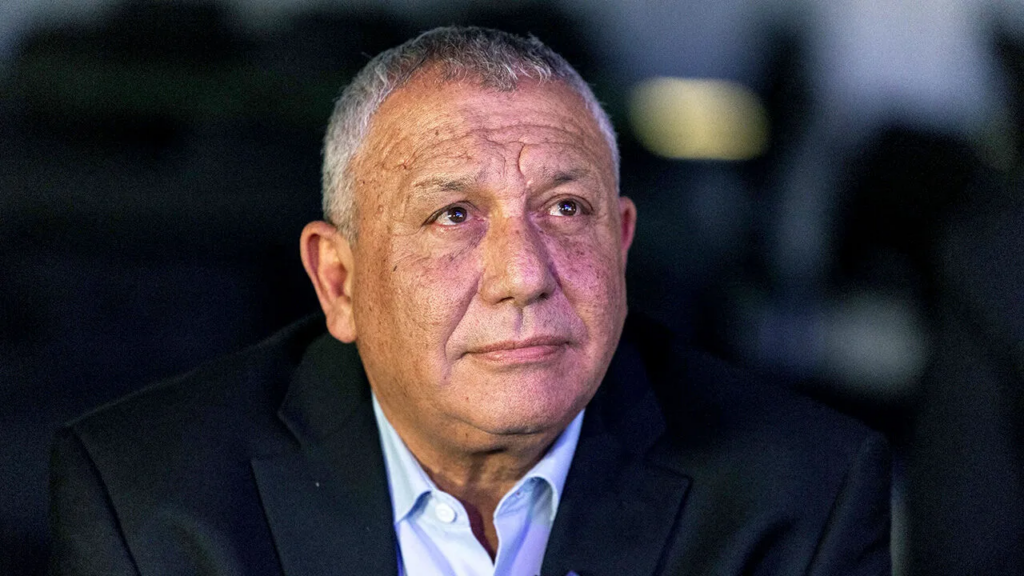
Gadi Eisenkot is emerging as his strongest opponent today. He is a former army chief, has great military credibility, and has paid a heavy personal price in the war, losing his son and relatives.
Unlike Netanyahu, he projects an image of personal sacrifice, institutional seriousness, and accountability. He has pledged to a state commission of inquiry into October 7 and to a more universal distribution of the burden of military service.
But anyone expecting a fundamental reversal of Israeli policy toward the Palestinians from Eisenkot will likely be disappointed. He comes from the heart of the military establishment.
He was a member of the war cabinet after October 7, 2023, and his disagreements with Netanyahu were mainly about the strategy, management, and political goals of the war — not some wholesale rejection of the dominant Israeli security doctrine. This is crucial.
The election may become a referendum on Netanyahu without becoming a referendum on the occupation, settlements, or the militarization of Israeli politics.
The Palestinians that everyone needs but no one wants
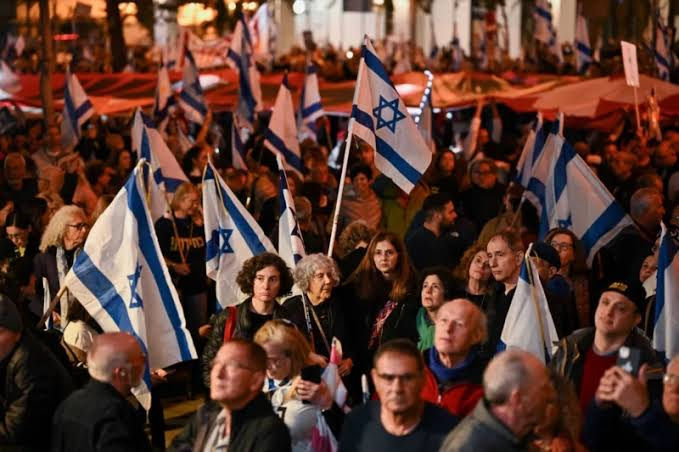
And here is where the enduring paradox of Israeli politics emerges. Arab parties could prove numerically decisive for the next government.
However, large parts of the Zionist political system still see their participation in a government majority as politically problematic. This creates a profound democratic contradiction: Palestinian citizens of Israel are invited to vote, their seats are counted in the Knesset as normal, but the participation of the parties that represent them is often presented as a reason to invalidate the legitimacy of a government.
Netanyahu has repeatedly exploited this fear as a political weapon, presenting his opponents’ possible dependence on Arab votes as a threat. The tactic can be electorally effective.
At the same time, however, it reveals how deeply the exclusion of Palestinians has become embedded in the political arithmetic of the state.
Can war save Netanyahu again?
The biggest unknown until October 27 is security. For Netanyahu, any election talk that revolves around corruption, Haredi conscription, October 7, 2023, or the institutional crisis is dangerous. Any talk that returns to war offers him more familiar ground.
This is not to say that any new military escalation will necessarily constitute election planning. It would be arbitrary to claim such a thing without evidence.
But it is politically obvious that a new major crisis in Gaza, Lebanon, or with Iran could shift the agenda from accountability to security again.
And there Netanyahu will once again attempt to present himself not as the man in whose time Israel’s greatest security failure occurred, but as the only leader who can manage its consequences.
The problem is bigger than Netanyahu
October 27 may indeed mark the end of the Netanyahu era. But there should be no illusions. Even if Likud is defeated, even if Gadi Eisenkot, Naftali Bennett or someone else manages to form a government, the deeper forces that shaped the current situation will not disappear overnight.
Occupation is not on the ballot. Settlements are not on the ballot. The deep militarization of politics is not on the ballot. Nor is the marginalization of Palestinians as equal political subjects.
Netanyahu has been the most successful exponent of this era, but he is not its sole creator. He ruled for so long because a significant part of Israeli society accepted or embraced the mix of nationalism, military might, fear, and perpetual emergency on which he built his political hegemony.
That is why the real crisis of the October election is not simply whether Netanyahu will go. It is whether a political system that has learned over the years to equate security with permanent military supremacy, democracy with the exclusion of millions of Palestinians, and political stability with the personal survival of a leader is truly ready to change.
Netanyahu may lose the election. The much harder question is whether Netanyahu-ism (the political legacy) he leaves behind will also be defeated.