



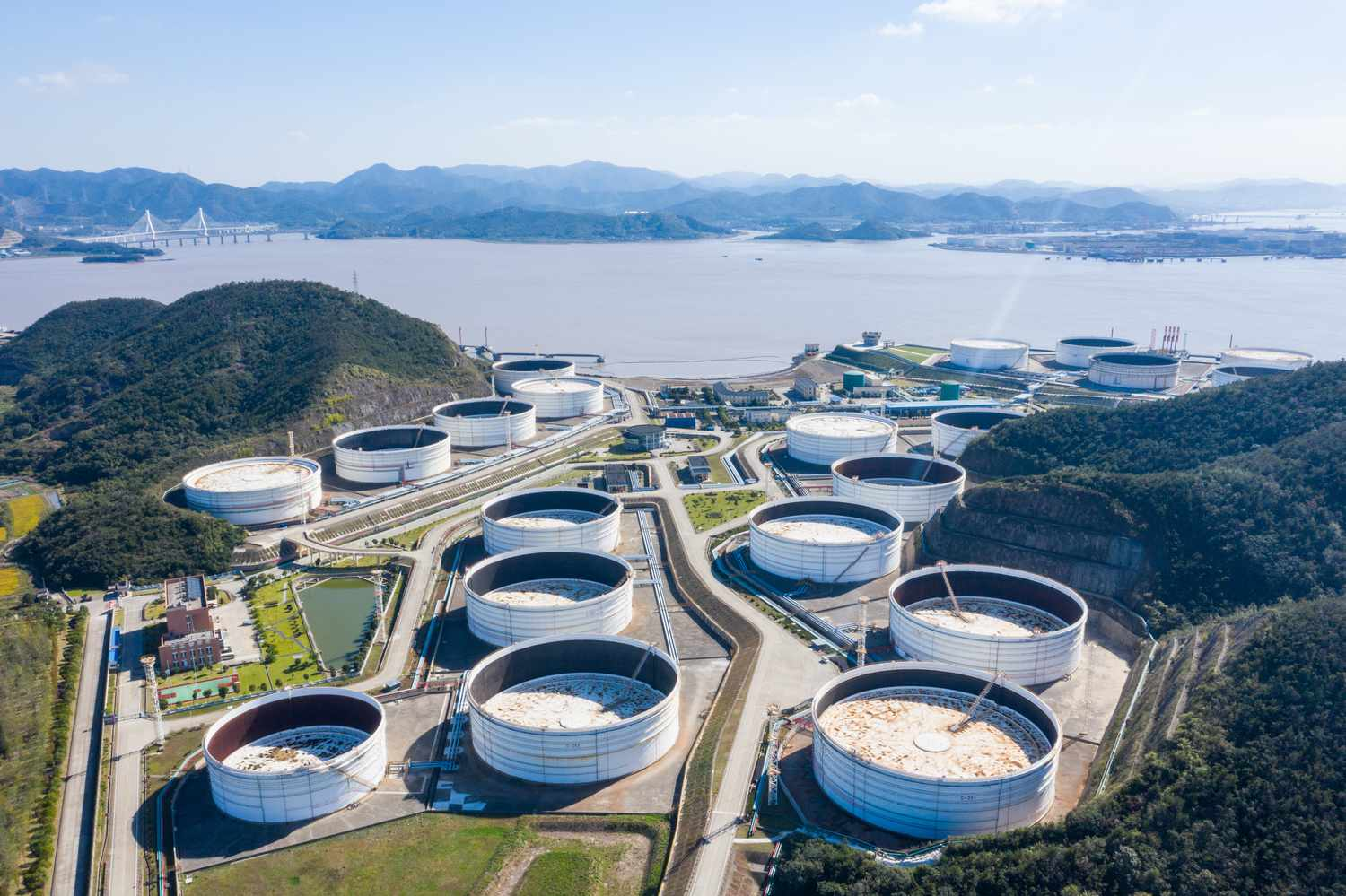
The protracted war with Iran is testing the limits of the US strategic oil reserves. The reserves created precisely for times of crisis are now at their lowest level in more than four decades, while the US is forced to pump ever larger quantities to contain energy prices.
Based on current stock levels and the current rate of consumption, the adequacy of the US strategic reserves is estimated at about 43 days, with the time horizon theoretically shifted to mid-September. Therefore, the third ten-day period of September is the critical milestone for the future of the US.
Moreover, the US “safety cushion” has come under strong pressure, as the Donald Trump administration released millions of barrels from the strategic reserves in order to deal with the shock caused by the disruption in the Strait of Hormuz, through which a significant part of the world’s oil transport passes.
In any case, the energy market is watching developments with concern, as a prolonged conflict could further increase price pressures, boost inflation and create a new cycle of turbulence in the global economy.
Shocking figures
The level of the US Strategic Petroleum Reserve (SPR) is at its lowest point since 1983, leaving the United States with reserves equivalent to about 43 days of crude oil supply, the Associated Press reported.
The Trump administration is releasing oil from the strategic reserves to address the rising energy costs caused by the closure of the Strait of Hormuz, through which up to a fifth of the world’s daily oil passes.
The release of 172 million barrels of oil
During the five months of conflict, the Strait has been effectively closed to commercial shipping, causing disruption in global energy markets and increasing uncertainty about the path of crude prices. In response to the crisis, President Trump authorized the domestic release of 172 million barrels of oil over a 120-day period.
About 108.6 million barrels of crude have been released so far, while current inventories stand at about 304.8 million barrels, according to federal data.
However, in June, the US president warned that the country cannot rely indefinitely on the strategic reserves to fight a war. “We’re going to run out of reserves in about four weeks. They’re really going to run out, and there’s going to be a time when you can’t get any oil. And you want to see chaos?” Trump told reporters on June 17.
The same day, the president signed a memorandum of understanding with Iran in an effort to pave the way for peace in the region.
The deal was intended to create a process for Iran to denuclearize and allow ships to safely pass through the Strait of Hormuz, as part of a prolonged ceasefire.
However, the deal proved short-lived, and attacks resumed on July 8. Crude oil prices jumped nearly 5% on July 8, with Brent crude up 5.2% to close at $78.02 a barrel. U.S. West Texas Intermediate (WTI) crude rose 4.4% to $73.52 a barrel.
Pressure on oil companies
The president has been sharply critical of US oil companies such as ExxonMobil and Chevron, accusing them of profiting too much from the crisis through increased production. “They’re making too much money. Too much money,” Trump said on Monday, calling on the companies to lower prices at the pump. “Are you surprised? I’m saying it. I’ll say it loud and clear,” he added.
Despite the US president’s statements, major oil companies say they have no control over the prices consumers pay at the pump and warn that international crude market conditions, due to the war with Iran, will continue to keep prices high.
Even when international oil benchmarks fall, prices at the pump usually follow with a lag of several weeks.
Political pressure from fuel accuracy
The rise in fuel prices is one of the factors that has kept inflation at high levels since the beginning of the year, further burdening the cost of living of American households.
The issue has taken on intense political dimensions, as there are three months left until the midterm elections on November 3, 2026. Democrats are attempting to politically exploit citizens’ dissatisfaction with accuracy, while Trump had pledged during the election that he would limit the cost of living.
The pressure on energy companies is intensifying as the average price of gasoline in the US has increased significantly, with the White House considering ways to intervene in the market and Trump demanding lower prices for consumers.

