The US and Israel are considering a new plan to escalate pressure on Iran, this time not through airstrikes or direct military confrontation, but through a large-scale land blockade aimed at weakening Tehran economically.
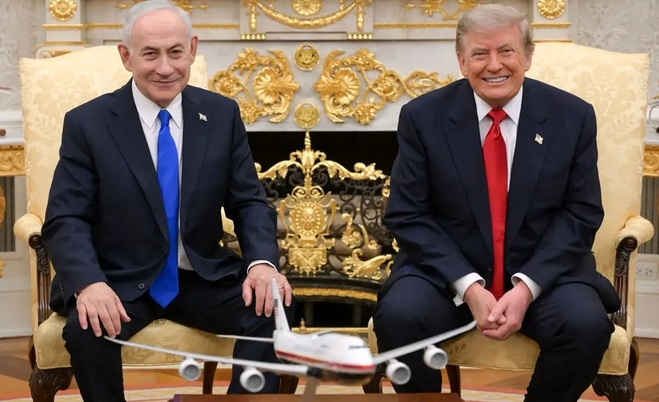
The plan is reportedly being discussed between US President Donald Trump and Israeli Prime Minister Benjamin Netanyahu, as part of a new strategy that combines military and political pressure.
The main aim is to drastically limit Iran’s ability to import and export through its land borders, effectively imposing an economic blockade without a formal declaration of war.
From bombs to economic siege
The military operations and airstrikes of recent months have failed to achieve the strategic goal of Tehran’s retreat.
On the contrary, the Iranian government has maintained its cohesion, while the country’s military capabilities have not been neutralized to the extent that Western plans sought.
Under these circumstances, Washington and Tel Aviv seem to be shifting the burden of the confrontation to the economy, attempting to damage Iran’s supply chain and cross-border trade.
Pressure plan towards neighboring countries
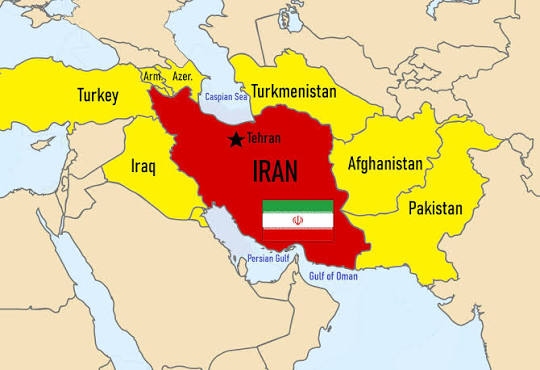
The proposed plan foresees intense diplomatic pressure towards almost all countries bordering Iran.
Specifically, the following countries are targeted:
- Iraq
- Pakistan
- Turkey
- Turkmenistan
- Afghanistan
- Armenia
- Azerbaijan
The aim is for the governments of the above countries to restrict or even close key border crossings, significantly hindering the movement of goods to and from Iran.
If fully implemented, such a plan could seriously affect imports of raw materials, exports of Iranian products and overall economic activity in the country.
A Strategy of Economic Asphyxiation
Critics of American and Israeli policy argue that this is a form of economic warfare, which attempts to impose political results through economic pressure instead of direct military conflict.
As they point out, this strategy may mainly burden the civilian population, limiting access to basic goods, raw materials and trade, while at the same time increasing the risk of destabilizing the entire region.
At the same time, the attempt to involve all neighboring states in such a blockade would create serious geopolitical tensions, as many of these countries maintain significant economic and energy relations with Iran and would hardly accept a complete cessation of their cooperation.
The difficulties of implementation
Despite the design, several experts estimate that the implementation of such an extensive land blockade would be extremely difficult.
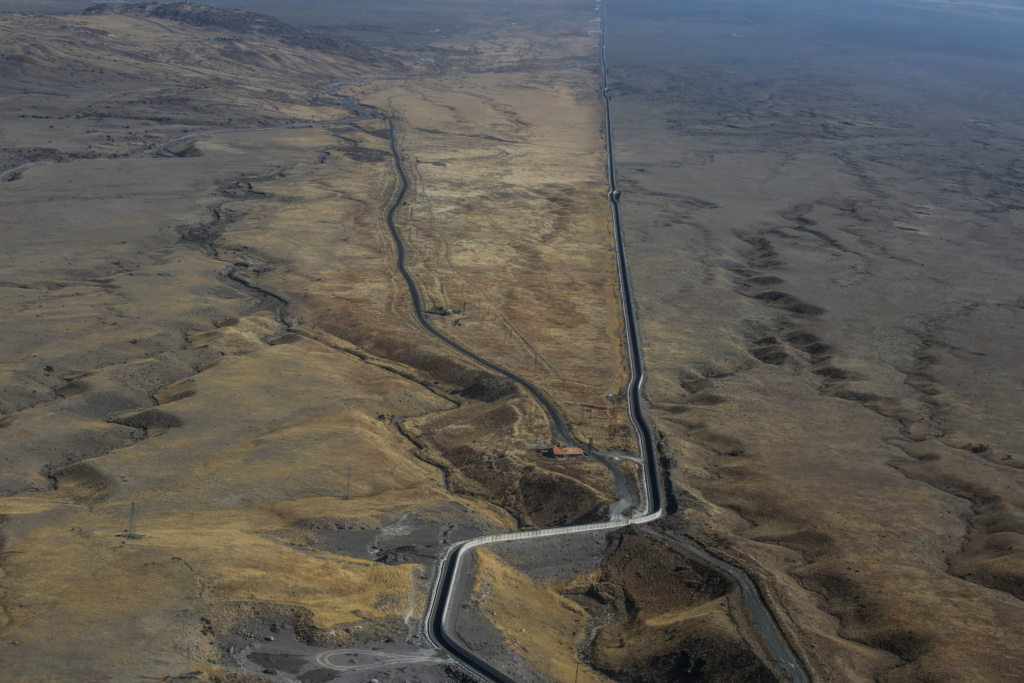
Iran’s borders extend for thousands of kilometers, while the country’s trade and energy connections with its neighbors are an important factor for the economies of the region.
Furthermore, such an initiative would require unprecedented coordination between states with different geopolitical interests, which makes its implementation particularly complex.
In conclusion, the US and Israeli plan marks a transition from direct military pressure to a more complex strategy of economic isolation of Iran.
Critics of this approach argue that this is a policy that attempts to impose geopolitical goals through economic suffocation, with potential consequences not only for Iran but also for the stability of the entire Middle East.
At the same time, the success of such a plan remains uncertain, as the cooperation of all neighboring countries is not taken for granted and the geopolitical balances of the region are particularly fragile.
How will Iran react
The Iranian leadership characterizes the plan as an “act of economic warfare,” claiming that the US and Israel are attempting to achieve through economic isolation what they have not achieved with military operations.
Tehran has repeatedly stated that it considers sanctions and blockade efforts a form of illegal pressure, while it would attempt to further strengthen its trade relations with Russia, China and the organizations in which it participates, such as BRICS and the Shanghai Cooperation Organization, in order to reduce its dependence on Western markets.
Iraq: The Difficult Neighbor
Iraq would hardly accept a complete border closure.
It has extensive trade, energy and religious relations with Iran, while strong pro-Iranian political and military forces are active within it. Such a decision could cause a serious political crisis in Baghdad.
Turkey: Economy above all
Turkey maintains competitive relations with Iran on several regional issues, but remains an important trade and energy partner.
Ankara is more likely to strengthen border controls for security reasons or migratory pressures, than to accept a complete economic blockade that would also hit its own economy.
Pakistan: Balancing Two Worlds
Pakistan maintains strategic relations with the United States, but also has a close relationship with Iran. Islamabad usually seeks balance and avoids actions that could cause serious destabilization on its western border.
Afghanistan: Limited options
Afghanistan faces serious economic and humanitarian difficulties. The Taliban government would likely seek to keep trade routes with Iran open, as a large part of basic goods enter through this route.
Turkmenistan: Neutrality as a priority
Turkmenistan has long pursued a policy of neutrality and cooperates with Iran on energy issues. Full participation in a blockade would contradict this policy and create problems for the country’s energy deals.
Armenia: The vital passage to Iran
For Armenia, the border with Iran is a strategic trade route. Yerevan would hardly accept its closure, as it would significantly limit its international economic options.
Azerbaijan: The most complicated front
Azerbaijan maintains close cooperation with Israel on defense and security issues, which could make it more susceptible to American pressure. However, the government in Baku will have to carefully weigh the risk of further worsening the already delicate relations with Tehran.
Could the plan be implemented?
Despite the discussions that are reportedly taking place, many analysts believe that a complete land blockade of Iran is extremely difficult to implement in practice. The seven neighboring countries have different interests, different relationships with Washington, and different degrees of economic dependence on Tehran.
In addition, the length of Iran’s borders, existing trade corridors, and energy partnerships make such a plan particularly complex and likely incomplete in its implementation.
Ghalibaf (Iranian Parliament): The US will pay for the crime in Qeshm, killing civilians
Meanwhile, the speaker of the Iranian Parliament, Mohammad Bagher Ghalibaf, issued a harsh statement against the US, on the occasion of the American strike on the island of Qeshm. The Iranian official described the attack as a “new crime,” claiming that it is a continuation of the attacks in the Minab and Lamerd regions.
In his statement, he accused Washington of “dirtying its hands every day with new crimes,” while claiming that the attack targeted civilian homes.
At the same time, he claimed that the US was attempting to compensate for its military failures with attacks that cause civilian casualties, concluding with the warning that “they will pay” for their actions.
US casualties in Iran war rise: 653 wounded, 18 dead
The US Department of Defense has updated its database of US military casualties, adding 11 more wounded soldiers. This brings the total number of casualties recorded since the start of the conflict to 653.
According to the available data, it is not clear exactly when the soldiers were injured, as the Pentagon’s system can register incidents several days or even weeks after the event, as reported by ABC.
Therefore, the 11 new records do not necessarily mean that the injuries occurred in the last two days. Meanwhile, the number of American soldiers who have lost their lives during the conflict remains at 18.
The new update comes after two consecutive nights during which, according to American statements, Iranian missiles were launched against targets in Jordan.
During the same period, CENTCOM carried out extensive airstrikes against dozens of targets that, according to the United States, are linked to the Islamic Revolutionary Guard Corps (IRGC) in Iran.