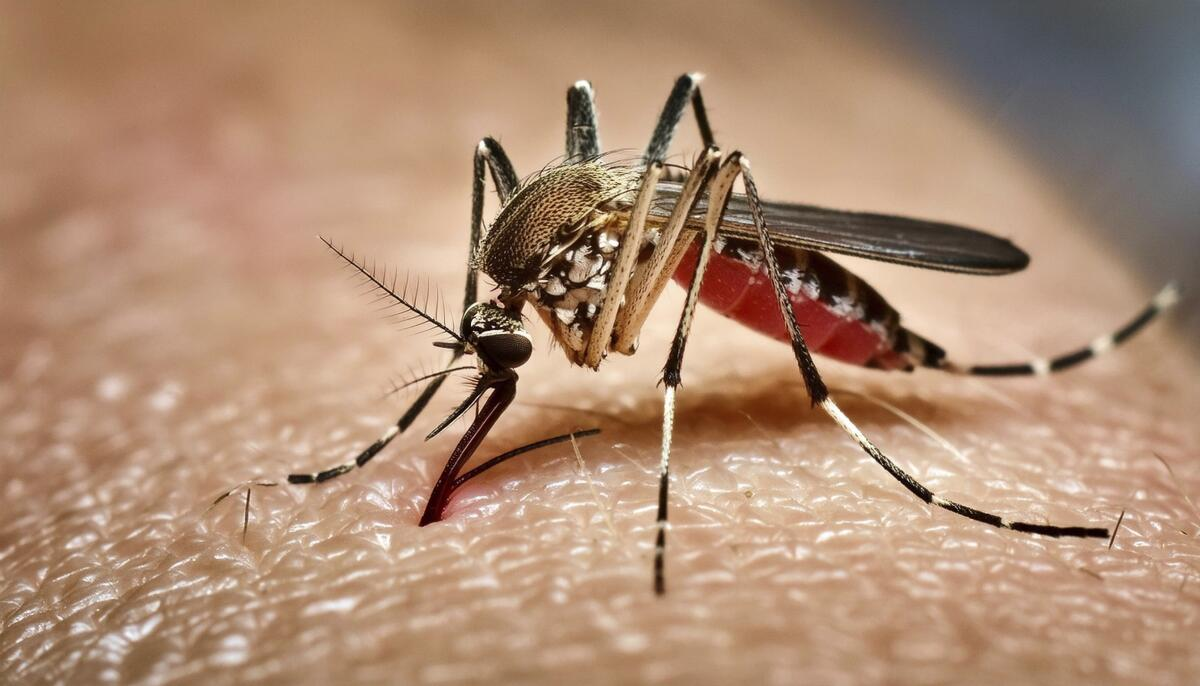
Unfortunately, it is an operation of destruction. A cynical show of force by those dark circles that, for several decades, have dominated and absorbed every semblance of logic and law from the mechanisms of power.
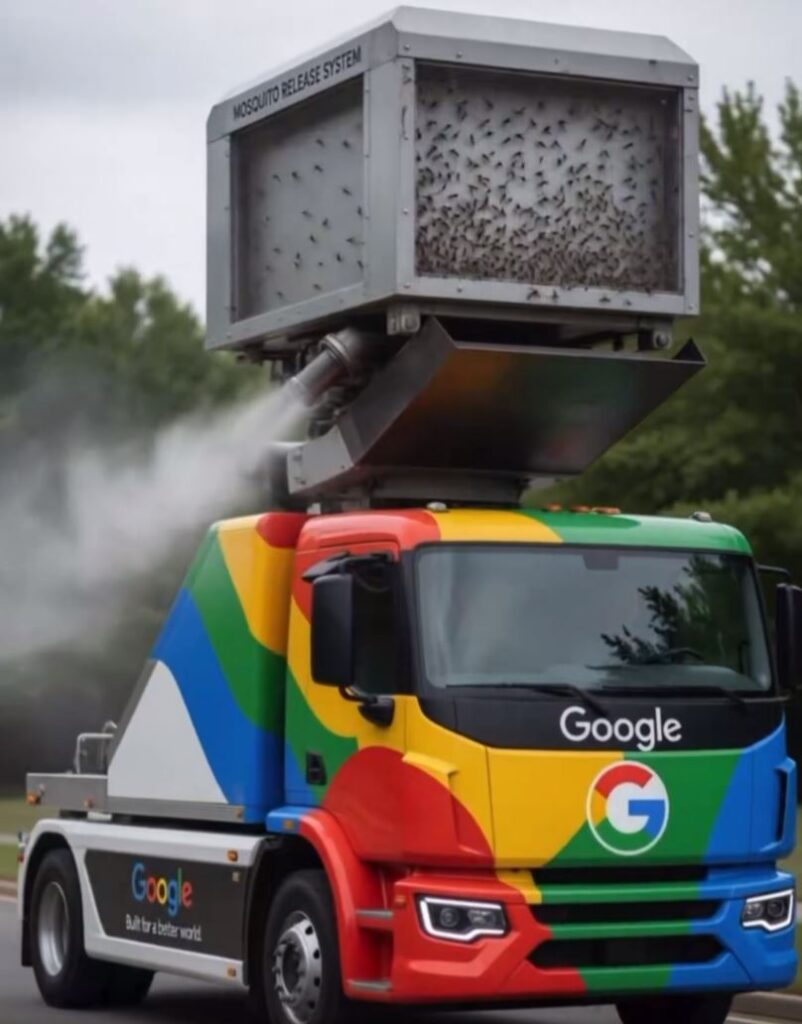
Google has officially and quietly filed an application with the US Environmental Protection Agency (EPA) to receive an “experimental permit to release up to 64 million mosquitoes infected with bacteria in Florida and California over two years.”
This plan is the largest outdoor biological experiment in US history! And it will be carried out by a technological giant and not by a public health agency.
It will be carried out by a company that is one of the infamous “big five” namely Google, Amazon, Meta, Apple and Microsoft, for which there have been serious concerns and complaints in both the US and Europe. Even the European Parliament has addressed and expressed its concerns about the excessive power they are acquiring, the excessive influence they exercise in our lives, and their ability to shape societies, through overt and covert “projects.”
The issue was leaked from the efforts to inform the public by epidemiologist Nicolas Hulscher and directly refers to dystopian science fiction.
The narrative behind the pretext
The application for this license is linked to a decade-long Google initiative called Debug, which uses biological techniques to control mosquito populations.
Debug began around 2014-2016 as a “moonshot” under Verily (then Google Life Sciences), the life sciences arm of parent company Alphabet.
Google acquired it in full in late 2024. The project applies the Sterile Insect Technique (SIT), a method used since the 1950s against pests such as screw flies and fruit flies.
Specifically, it breeds male mosquitoes infected with the naturally occurring bacterium Wolbachia pipientis. These males do not bite or transmit disease. When they mate with wild females, the resulting eggs do not hatch or produce viable offspring, gradually reducing the target population over generations.
The current EPA application is for Culex quinquefasciatus (the Southern Common Mosquito), a vector of West Nile virus and St. Louis encephalitis, with planned releases of about 16 million males per state per year.
Previous efforts have focused on Aedes aegypti, which transmits dengue, Zika, chikungunya, and yellow fever. The releases rely on automated robotic breeders, artificial intelligence for sex separation through computer vision, and data-driven monitoring for targeted development.
Mosquitoes are a huge global health problem. It is the deadliest animal in the world, killing more people annually than any other creature through disease transmission. In the US, West Nile virus infects thousands of people annually, with serious cases and deaths. Internationally, dengue fever and malaria impose enormous economic and human costs. Debug is being touted as a more environmentally friendly alternative to chemical insecticides, which face resistance issues, environmental backlash, and regulatory hurdles. Using technology, Google aims to scale up SIT, which has historically struggled with mosquitoes due to production and separation issues.
The peculiar tests
Google’s involvement is consistent with Alphabet’s “moonshot” philosophy – tackling ambitious, high-impact problems with engineering and data science. Debug combines expertise in software, robotics and biology.
Success could open up markets for mosquito control technology, data services and public-private partnerships in health worldwide.
Singapore is a striking example: since 2018, Debug has been supporting the National Environmental Protection Agency’s Project Wolbachia, achieving an 80-90% reduction in the Aedes aegypti population and over 70% reduction in dengue fever cases after 6-12 months of releases. Similar results are being seen in other trials, including Fresno, California (up to 95% local reduction in some years).
The expansion to Florida and California—states with significant mosquito problems and tech-friendly ecosystems—serves as a springboard for larger U.S. and global deployments.
Previous U.S. trials, such as Debug Fresno (2017-2019), released millions of males with varying degrees of success; the population sometimes rebounded, highlighting the need for continued effort. The current proposal builds on that data and is subject to EPA oversight.
Reading Google’s “research history” reveals that the company has spent decades and billions on the technology. It has also conducted trials in the U.S. and Singapore. Successful trials, we’re told. Randomized trials in Indonesia show significant disease reductions. Singapore’s multiyear data suggests sustainable benefits with continued releases.
But tests that have remained silent, not to mention secret, for years. Why?
Humanity does not possess the Knowledge of Ecosystem Engineering
For a tech company facing allegations and scrutiny over data, advertising, and AI ethics practices, public health initiatives are a very serious wake-up call.
Google is building capabilities in biotechnology, automation, and field development that can be transferred to other areas such as agriculture or pandemic preparedness.
And here, valid questions arise. There is growing concern about unintended ecological impacts, such as impacts on food chains (bats, birds, fish that feed on mosquitoes) or gene flow.
- Are we ready to hand over environmental releases to the private sector, without fear of insufficient transparency or speculative excesses?
- Are we ready to allow mass biological experiments by private companies?
Supporters note that Wolbachia programs are not genetically modified organisms (GMOs) in the sense of CRISPR, although regulatory classification treats the bacterium as a pesticide. That the method is species-specific, reversible, and avoids broad-spectrum insecticides.
But what weight does all of this carry? Weren’t private companies the ones presenting study after study to argue that smoking can’t be blamed for cancer? And where are we today? A smoking ban even in outdoor spaces!!!
If approved, it would be one of the largest deliberate releases of insects in U.S. history, testing scaling up in a variety of American climates. Success could accelerate adoption elsewhere, potentially reducing reliance on insecticides and reducing the burden of disease. The potential success of the program is measurable and is recorded by Google scientists.
But beware: failure is not measurable! There is no way to predict the magnitude of the destruction on the planet in the possible failure of such a massive and invasive program.
And we are not able to do so because, despite the beliefs of many scientists, because Humanity does not possess the Knowledge of Ecosystem Engineering. Our understanding of such issues is very great compared to previous centuries but insignificant compared to the complexity and interaction of biodiverse systems.
Biotechnology and transhumanism are the new game of the super-rich and their political puppets. And disease and food control is the Holy Grail of this game.
Man must stop experimenting like a drunken alchemist. We must not forget that good is more difficult than evil. Creation is more difficult than destruction.