



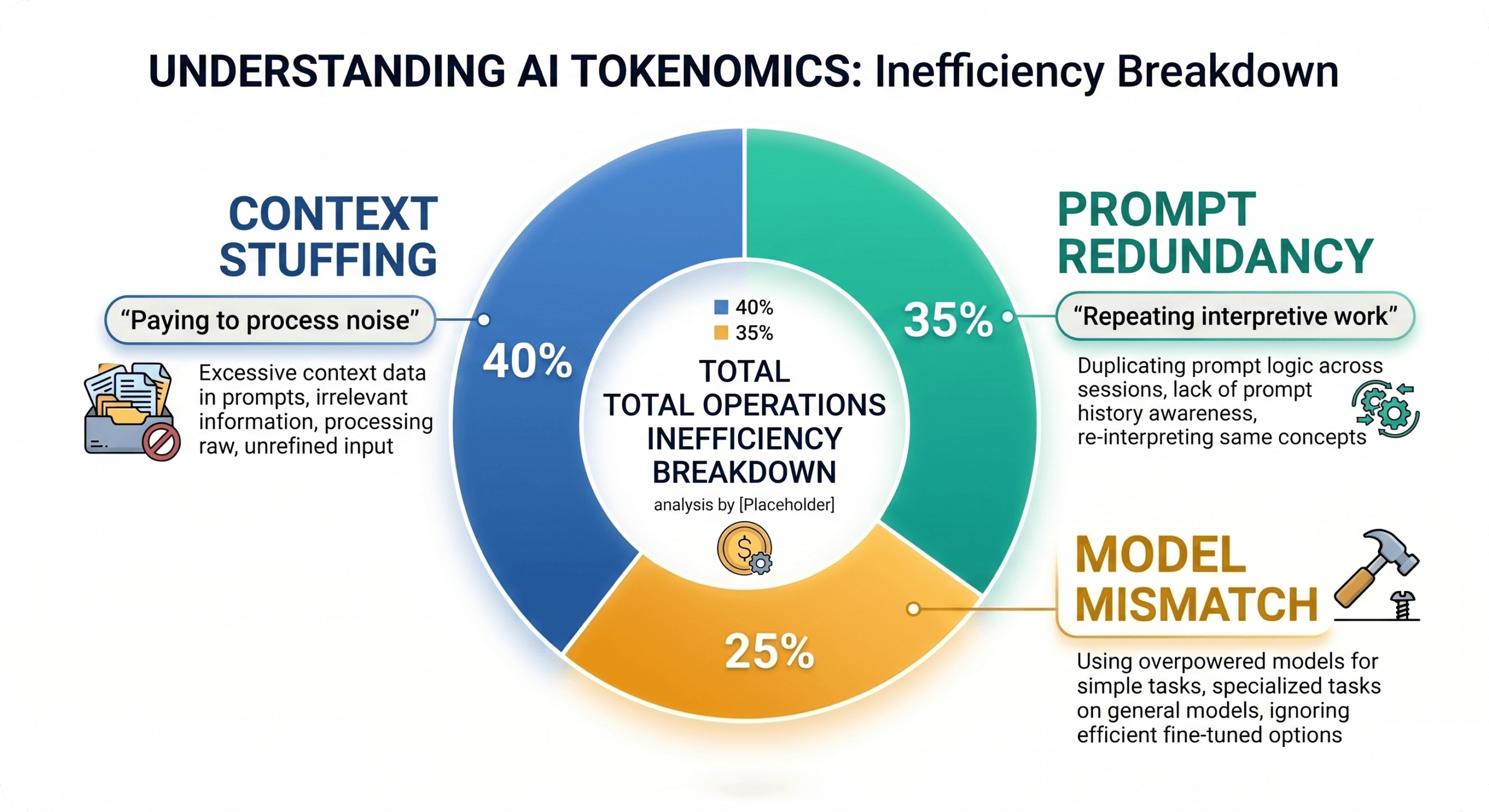
Until a few months ago, companies rewarded employees who used AI extensively by consuming huge amounts of tokens, the basic unit of measurement for AI usage. Now, that tactic is a thing of the past.
Small and large companies in the US have started using cheaper models, including some developed in China.
Companies in the US are starting to adopt this radical idea, which could disrupt an industry that powers the global economy.
This approach is necessary because companies are forced to spend huge amounts of money on the use of artificial intelligence, leading them to choose the most appropriate tool for their needs, which will simultaneously save resources that can be better allocated to other tasks. This does not mean that companies are abandoning the super-models of OpenAI and Anthropic. On the contrary, many choose to use them only for the most demanding tasks. But for the simple ones they are using cheaper models.
Businesses are now forced to learn how to measure and improve the return on their AI investments. This process is called “tokenomics,” referring to tokens, the basic unit of measurement for AI usage.
The resource-saving “tokenomics” or “tokenomical” approach is a dramatic shift in mindset.
Anthropic and OpenAI have spent years competing for AI supremacy, trying to create increasingly advanced and expensive models.
But now they are finding that businesses want simpler solutions. The growing popularity of these models has turned the tables on the AI market, threatening the high valuations of both companies as they prepare to go public.
Geopolitical dimensions
This shift also has a geopolitical dimension, as it pits the world’s two largest economic powers against each other.
In general, the most popular American models are closed, which means they are strictly controlled by the companies that develop them. China, on the other hand, is known for its cheaper open-weight models, which can be downloaded and customized to the user’s needs.
Regardless of how this confrontation unfolds, many investors and executives cited by the American newspaper believe that the era of cheaper AI is here to stay. Several American companies have already presented or are developing new open models.
Silicon Valley companies were the first to start treating AI like any other product, looking for the best price-performance ratio. In recent weeks, this practice has begun to spread to other industries.
AI companies are offering their clients “crazy” deals to keep them in their portfolios.
Strategies to reduce costs include limiting access to top-of-the-line models for new hires, as well as using the most advanced artificial intelligence systems to plan a task before cheaper models take over.
This strategy works in practice
The cost of building a web browser from scratch, with the entire project completed exclusively with OpenAI’s GPT-5.5, comes to just over $10,000. On the other hand, combining Cursor’s Composer programming model with Anthropic’s Opus 4.8 cost just $1,339.
Businesses should keep this in mind.


