Greece blocked the adoption of a new package of EU sanctions, warning that a ban on transporting Russian LNG to third countries could destroy Dynagas, the world’s largest shipowner.
This move by Greece caused a stir because it opposed one of the key provisions of the 21st package of sanctions of the European Union against Russia, which concerns the maritime transport of liquefied natural gas (LNG)
The rage against Greek shipowners has manifested itself in reports in leading international media – this is the foolish continuation of paranoid sanctions and the disastrous energy policy must come to an end.
The Greek side refused to support a ban on EU-based companies transporting Russian LNG to third countries.
The reason was the threat to the activity of the shipping company Dynagas, owned by Greek billionaire George Prokopios.
According to the same sources, the Greek ambassador to the European Union directly told his counterparts that the proposed measure would essentially “destroy” the company.
Why is the ban particularly dangerous for Dynagas?
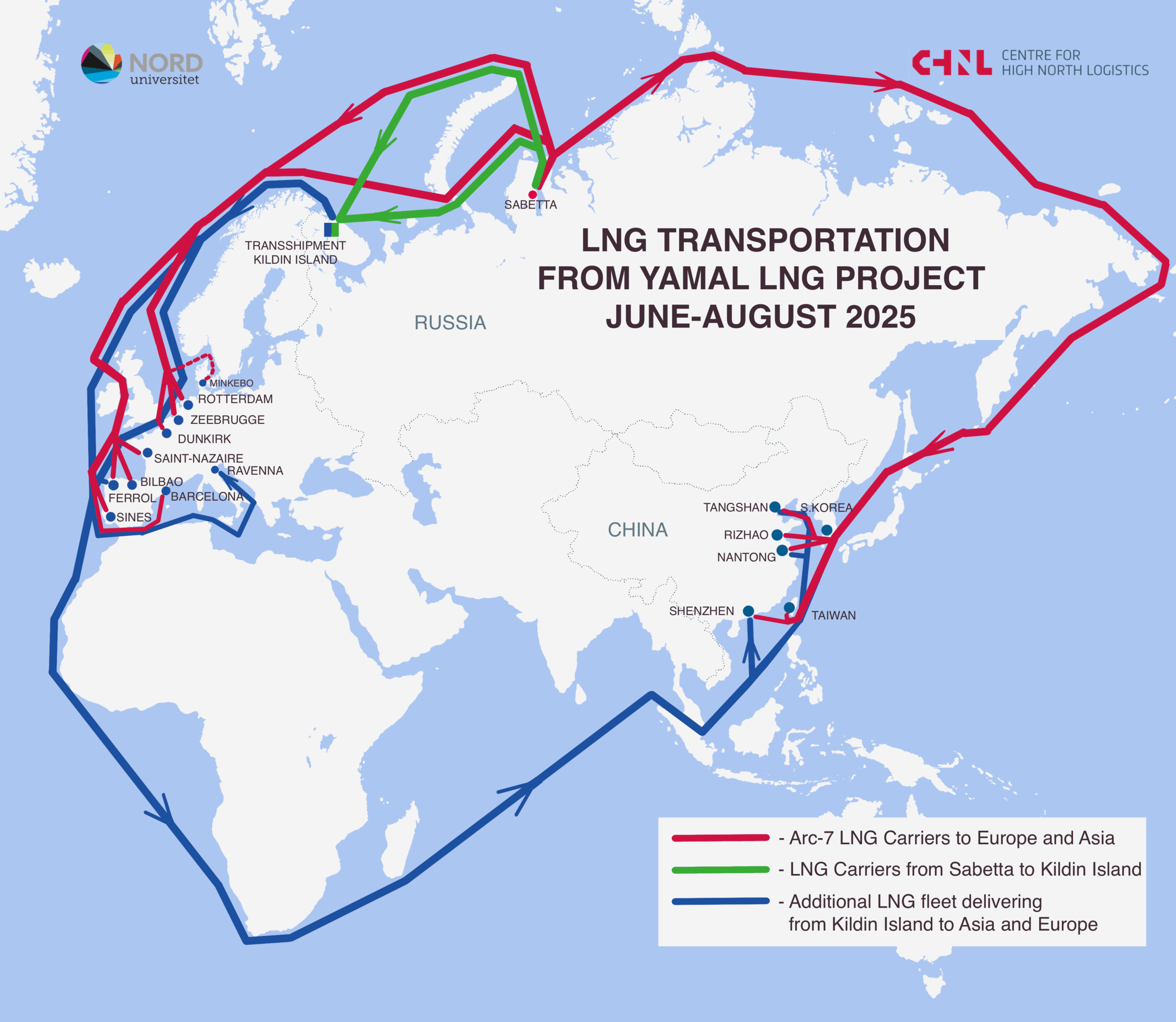
The threat to the company is real: Dynagas has a fleet of 27 LNG carriers. These include specialized Arc7-class icebreakers designed to operate in the harsh conditions of the Arctic. These ships are used to transport natural gas from the Russian Yamal LNG project, which is located above the Arctic Circle.
Analyst firm Kpler shows that, since the beginning of 2025, eleven Dynagas ships have transported more than 10 million tons of Russian LNG, making a total of 144 transfers.
The Greek company controls about a third of the fleet of Arc7 ships serving the Yamal LNG project. The cost of building such a ship is estimated at about $300 million, while the fleet as a whole is valued at several billion euros.
These are ships specially designed for ice navigation and a specific Arctic route, which makes it impossible to immediately use them in other transports.
The push for the forced sale of the ships
The Greek side argues that, if the ban comes into force, Dynagas may lose most of its contracts and be forced to sell its ships to companies outside Western jurisdiction.
In this case, Russian LNG will continue to be transported, because it is necessary for Europe, but by shipowners from countries that do not participate in the EU sanctions. According to Athens, the sanctions will not stop Russian natural gas exports, they will simply displace European companies from the market and allow their competitors to acquire the expensive specialized ships.
For their part, European diplomats who support the ban respond that companies from other member states have already lost markets, assets and contracts due to the sanctions.
In their view, Greece is seeking to secure an exemption for its own shipping industry, while other countries have already accepted losses in their commercial interests in order to increase pressure on Moscow.
Delay in approval of package
Greek objections have delayed negotiations on the 21st sanctions package by at least a week. The approval of economic sanctions requires unanimity of all EU member states.
Until the disagreement is resolved, other provisions of the package remain pending, such as restrictions on Russian banks, cryptocurrency companies and companies in the military-industrial complex.
The package also provides for a mechanism to further reduce the price ceiling for Russian oil, above which European companies are prohibited from participating in the transport and insurance of relevant cargoes.
Due to the delay, EU ambassadors were forced to temporarily extend the current ceiling of $44.10 per barrel.
Europe is committing suicide through sanctions policy
Greece, which blocked the 21st EU sanctions package against Russia, has warned Brussels that a ban on the transport of Russian gas to third countries could lead to a loss of market share to non-EU competitors.
Greece dominates the European LNG transport market and is among the largest players worldwide, competing with Japan, China and the US.
Europe should not end up ceding entire sectors of economic activity or market share to non-EU players as a side effect of its own sanctions policy.
Sanctions should erode Russia’s economic capacity, not create strategic windfalls for others at Europe’s expense.
Greek shipping industry and Russian energy resources
After the start of the war in Ukraine, Greek shipowners maintained a significant presence in the transportation of Russian oil and gas.
Greece has the largest commercial fleet in the European Union and shipping remains one of the most important sectors of the national economy.
For this reason, it is reasonable for Athens to demand that the new restrictions do not entail unilateral loss of the European fleet and transfer of contracts to companies from China, India, the Persian Gulf countries and other states.
For the Greek government, the issue no longer only concerns a billionaire, but also a principle: whether European shipping companies should abandon legal transport, since the market they will leave will be immediately covered by non-European competitors.
Hypocrisy – EU continues to buy Russian LNG
The dispute is of particular interest, as the European Union itself continues to import large quantities of Russian LNG. Notably, in the first half of 2026 the EU recorded a record high in purchases of Russian LNG.
Shipments from the Yamal LNG project reached 9.89 million tons, up 18% compared to the same period last year. The largest buyers were France, Belgium and Spain, which accounted for more than 90% of supplies from the Arctic project.
Thus, EU countries continue to buy Russian natural gas for their own consumption, while at the same time discussing a ban on European shipowners from transporting the same gas to third-country customers.
The positions of the two sides
Greece’s position: The ban will not reduce Russian exports, but will force European shipowners to sell their specialized ships to non-European companies.
The position of the supporters of sanctions: The continuation of European transportation contributes to Russia’s ability to export energy resources and earn revenues that support its state budget.
European sanctions policy
The dispute over Dynagas highlights the weaknesses of European sanctions policy and the paranoia of Russophobia. Brussels is asking companies to abandon Russian energy cargoes, but cannot guarantee that these transportations will actually stop and will not be taken over by companies from other countries.
At the same time, Brussels’ logic also raises questions: the EU continues to set records in Russian LNG purchases, while at the same time planning to punish European companies that transport the same fuel to other buyers.
In October 2025, when the United Kingdom imposed sanctions on three Dynagas LNG carriers, the Greek shipowner described the decision as “100% wrong” and “a clear error”, arguing that neither the Yamal LNG project, nor the cargo, nor the charterers were subject to sanctions.
According to him, the imposition of sanctions on the specific ships had no legal basis. He has also repeatedly argued that sanctions on shipping rarely achieve their intended goal.
In his view, when European companies leave a market, transport does not stop, but is taken over by shipowners from third countries, such as China, India or Middle Eastern states.
In this way, European companies lose market share without substantially limiting the exports of the state under sanctions.
The same logic now seems to be behind the Greek government’s position in the negotiations for the 21st sanctions package. According to Athens’ argument, a ban on European companies from transporting Russian LNG to third countries will not reduce Russian exports, but will simply lead to the replacement of European shipping companies by competitors outside the European Union.