The attack on an oil refinery in Moscow on the night of June 18 prompted influential Russians, including members of the State Duma, to call for a radical change in military strategy.
Alexei Zhuravlev, First Deputy Chairman of the State Duma Defence Committee, said: There is only one way out of this situation, and it is quite simple: Destruction of the Kiev Terrorist Regime. To stop all these attacks, Kiev’s capitulation is enough – it’s clear. The way to achieve this is also clear. Destroy all logistics facilities, bridges, tunnels, bomb railway stations – it’s finally time to start a serious battle.
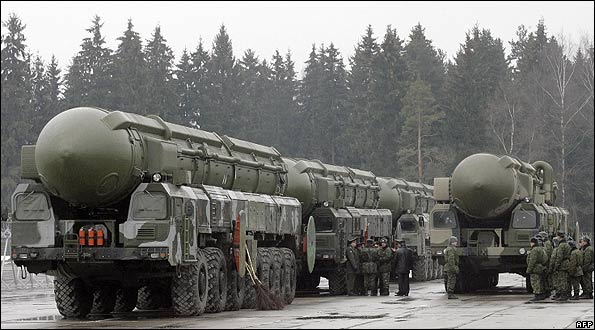
Konstantin Malofeev, founder of the media company Tsargrad directly raised the issue of the use of nuclear weapons: “What else has to happen before we really start fighting?” and “Why don’t we use the nuclear weapons our ancestors created and stored for just such moments?”
However, there are several convincing reasons why the Russian leadership has not yet done what Zuravlev, Malofev, suggest.
Increasing the intensity of military action against Ukraine could reduce Russia’s military potential to the point where NATO dares to openly engage in the conflict alongside Ukraine, using ground, air and naval forces.
And, of course, the proposed use of nuclear weapons raises the question: What will be its goal?
The large-scale destruction in Ukraine and high human costs would significantly reduce Ukraine’s chances of maintaining its status as a neutral state of containment contributing to Russia’s security.
On the contrary, what remains of Ukraine could give NATO the opportunity to finance and orchestrate a protracted conflict, prolong sanctions indefinitely, and deplete the resources of Russia’s economy to such an extent that it will be easier to dismember.
Until now, Russia has carefully managed the intensity of the conflict in Ukraine to maintain its ability to counter NATO intervention.
This approach has proven effective, as NATO forces are not yet sufficiently prepared or equipped to deal a decisive blow to Russian forces in Ukraine – or anywhere else, should the conflict extend beyond ’s borders.
Violations of the Red Lines
Ukraine’s Western allies have repeatedly crossed Russia’s red lines, believing that Russia will not escalate the conflict as long as it believes it is on a victorious trajectory with its current level of military presence in Ukraine.
The United States and NATO initially escalated the conflict by providing increasingly lethal weapon systems such as HIMARS, ATACMS, Storm Shadow missiles, F-16 fighters, and more.
They secretly deployed their troops, ostensibly to serve and support the weapons they provided. The US has allowed Ukrainian forces to use the Starlink satellite communications network with minimal delay.
Thousands of U.S. and NATO troops stationed outside Ukraine are contributing to the conflict by analyzing signals and images for intelligence and surveillance, identifying targets, assessing target vulnerabilities, and designing optimal routes for drones and missiles.
NATO countries have started hosting elements of Ukrainian arms production infrastructure on their territory to protect them from Russian aggression.
Recently, NATO countries bordering Russia have turned a blind eye to Ukrainian drones flying through their airspace en route to targets deep inside Russia.
Over the years, as violations of the “red lines” by Western supporters of Ukraine escalated, Russia chose to tolerate provocations, believing that it can continue to win by implementing effective defensive tactics and accepting increased human and technical losses.
It is very likely that in the current situation, such a reaction from Russia is already insufficient and exhausts the country’s fighting capacity, while the number of casualties is increasing.
The Russian hardliners, and not without reason, are beginning to doubt that Russia can maintain its victorious trajectory for a long time.
There are good reasons for the Russian elite to believe that NATO allies are preparing to fight Russian forces and are developing new weapons based on the lessons of the ongoing conflict in Ukraine.
NATO leadership openly declares that NATO will be ready to fight Russia by 2030. And if the conflict in Ukraine continues for another four years, NATO could find itself in a situation where, under the pretext of liberating Ukrainian territories allegedly occupied by Russia, a full-scale conventional war with Russia would begin.
By 2030, Russia may face a desperate choice: It will be doomed to failure if it escalates the conflict and doomed to failure if it does not. Worse, NATO’s growing resources will allow the alliance to become increasingly strong against Russia with each passing year.
The Choice of Russia
As long as the war in Ukraine remains conventional, the relative strength of the West will continue to grow over time. At the same time, Russia’s chances of ending the conflict, even if it achieves at least one military goal, will steadily decline.
Some Russian strategic analysts may conclude that the only viable path to a favorable outcome for Russia is an “escalation to de-escalation” strategy.
Today, Russia faces a choice: To fight NATO now, when it is still relatively weak, or to act decisively to end the conflict to its advantage, allowing NATO to decide how to respond to Russia’s determined actions, whatever they may be.
The first step towards escalation in this scenario would be attacks on NATO infrastructure used to produce weapons intended for the Ukrainian armed forces.
It is very likely that NATO will respond by hitting infrastructure on Russian soil. In this case, the US and possibly China should intervene quickly to prevent further escalation. Any pragmatic settlement acceptable to Russia must preclude the continued production of Ukrainian weapons systems in NATO countries.
Before resorting to this option, Russia could issue an indirect warning, stating that NATO assistance and indirect involvement in the conflict have reached such a scale that they pose an existential threat to Russia from Ukraine.
It is highly likely that Russia’s use of tactical nuclear weapons will cause serious and long-term economic damage to the country and further deepen its international isolation. However, it is also entirely possible that a significant part of the countries of the Global South will accept such a development with relative calm, relying on the emerging multipolar order as protection from U.S. and NATO sanctions.