



As the dust of the war between the US, Israel and Iran… settles in the cities of the Persian Gulf, a new, completely different landscape is emerging in the Middle East, sealed by the Memorandum of Understanding signed by the opposing parties, which demonstrates Tehran’s strategic dominance on 7 fronts.
In fact, the US has not even managed to secure its demand for a 15-20-year suspension (if not a complete ban) of all Iranian uranium enrichment, something that President Trump has been pressing for.
In recent statements, the US president has pointed out that the planned agreement will allow Iran to maintain a civilian nuclear program, while strictly limiting its military applications.
In Tehran, they interpret these statements as yet another American retreat from Iran’s demand for “zero uranium enrichment.”
However, the most important part of the agreement between the US and Iran lies in the upgraded role of the Islamic Republic in the new political geography of Hormuz and the Persian Gulf as a whole.
This is because, after the 60 days provided for in the agreement, Tehran retains the full ability to influence the security of the most important energy corridor on the planet. The strategic role of Hormuz is not surrendered, it is simply temporarily suspended.
Thus, the Islamic Republic is freed from years of diplomatic isolation and restores hydrocarbon exports to the center of its national strategy.
At the same time, it maintains increased influence in the wider region covering Lebanon, Yemen, the Persian Gulf and virtually Syria.
It is no coincidence that the Iranians are trumpeting that they have reached a “better deal” with Donald Trump than the previous deal signed in 2015 with the Obama administration, while the Israelis are watching the developments with astonishment – at a time when Benjamin Netanyahu’s political future is looking bleak…
Trump did not even make the commitment to freeze uranium enrichment
More specifically, President Trump has reportedly withdrawn his demand for a 15-20-year freeze, if not a complete ban, on all Iranian uranium enrichment, which his administration had been pushing for to be implemented by May 2025.
During an interview with the New York Times, Trump stressed that the planned agreement would allow Iran to maintain a civilian nuclear program, while strictly limiting its its military applications.
Trump insisted that Iran would be permanently limited to low-level enrichment, which “could never be used by the military.”
Iranian media reported that this statement constituted a retreat by Trump on Iran’s demand for “zero uranium enrichment.”
Iran: “Trump offered us a better deal than Obama”
This seems to indicate that he has become realistic enough to understand that the best possible deal he could secure with Iran would be a repackaged agreement like the so-called “JCPOA” that Iran signed with President Obama in 2015 with improved verification measures.
If this is true, it would not be an exaggeration to conclude that the Trump administration waged a war against Iran in order to force it to agree to reinstate the JCPOA — an agreement that Trump continues to claim would have allowed Iran to strike Israel with nukes if he had not canceled it in 2018. At the same time, with the war he was explaining, he closed the Strait of Hormuz, which was open under an Obama agreement, and after 60 days, Iran is likely to impose a transit tax.
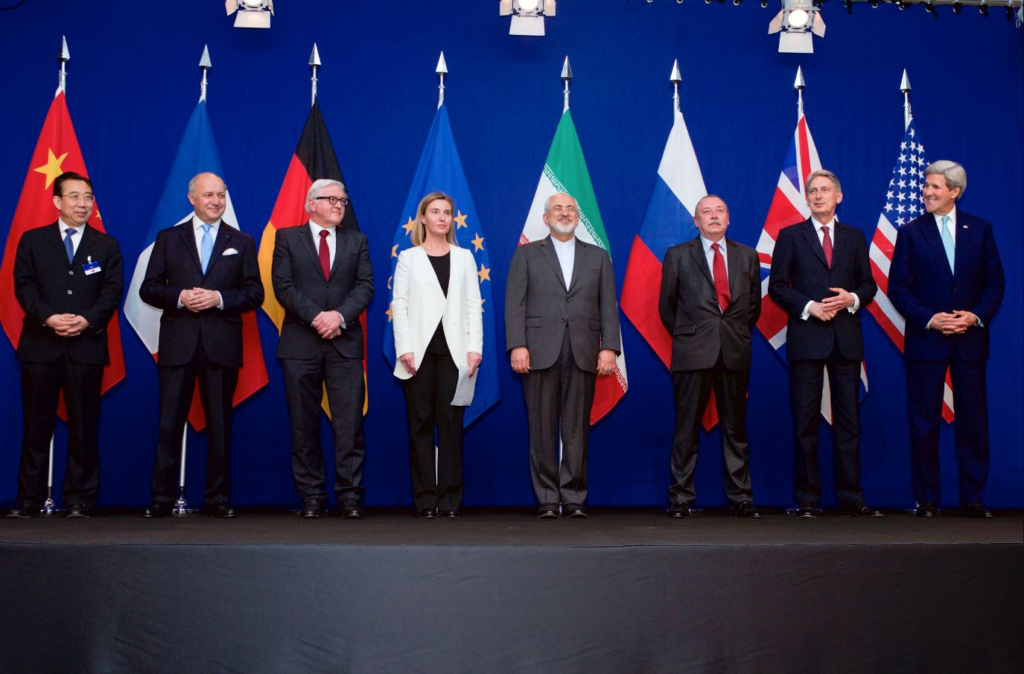
It took the US two years to negotiate the 109-page Joint Comprehensive Plan of Action in 2015, but Trump seems to believe he can negotiate a new nuclear deal with Iran in… sixty days.
However, there is no indication that Iran would be willing to hand over 97% of its enriched uranium, as it did in 2015.
The Memorandum of Understanding Hides 7 Strategic Torpedoes for Iran and Israel
If the US-Iran Memorandum of Understanding is finally signed, then the agreement constitutes much more than a simple de-escalation.
It constitutes a series of strategic concessions from Washington to Tehran, which completely and drastically (if not dramatically) change the balance of power in the Middle East.
1. Iran is not making any immediate commitment to dismantle its nuclear program
Donald Trump had presented military pressure as a means of forcing Tehran to completely abandon its nuclear ambitions.
Instead, the only substantive concession that emerges is a reassurance that Iran will not acquire a nuclear weapon. The nuclear issue is postponed to a second phase of negotiations, giving Tehran time, flexibility, and negotiating depth.
2. Iran is committed to keeping the Strait of Hormuz open for a limited period of time only
After the 60 days stipulated in the agreement, Tehran retains full control over the security of the world’s most important energy corridor. The strategic role of Hormuz is not being surrendered, it is simply being temporarily suspended.
3. Iran’s regional power architecture remains essentially intact
There is no commitment to weakening the networks of influence it has built over decades in Lebanon, Yemen, and Iraq, while the possibility of reactivating in Syria remains. Tehran is emerging from the crisis without sacrificing the key tools of its regional strategy.
4. Iran is gradually returning to international economic normality
The release of frozen funds, the prospect of broader economic cooperation, and the possible lifting of a significant part of the oil sanctions constitute a process of political and economic normalization.
In simpler terms, the Islamic Republic is breaking free from years of diplomatic isolation and is returning hydrocarbon exports to the center of its national strategy.
5. The agreement strengthens Iran’s role as a regional power
In fact, it emerges stronger than ever as a central regulator of military-political developments in the Middle East.
If accompanied by a further reduction in the American military presence in the region, Tehran will gain greater leeway to act as the main regulator of developments in the Persian Gulf against the Arab monarchies, from Qatar and the United Arab Emirates to Bahrain and Saudi Arabia.
6. The regime itself emerges politically strengthened
The scenarios of the collapse of the Islamic Republic, which dominated American and Israeli circles after the major mobilizations of early 2026, collapsed with a bang, as the military confrontation strengthened the regime’s ties with society, rather than breaking them.
The signing of a memorandum with Washington constitutes an indirect recognition of the stability and resilience of the Iranian political system.
7. The agreement threatens to open a disastrous and irreparable rift in Washington-Tel Aviv relations
Achieving a ceasefire in Lebanon and reintegrating Iran into the regional diplomatic equation are in direct conflict with the strategy being promoted by the Netanyahu government.
And, as Israel heads toward elections in September, the agreement is becoming a front-line domestic political issue.
The opposition denounces the abandonment of Israeli positions, while Netanyahu himself is facing the most serious challenge to his strategy since the beginning of the crisis.
The Iranians defeated the US-Israel, guided by Machiavelli and von Clausewitz
Tehran’s great success therefore does not lie in its missiles, but in the political use of time as a crucial dimension in a geostrategic confrontation.
Iran understood that military conflicts have no value unless they are translated into political gains.
It turned a period of extreme pressure into an opportunity to renegotiate its position in the international balance of power.
In this sense, Tehran acted more in the logic of Clausewitz and Machiavelli than in the logic of uncritical military confrontation, without strategic depth, as its opponents did:
- it exploited the contradictions of its opponents,
- utilized the window of opportunity opened by the international situation, and
- sealed on the negotiating table what it achieved in the first year on the battlefield.

