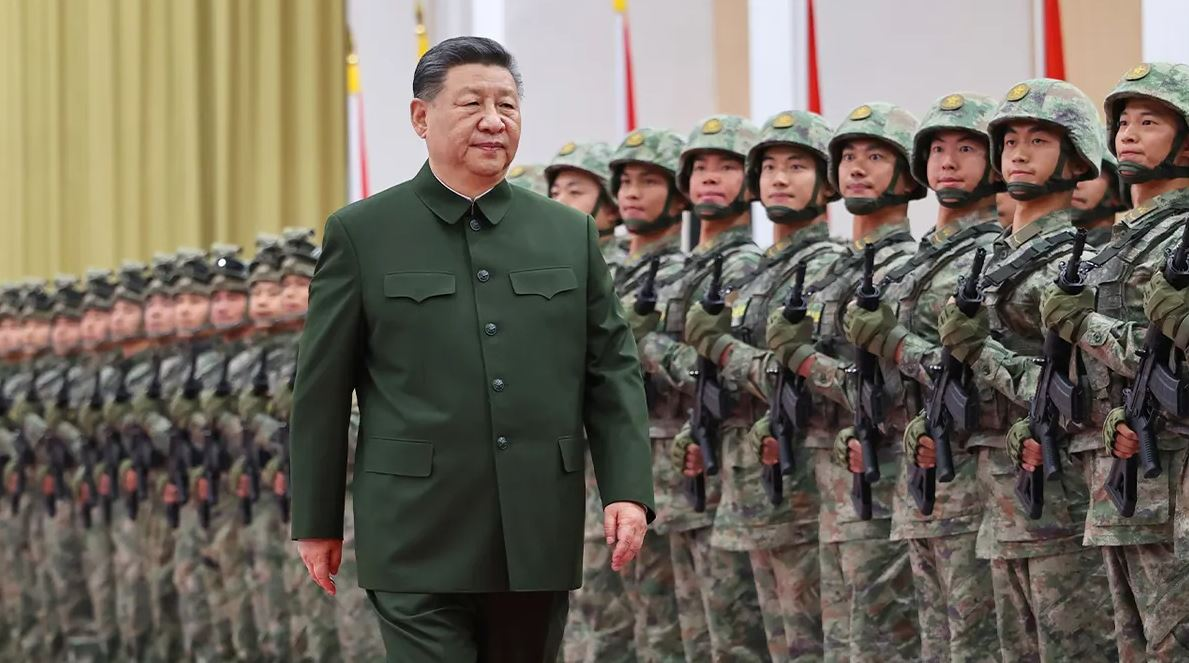
The purge that Chinese President Xi Jinping has imposed on China’s military elite is unprecedented in China’s modern political history and can only be compared to those of the era of Mao Zedong.
In a recent appearance before the military, the Chinese President, with a deadpan face, warned officers to beware of disloyalty and corruption: “The military,” he said, “must never have anyone who hides a divided heart towards the party.” It was a rare public reference by Xi to one of the worst political crises of his 13 years in power: he had lost confidence in the military leadership that he himself had spent a decade reforming!
The phrase “divided heart” is found in ancient Chinese treatises that advise rulers to beware of traitorous generals!
He’s Reshaping the Military He Builted
The crisis threatens one of Xi’s greatest achievements: transforming the Chinese military into a formidable force with new aircraft carriers, hypersonic missiles and an expanding nuclear arsenal. And it comes at a time when China’s rivalry with the United States has intensified.
China’s war readiness could be disrupted for years by the very purge that Xi has called necessary to “cleanse” and strengthen order and discipline. What initially looked like a limited anti-corruption campaign has turned into a mass dismissal of dozens of top officers, culminating earlier this year in the downfall of Zhang Youxia, China’s top uniformed commander and a trusted confidant of Xi.
The final rift between them came, according to some sources, when Xi tried to promote the general who led the purge to a position comparable to Zhang’s. Zhang fought back. Months later, he was removed.
The seriousness of the campaign was again evident last week, when a military court sentenced two former defense ministers to death with a two-year suspended sentence for bribery.
The corruption Xi is hunting is real. But past internal speeches reveal another factor: a leader who saw any sign of disobedience as the seed of a political threat to his power.
Xi believes that the loyalty and effectiveness of the top commanders he had chosen had been eroded by corruption and clientelism. The turmoil also exposed the tension between Xi’s two main pursuits: preparing for war and imposing political loyalty.
Ultimately, Xi removed a combat-experienced general who had helped transform the military and replaced him with an “interrogator,” who is now, along with Xi, the only other member remaining on China’s top military council.
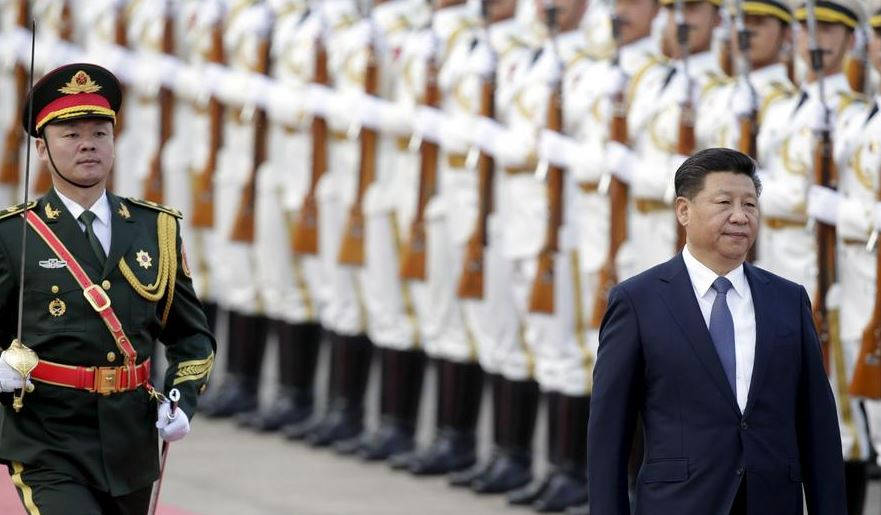
“The Party Commands the Gun”
From early on, Xi seemed determined to avoid the fate of his predecessor Hu Jintao, who was seen as failing to impose his control on military commanders. After taking power in 2012, Xi launched investigations into commanders who had enriched themselves and gained undue influence over Hu.
In 2014, he gathered hundreds of senior officers in the city of Gutian, where Mao had proclaimed the basic tenet of the Chinese state: “The Party Commands the Gun”! There he warned that the Communist Party’s control over the military had become dangerously eroded.
He spoke of a decline in faith in party values, of corruption, cronyism and insubordination. He even cited exercises so fake that soldiers used shovels and sticks instead of weapons…
Xi Strengthens Personal Control
In his early years in power, Xi also began to establish a “presidential responsibility system,” strengthening his control over the military.
He reorganized military regions, created new theaters of operations, and dismantled old structures he saw as obstacles to effective control. His goal was to enable China to combine land, air, and naval forces to project power abroad, while ensuring that the modernized military remained fully loyal.
Zhang Youxia was among the commanders tasked with implementing this vision. He was a tough, charismatic officer who had fought in the 1979 border war with Vietnam.
In 2022, Xi not only retained him on the Central Military Commission but also made him the country’s top general, tasked with achieving a leap in China’s military capabilities by 2027.
The Great Purge
Just half a year later, in 2023, the image of stability collapsed. Xi abruptly replaced the head of the Rocket Force and his deputy—a highly unusual move for the branch that controls nuclear and conventional missiles.
China’s defense minister was then dismissed without explanation. The “political correction” campaign expanded, and within two years dozens of top officers were removed or disappeared from public life.
As the purge expanded, so did the power of Zhang Shengmin, the man leading the investigation. Zhang Shengmin had little experience in military operations but had built a career as a political commissar, enforcing party loyalty.
He was later appointed head of the agency investigating corruption and disloyalty in the military. By late 2025, the purges had begun to change not only the composition but also the balance of power among the remaining commanders.