
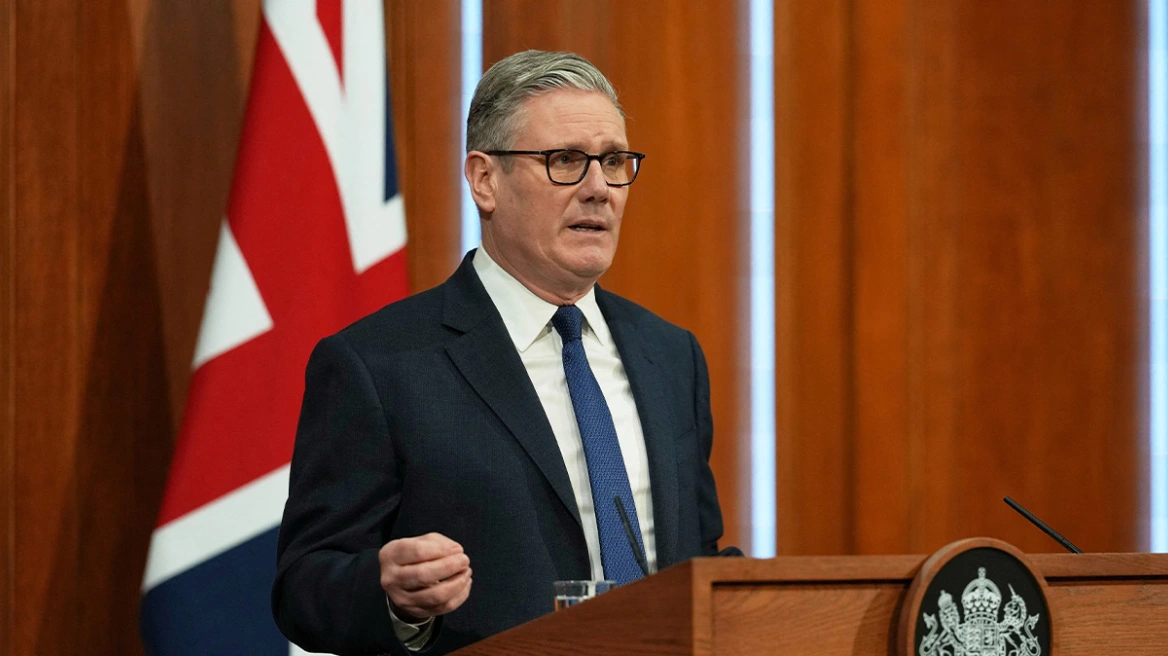
The British Prime Minister, quite sensibly, took full responsibility for the party he had entrusted to him in the local elections. And immediately afterwards declared that he would not resign.
“Starmer must go!” — this phrase has been echoing non-stop on British television screens for the past 24 hours, as the results of the local elections in England have been announced. Moreover, disappointed local councillors have been criticizing him harshly.
“I have never heard anything like it in my life,” said the experienced Gb News presenter Martin Daubney in amazement, as he read out the results from the first ten constituencies live on air.
At that moment, Labour had lost 83% of the seats it contested, without winning a single one. This meant that the long-awaited and predicted failure of Starmer’s Labour Party initially seemed even more catastrophic.
Personalizing failure is perfectly justified
Usually, local elections in Britain are purely local in nature and often unrelated to the national agenda. They rage about road repairs, the construction of a public utility, the expansion of a local hospital and similar local issues.
This election, however, is unlike any before it. For many, local issues have suddenly taken a back seat. The campaign has focused on illegal immigration, the destruction of Gaza and the war in Iran.
This turned out to be the Achilles heel of both Labour and the Conservatives!
Nigel Farage’s Reform UK party had long been built on the issue of combating immigration. And the Greens, who literally before our eyes transformed from an environmental movement into a party of Muslim defenders, rose to prominence on the issue of Gaza and Iran.
Thus, two ideologically opposed parties destroyed two categories of the core Labour electorate: Reform UK removed the working class of the so-called “Red Belt” (Central England), while the Greens almost completely captured the sizable Muslim electorate and the youth.
And so, in essence, the Labour Party suffered this defeat! It is safe to say that the responsibility for this defeat does not lie with any individual mayor or council member, but with the Prime Minister, who is responsible for the policies that led the country and the party to their current deplorable state.
The anger of the sidewalk and the conspiracies of power
Recognizing the dire situation Starmer faced, his closest colleagues had long since begun to plot against him.
Members of his government even discussed among themselves who would inform their boss of the need to resign. Potential candidates for the party leadership, and therefore the prime ministership until the 2029 general election, also emerged.
But here a problem arose, a problem that Starmer himself sees as his lifeline: None of the four or five potential candidates enjoys significant support among party members. The most popular candidate is Manchester Mayor Andy Burnham, who has made no secret of his prime ministerial ambitions.
But to be eligible to lead the party and, by extension, the government, he must be a member of parliament. Recognizing this, Starmer deliberately blocked his candidacy in one of Labour’s safe constituencies when the opportunity arose.
The Unions Verdict and the Burial of the System
But it is important to understand: not all of Labour’s decisions are made by the leader. The party structure has been built for decades in such a way that the largest unions act as its main sponsors and organizers.
Their bosses expressed their disapproval of the Prime Minister’s performance on the eve of the election. They planned to discuss the election results with him on Friday night via video conference.
Their decision will ultimately determine whether Starmer will be able to avoid responsibility for his party’s historic failure. But when we discuss Labour’s crisis, we cannot help but mention the crisis of another mainstream party.
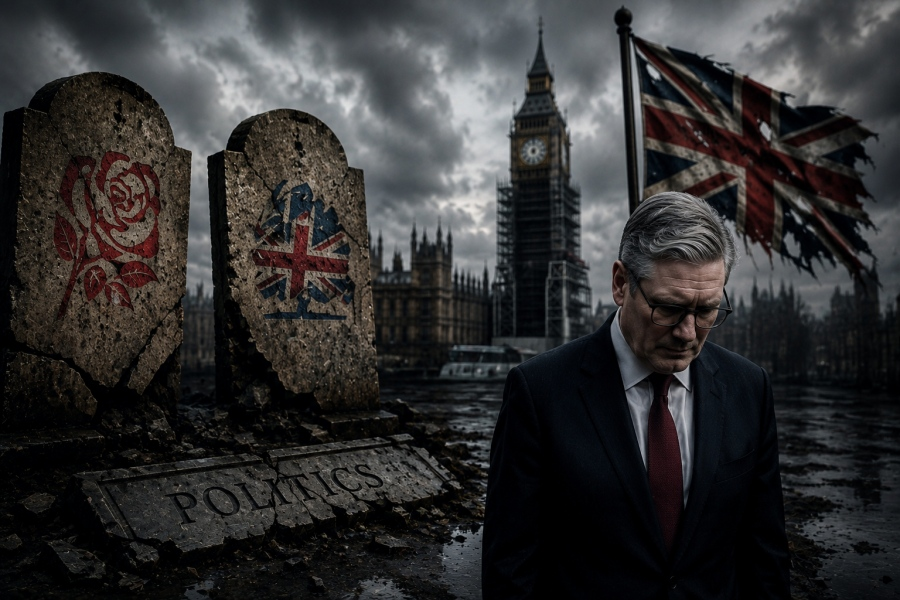
The Tories-Conservatives have not fared any better, but their failures have become commonplace. While these two political forces once dominated Britain’s political landscape, always taking more than 50% of the vote together (sometimes as much as 70%), in last Thursday’s election both parties received only a third of the vote. And this is truly a turning point in British electoral history.
The leader of the Green Party, Zack Polanski, commented on the results of the vote: “Two-party politics is not dying, it is dead and buried.” So last Thursday, we witnessed the funeral of Britain’s centuries-old political system.