The relationship between the United States and Iran has been one of the most complex and dangerous axes of international politics for decades. In 2026, tensions have reached a new peak, with failed diplomatic efforts, military preparations, and intense internal disagreements in Washington.
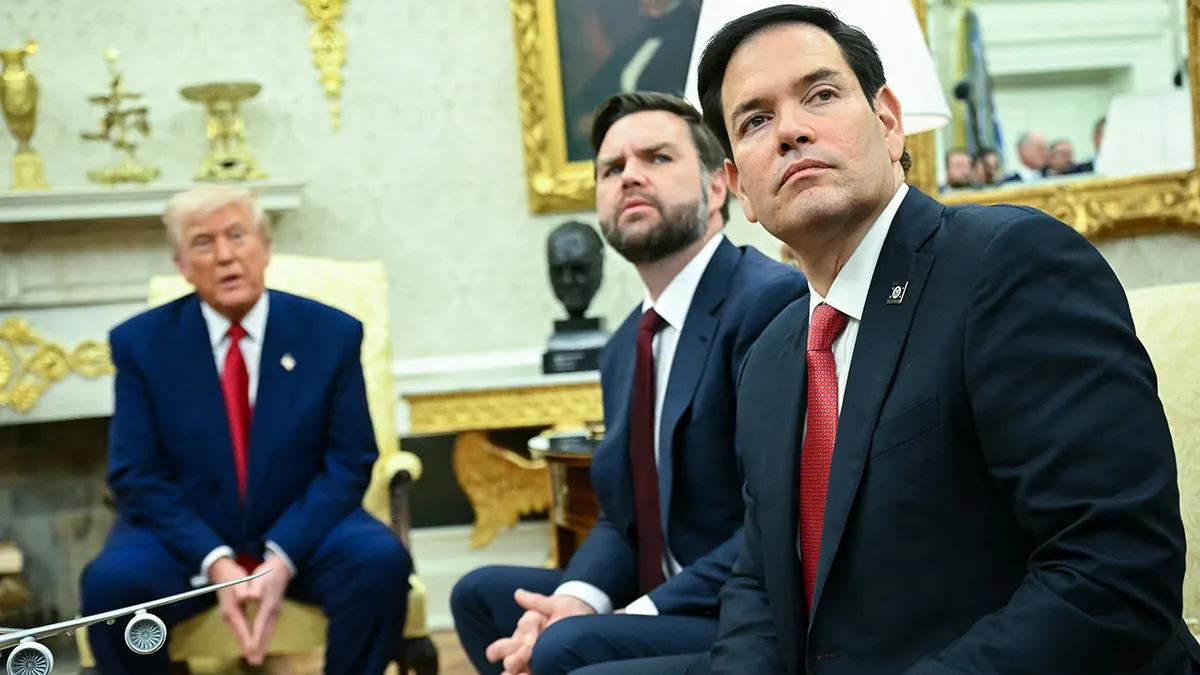
At the same time, a new field of power is taking shape within the Republican Party, where figures such as US Vice President J. D. Vance and Secretary of State Marco Rubio represent different schools of thought on the role of the United States in the world.
The convergence of these two developments—foreign policy and domestic political confrontation—has led to a multitude of interpretations. Some of them argue that the failures in diplomacy are not accidental, but the result of conscious strategic choices.
A Well-Planned Trap
Many argue that Vance’s representation of the American side in the Islamabad negotiations was a well-planned trap by the Deep State for the American vice president to lose ground on the path to the Republican Party’s presidential nomination for the 2028 presidential elections.
The Americans’ maximalist demands, such as the complete surrender of Iran’s nuclear stockpiles, left no room for Tehran to accept any diplomatic compromise. The failure of the negotiations was assured, and the shipwreck would be blamed on Vance as the head of the American delegation.
Why does the Deep State prefer Rubio?
Since February 2026, there have been sharp disagreements within the US government. Marco Rubio and Pete Hegseth were in favor of military action, and Vance and Tulsi Gabbard were against.
This divergence of views reflects a deeper ideological conflict. On the one hand, the approach that emphasizes force and deterrence. On the other, a more restrictive strategy that avoids new military engagements.
The stage is set in Islamabad
Talks between the United States and Iran have collapsed in an environment of deep distrust. The main reasons include disagreements over Iran’s nuclear program, sanctions and economic pressure, regional conflicts in the Middle East, and a lack of political will for compromise.
In this context, the failure of the talks can be interpreted in more “classic” international relations terms: a clash of interests and strategies. However, political circles in the United States have also given a different dimension, arguing that the developments serve internal political balances.
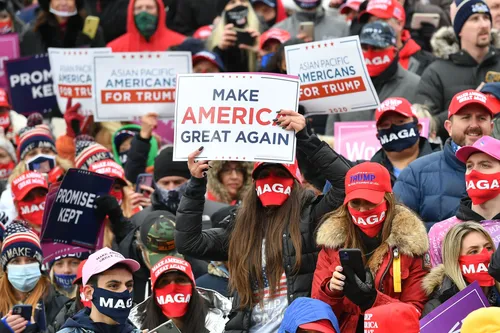
The well-known journalist Tucker Carlson, a prominent representative of the MAGA movement, openly accused Trump of subjugating himself to the Deep State and the military-industrial complex with the war on Iran. He publicly denounced that the US government does not serve the interests of Americans.
The two trends in the Republican Party
In this context, it should be noted that the Republican Party is no longer monolithic, there are clearly two main trends:
1. The “America First” wing
It is mainly expressed by J. D. Vance and opposes new wars, emphasizes the domestic economy and is in favor of limiting military interventions
2. The traditional – interventionist wing
It is represented more by Marco Rubio and is in favor of the “active” foreign policy of promoting American power internationally, a closer relationship with strategic alliances and the strengthening of the military-industrial complex with new orders.
This distinction is crucial to understanding why the developments around Iran are also acquiring domestic political significance in the USA.
The sudden rise of Marco Rubio
The data shows that Marco Rubio has significantly strengthened his position. He is showing a rise in polls (e.g. CPAC), maintains a strong presence in the White House while having a dual role in the State Department and the National Security Council.
According to officials in the Donald Trump administration, Rubio is considered: loyal, experienced and effective. His political evolution is remarkable: from a 2016 candidate who was considered an establishment, he has transformed into an acceptable face for the MAGA movement.
Vance is a MAGA representative but…
J. D. Vance maintains high rates in the polls, expresses the core of MAGA and has a strong base of supporters. However, his stance against military conflict with Iran puts him at odds with more aggressive strategies.
Rubio the… darling of the military-industrial complex
As US Secretary of State, he is directly linked to promoting a strategy that serves the interests of the US military-industrial complex.
The criticism focuses on the fact that these military interventions and the maintenance of war fronts directly feed the US defense industries, which benefit from the increase in armaments spending.
It should not go unnoticed that Rubio is one of the top recipients of funding from the US defense-industrial complex.
According to OpenSecrets, during his term in Congress he has received hundreds of thousands of dollars from weapons companies and defense PACs.
“Trump has surrendered to the system”
Meanwhile, Tucker Carlson’s harsh attack on Washington caused a sensation, directly questioning whether the government is working for the benefit of its own citizens.
In his statements to the Wall Street Journal, Carlson, who supports Vance, did not limit himself to a simple disagreement. He raised a deeper issue: that the American political system works in a way that even surpasses the president himself.
Referring to Donald Trump, he argued that his presidency has proven that “the system is stronger than the individual.” His most resonant position, however, concerns the war with Iran itself.
Carlson clarified that he is not personally against Trump, but against the political choice for conflict. “I don’t hate Trump. I hate this war,” he said characteristically, emphasizing that he feels morally obligated to react. The most striking element is the rupture that this disagreement caused.
From the cracks of MAGA to the schism?
According to the revelations, Carlson’s relationship with Trump—a relationship that lasted almost a decade—collapsed the day the United States and Israel launched a military operation against Iran, on February 28. This development has particular political weight.
Carlson was not just a commentator, but an active supporter of Trump, with significant influence over his electoral base. His transformation—from ardent ally to fierce critic—reveals deeper cracks within the American political and communications ecosystem.
The message that emerges is clear: United States policy in the Middle East is no longer only being challenged internationally, but also by powerful voices within the country itself. And this internal challenge may prove more decisive than any external pressure.
Political implications
One of the most revealing elements of the case is that Carlson tried, for months, to prevent the US from getting involved in a new war in the Middle East. Despite his access and influence, he was unable to change the course of events.
This reinforces his main argument: that decisions are not made solely by the president or his inner circle, but by a broader system that determines strategic choices.
The public rift between Carlson and Trump is not an isolated incident. It reflects deeper cracks within the American political space, especially in the camp that until recently appeared united.