

Evidence has fallen into the hands of the Iranians that exposes and exposes the true nature of the American operation on Sunday, April 6, in the Isfahan region of Iran, which the Pentagon attributed in communications to the rescue of the pilot of the downed F-15E, as initially estimated by the media.
Documents indicate that the two C-130 aircraft and the three helicopters that were destroyed in the mission to Iran were not there for rescue, but with the aim of “robbery” and indeed.. nuclear-type theft and failed.
The truth was unlocked by the discovery of an ID and an Israeli visa for Amanda Ryder, a US Air Force officer….
Why does Ryder’s identity card testify to a US ground intervention in Isfahan?
More specifically, Amanda Ryder is a maintenance technician, which makes her unlikely to be on a high-risk mission, such as rescuing a pilot deep in enemy territory.
Her presence would be more indicative of issues that can arise in aircraft over the course of days rather than hours.
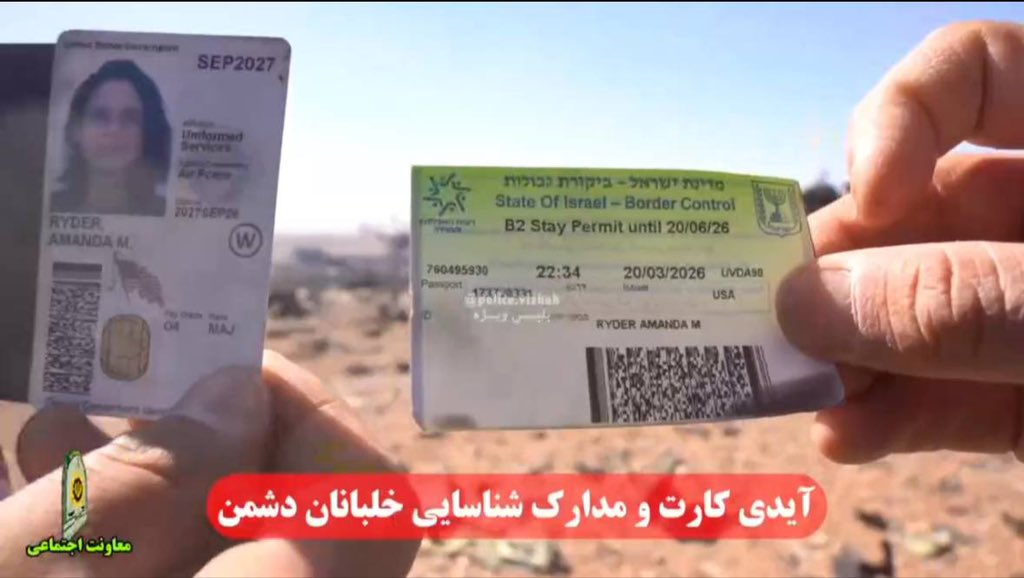
The Iranians have identified the US Air Force’s “Major Amanda M. Ryder”. She appears to have received a B2 visa from Israel, which is interesting as this visa only allows for tourism or business activities.
Scene shows US ground landing and nuclear robbery in Isfahan
Apparently, the subsequent scene that emerged in Iran the day after the US operation is not debris from a US pilot evacuation operation, but rather documentation of the failure of an operation to seize Iran’s highly enriched uranium.
Thus, the whole world witnessed disinformation tactics in the media and the US military, as well as propaganda to cover up an operation that took place 400 kilometers away from the alleged location of the pilot.
Iran managed to prevent it, causing heavy losses to the US Air Force.
The pilot’s landing location raises questions
The rescue of the second pilot becomes much more interesting when one realizes that he walked 110 miles in a single day to reach his location from the crash site and the other pilot.
The scenario becomes even more extreme if one considers that the American press spoke of a serious injury to the pilot’s ankle…
And this, because covering the relevant distance is typical of a very well-trained marathon runner…
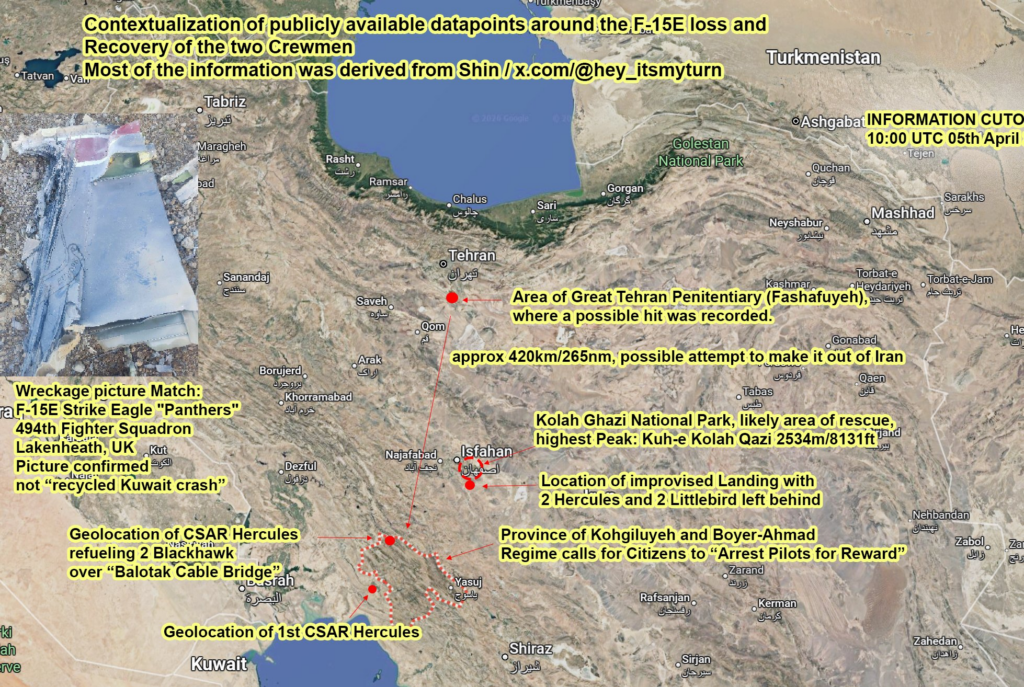
The other question arises regarding the different location where the two pilots landed after ejecting from the same aircraft…
It should be noted that another pilot had been recovered in a similar rescue operation on 3/4 which also had huge losses for the US Air Force.
So the question arises as to how it is possible for two pilots to be ejected almost simultaneously from the same aircraft, but the search for their rescue is being carried out over such a huge distance.
Logic says that they could not have been more than a few hundred meters apart or at most 2-3 kilometers, instead of 250-300 kilometers.
Attempted rescue with two giant C-130s?
Furthermore, two main questions arise: why attempt to rescue a man using two huge C-130 aircraft that can jointly transport around 256 men?
And, of course, why conduct this operation in the Isfahan region, where the US believes that 400 kilograms of 60% enriched uranium are stored at the nuclear facility of the same name.
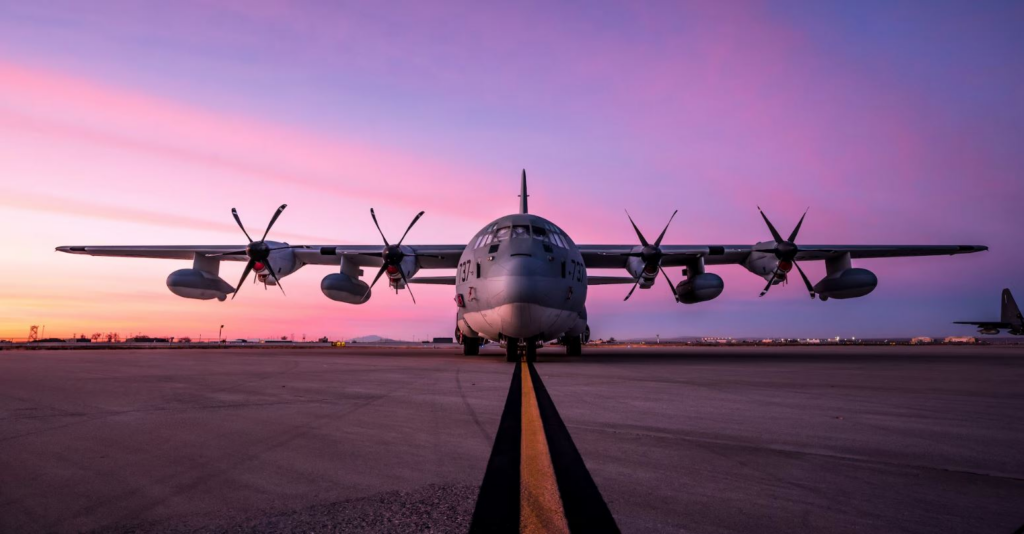
The US military attempted a ground operation there under the guise of a rescue mission — nothing more. It simply failed, ending in a bloody fiasco, due to the immediate response of Iranian forces.
The US lost 10 airmen in the fiasco
After a US Air Force F-15E Strike Eagle fighter jet was shot down over Iranian territory late Thursday night, the US military’s efforts to recover the two airmen who had ejected and parachuted into Iran resulted in aircraft losses on a scale unprecedented in the post-Cold War era.
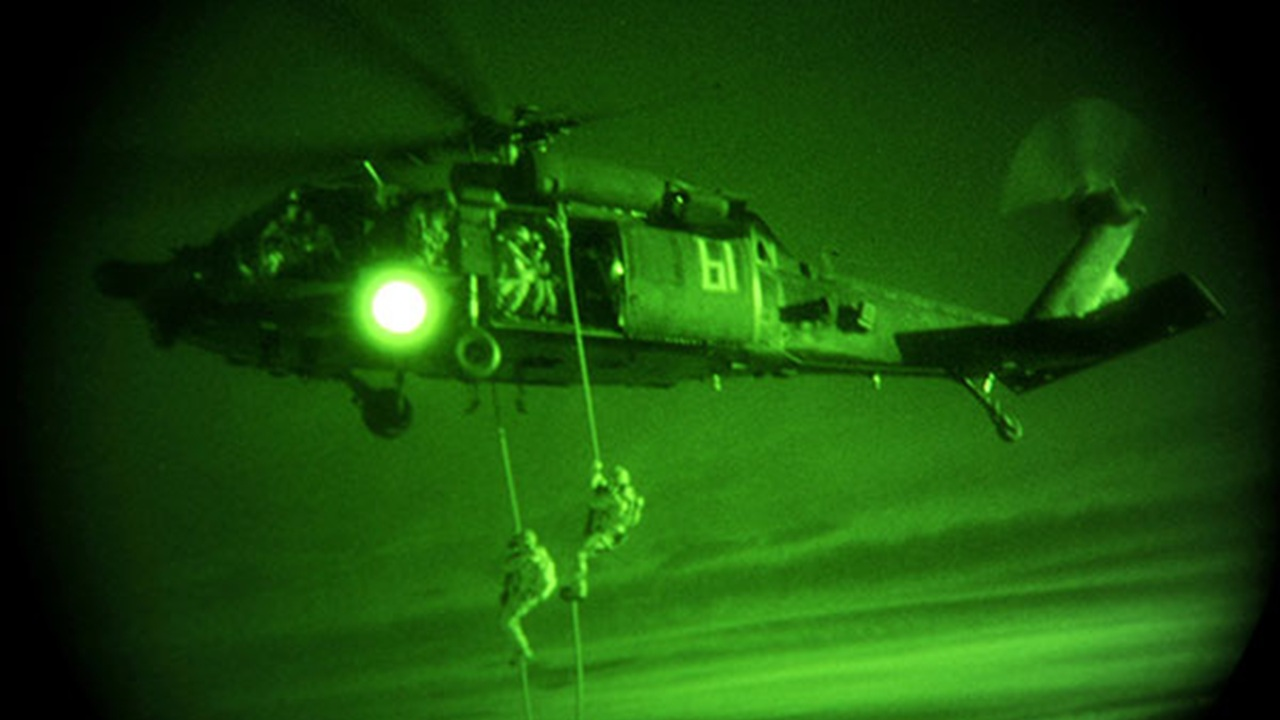
After the US launched a rapid rescue mission—standard doctrine for downed aircrews—HC-130J Combat King II personnel recovery support aircraft, HH-60W combat rescue helicopters, the infamous Little Bird, and UH-60 Black Hawk transport helicopters were confirmed to be flying over Iran, while A-10 attack aircraft and MQ-9 drones provided further support.
Engagements with Iranian forces resulted in the loss of a total of 11 aircraft.
Unimaginable Losses of Fighter Jets, Attack Helicopters, and Support Vehicles
While operating at low altitudes over Iran, two UH-60 helicopters, two MQ-9 unmanned aerial vehicles, an A-10 aircraft allegedly providing air cover, and a supporting Israeli Hermes 900 reconnaissance drone were all shot down by Iranian air defenses.
Two separate videos showing the crash of two Black Hawks received particular publicity following the engagements.
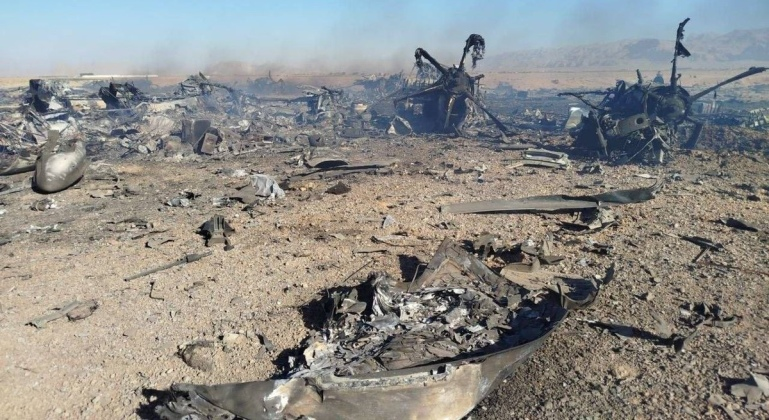
Additional losses occurred after two HC-130J Combat King II search and rescue aircraft and two MH-6 helicopters landed in Iran; American sources reported that… they got stuck in mud and were unable to take off, leading American forces to destroy them on the ground to prevent them from falling into the hands of Iranian forces.
There is strong speculation that the aircraft were destroyed by Iranian strikes and that the claim of their destruction by American forces was fabricated for purely communication reasons.
The myth of American air superiority is beginning to suffer credibility blows
The extent of the American losses, which total ten aircraft as well as an isolated Israeli one, underscores the significant risks involved in operating aircraft over Iranian territory.
However, the rapid depletion of US and Israeli beyond-visual-range missile arsenals has increasingly forced both countries’ services to operate closer to or within Iranian airspace to use cheaper and more abundant gravity bombs, posing significantly greater risks.
Although the US Air Force and the Israeli Air Force were reported in the last week of March to have significantly reduced deep-penetration strikes into Iranian territory—following the confirmed successful surface-to-air strike on an F-35 fifth-generation fighter on March 19—the severity of the missile shortages means that such flights are likely to continue, even if they involve heavy casualties.
According to Iranian sources, the large group of American soldiers who carried out a suicide mission in Isfahan aimed to steal nuclear material. In other words, it was an informal ground intervention by the Americans that drowned in blood.
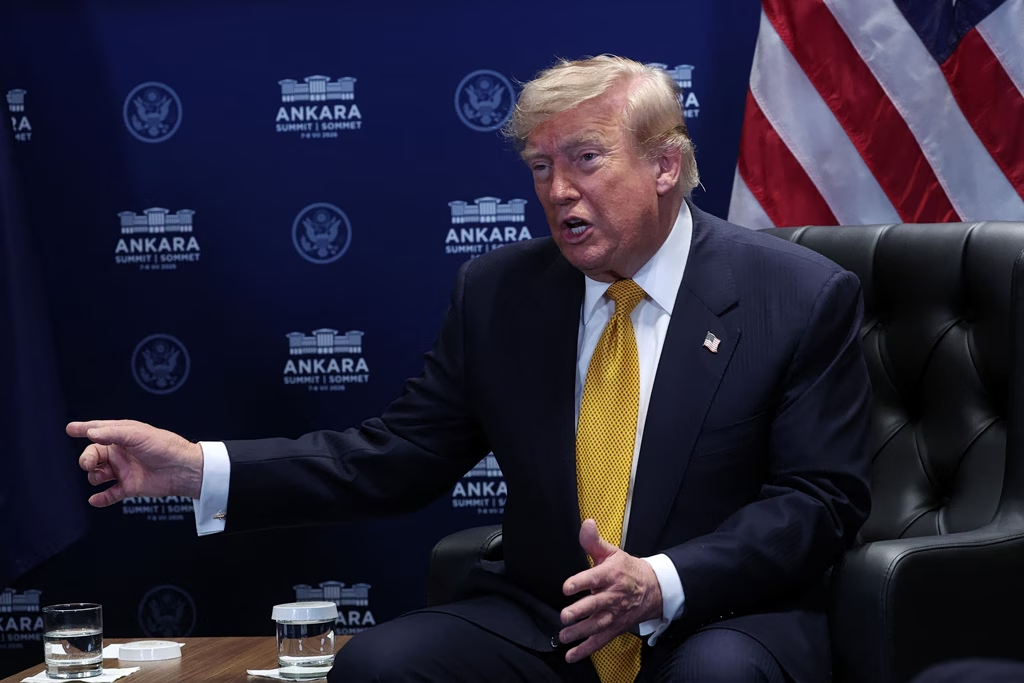
The aim was to search for and steal Iran’s nuclear stockpile, something that Russian sources had predicted in the previous days. It is recalled that US President Donald Trump announced a “successful rescue operation”, the second crew member of the F-15 E fighter jet that was shot down by Iran has been saved.
However, there are important points, possibilities and ambiguities that are worth examining.
Iran has shot down 12 US aircraft, helicopters and drones in just 24 hours, including several types:
- First fighter jet shot down
- 2 C-130s
- 1 A-10
- 4 Black Hawk helicopters
- 2 MQ-9 US helicopters
- Trump called the operation a success, which raises questions.
Many Americans were killed
The failed operation resulted in serious losses of American military personnel and the destruction of military equipment.
The United States once again found itself exposed to the reality of the areas it was attempting to control, at a disproportionate and heavy cost to its own soldiers. Multiple sources confirmed the deaths of many American soldiers during the failed rescue operation of the crew aboard the aircraft that was shot down in Iran.
The CGN confirmed on Sunday afternoon (5/4) that the mission resulted in serious personnel losses. What makes this defeat so painful is that only one aircraft was not damaged.
During the operation, two aircraft and two helicopters were completely destroyed inside Iran. The aircraft were HC-130J and MC-130J, while the helicopters belonged to special operations rescue units.
All the assets, after the heavy fighting and the firing of light and heavy weapons, as well as mortar bombs during the operation, were rendered non-operational and destroyed on the ground.
This picture is not just a tactical defeat. It is the revelation of the asymmetry of the consequences that the United States causes when it operates on foreign soil without prudence or a full assessment of the risks.
This defeat brings to the surface a recurring trap of American strategy: the assumption that technological superiority and numerical superiority are sufficient to impose order.
The asymmetry of the defeat is obvious: losses first hit ordinary soldiers and operational units, while political and strategic planning in the US remains unaffected.

The Russians had predicted the American operation
The Russians had predicted the American operation, as since early April they said that the US had completed military preparations for a possible ground operation in Iran, with information indicating that more than one invasion could take place simultaneously.
According to Russian media in recent days, significant military movements had been recorded:
- Transfer of 41 MC-130J Commando II special aircraft to RAF Mildenhall in the United Kingdom, with at least 11 modified for covert invasion missions.
- Arrival of EA-37B Compass Call electronic warfare and 12 A-10C Thunderbolt II attack aircraft.
- Arrival of the 31st and 11th Marine Expeditionary Units with a total of 4,700 marines and three amphibious ships, including the USS Tripoli and USS Boxer.
- Arrival of approximately 3,000 paratroopers of the 82nd Airborne Division.
According to the same sources, there were two main operations under planning:
- Seizing Kharg Island, from where 90% of Iran’s oil is extracted.
- Removal of the enriched uranium by special forces, requiring the creation of a runway for the transport of the radioactive material.
The Iranian regime has about 450 kilograms of 60% enriched uranium, which could be converted into a nuclear weapon within weeks. For the United States, seizing this stockpile is a matter of survival for its strategic influence in the Middle East.
In a congressional briefing, US Secretary of State Marco Rubio avoided giving clear answers about who would take action: “Someone has to go and get it,” he said, without specifying who.
Most of the stockpile remains in the basements of Isfahan, with the rest spread between Fordow and Natanz. The early days of the war included strikes that were apparently aimed at sealing the entrances to the facilities, presumably to prevent the transfer of material.
60% uranium in a quantity of 450 kilograms can reach weapons grade within weeks, enough for 11 nuclear bombs if it reaches 90% purity. The American strategy seems to calculate that small special operations units can deal with the threat, without sending a large Fallujah-style ground force.