Public trust in the edifice of bourgeois liberal democracy is waning year by year. Citizens are sensing the growing divergence. They observe a ruling-managing plutocratic class that rules through regulation and moral instruction, while daily life becomes increasingly difficult, borders become blurred and blurred, and social cohesion weakens. A civilization that once projected a serene existential certainty now projects a growing anxiety. It supposedly celebrates its transparency, while power is transferred through opaque networks of finance, technology, and bureaucracy. It proclaims its autonomy, while dependence is ever deepening through debt, surveillance, and global supply chains.
In such political “climates,” history moves along familiar lines: Democracies, when they tire, create personalities who promise decisions instead of discussions. The age of the Caesars, predicted by Oswald Spengler in his book “The Decline of the West,” emerges when the democratic process loses its power and state power seeks a single person, when legitimacy formally remains, but in reality the vitality is drained from all its forms.
Classical Rome offers us the model of historical development with austere clarity: The late Republic maintained its offices, its Senate, its rituals of legitimacy. Speeches echoed in the Forum, alliances shifted, reforms were proposed and suspended. However, behind the harmonious facade lay exhausted institutions, fierce oligarchic competition, and a population that desired order more than theory. Wealth was concentrated in a few hands, armies became loyal to their commanders rather than to the state, and political life was transformed into a public spectacle.
The Age of Julius Caesar and Today’s Similarities
Julius Caesar did not in fact create anything new in the political fabric of the Roman state. He embodied the direction that had already been charted in his time. The structure of democratic government had been emptied long before his time. Power migrated from law to personality, from abstract sovereignty to embodied will. The form remained democratic for a time, but the essence of the state shifted towards monarchy. The transformation seemed gradual until it became irreversible, and only later did generations recognize that a limit had been definitively crossed.
The modern West is at a similar historical “threshold.” Its ruling circles advocate a universal doctrine of liberalism, human rights, and global integration, presenting the web of their proposals as the culmination of history. However, beneath this doctrine, the social foundations are disintegrating. Economic inequality is widening, cultural consensus is dissolving, and national sovereignty is succumbing to supranational frameworks and economic imperatives. Leaders talk about “tolerance” and “diversity,” while many citizens experience a disintegration of the state apparatus and a loss of national continuity. Political discourse is transformed into ritualized rage, reinforced by radio and television and digital platforms that reward extremism and seek meaningless spectacle.
Elections simply change the “servants” of the Regime, while any political direction often continues on established paths shaped by markets and administrative elites. In such conditions, the disillusionment of the people begins to seek a decisive will. An audience that feels unheard is drawn to personalities who promise to break the stagnation and restore collective cohesion in a world that is clearly being carried away by the will of the International Overlords.
The multipolar world and its current status
The multipolar world intensifies this dynamic. Power is no longer concentrated in a single Atlantic sphere. China is asserting technological and industrial dominance through central planning and disciplined state direction. Russia is reasserting its dominance through military resolve and strategic patience. India is advancing as a cultural state with ambitions that extend beyond its regional boundaries. In each case, power is crystallized around powerful figures who embody the national purpose. These policies operate within formal constitutional frameworks, yet decisions emanate from centralized centers. The contrast with liberal Western fragmentation sharpens the perception. Citizens in Western Europe and America observe states that act with unity and speed, and wonder whether diffuse parliamentary systems can maintain any remotely comparable resolve in an era of cultural antagonism.
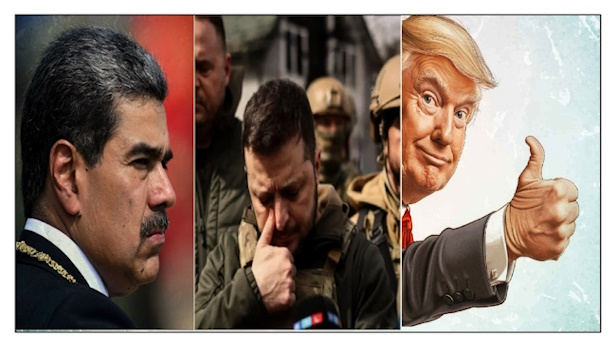
The new unpredictable “cosmocrat” Donald Trump emerged into this atmosphere as both a symptom and a signal. His rise signaled a revolt against administrative consensus and the permanent well-meaning bureaucracy. During the campaign, he spoke in sharp tones, rejected established etiquette, and claimed to represent the forgotten citizen. Many of his supporters imagined him as a decisive leader who would cast aside inertia. His critics perceived his ideological and political disarray and the consequent high risk of his victory. Both answers exaggerated his prestige.
Trump as a harbinger of the Caesars
Trump has functioned as a harbinger, not a Caesar. He has exposed the depth of alienation within American society and has also demonstrated the rift between government elites and broad sections of the population. Yet he has governed within the same unchanging constitutional framework, constrained by the courts, Congress, media pressure, and internal division. His presidency has provided a temporary flashpoint in a deep crisis. It has not completed the transformation toward centralized rule.
A true Caesar emerges when institutions fail to command the due obedience of the masses, even in appearance, and when legitimacy survives primarily as a ceremony devoid of substance. In Roman history, the crossing of the Rubicon symbolized the moment when personal rule replaced the power of the Senate. In modern systems, the equivalents of this passage emerge through prolonged emergencies, executive extensions, and security crises that consolidate and normalize emergency powers.
Economic turmoil, pandemics, energy shortages, and geopolitical conflicts create political climates in which populations accept increased control in exchange for stability. Decline signals an exhaustion of form, not simply a moral decline. When a political class loses its creative energy, it consolidates power to maintain state cohesion. Centralized leadership becomes the means by which a civilization attempts to halt its dissolution.
Western Europe exhibits parallel trends. The supranational governance of Brussels distributes responsibility to committees, councils, and courts, whose decisions shape national life in decisive ways. Voters vote, but strategic directions on immigration, fiscal discipline, and external alignment often remain constant across election cycles. Public discourse oscillates between technocratic reassurance and supposed moral exhortation. Economic stagnation and demographic decline are creating growing anxiety. As geopolitical competition intensifies among continental powers, the demand for leaders capable of unified action is growing. Executives are expanding privileges in the name of security and stability. The language of rights persists, although the practice of governance often becomes centralised by necessity. The political terrain is being prepared for figures who embody power beyond party negotiations and agreements.
The Modern Age of the Caesars
The Age of Caesars does not require the formal abolition of democratic structures. It retains elections, parliaments, and courts as visible structures, while shifting decisive power to individuals whose personal power transcends factions. Digital media accelerate this process by creating direct links between the leader and the masses, bypassing intermediary institutions. Persistent conditions of crisis justify extensive executive discretion and more immediate and severe intervention. Citizens accustomed to instability may welcome rapid administration over protracted deliberation. Gradually, emergency becomes habitual, and further concentration of power seems natural. History teaches that societies more readily accept such transitions when they associate them with protection, dignity, and renewed purpose.
In the broader multipolar order, the struggle between economics and politics is intensifying. Financial networks, global corporations, and technology conglomerates exert influence across borders, shaping narratives and policies through capital and information. However, dominant states reassert primacy through industrial policy, strategic alliances, and military might. Politics seeks to reclaim dominance from markets. Competition unfolds over trade corridors, energy routes, digital infrastructure, and cultural sectors. Within this competition, leaders who can integrate economic power into national strategy gain prestige. Caesarism thus emerges from the democratic “soil,” while drawing nourishment from deeper layers of tradition and collective will.
Today’s decadent West finds itself at a crossroads shaped by these forces. Its liberal creed insists on universality, yet its political psychology signals transition. Trump served as a warning flash, an announcement that consensus had become too fragile and that the search for a dominant authority had begun. Future figures may go further down this path, embodying a stronger synthesis of will and structure. Whether such leadership will yield real renewal or rigid dominance depends on character and circumstance.
The era of the Caesars is coming because the conditions for Caesarism have matured: Institutional fatigue, cultural antagonism, economic centralization, and a longing for decisions.