



As Europe faces stricter environmental targets and an ever-increasing need to limit primary resources, a silent technological revolution is unfolding within its factories, recycling centers and industrial ecosystems. Artificial intelligence, combined with advanced robotics and multimodal sensory perception, is reshaping not only the way we separate and process materials and raw materials, but also the way we perceive them as economic and environmental value. For decades, waste sorting was based on simple mechanical principles. Today, deep learning systems can analyze multispectral and X-ray data, recognizing even materials with minimal differences. Deep learning models are the brains of sorting systems, guiding robotic systems to select and separate each object, offering material recovery with up to 99% accuracy.
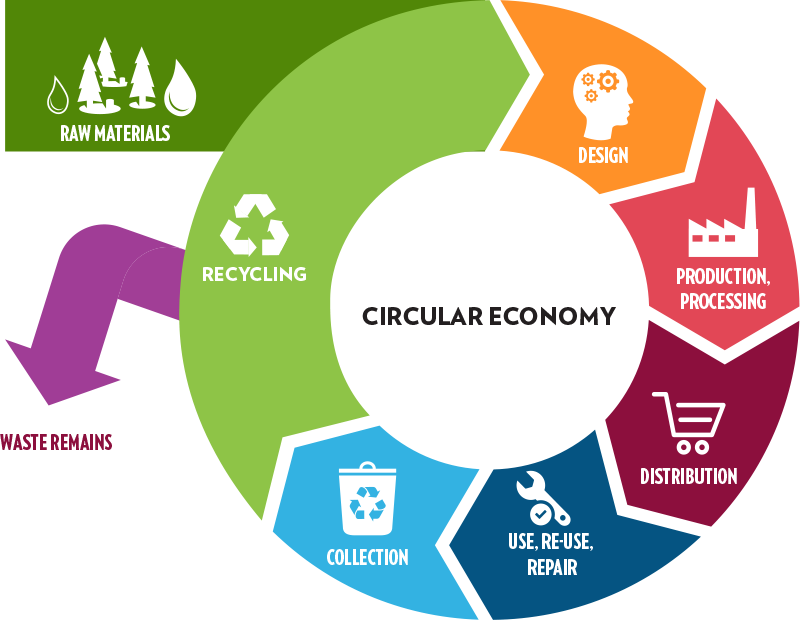
At the same time, the new generation of robotic infrastructure, from ultra-fast delta robots to collaborative arms and autonomous vehicles, has the ability to operate in absolute synchronization within complex waste streams and radically transform waste management processes. The result is separation with unprecedented clarity, speed and reliability: from identifying wood, metals, iron filings and highly complex plastics to classifying complex industrial waste and demolition materials. This technology not only improves recycling but also allows the value of materials to be preserved throughout their life cycle, transforming waste into new resources and essentially strengthening the circular economy.
Thus, for the first time, the possibility of a large-scale, sustainable and truly circular industrial chain is created. Artificial intelligence technologies and a series of its pillar technologies, acquire even greater importance when they meet Digital Product Passports (DPP), the “digital passports” of products that will record information about their composition, origin, environmental footprint and recycling capabilities.
The transparency introduced by DPPs transforms materials that were previously considered waste into valuable, traceable secondary raw materials. At the same time, it will allow regulators to track the circular path of materials, strengthening trust, compliance and strategic planning. In this new environment, which is just beginning to take shape in Europe, policy and research are now moving in a common direction: the transition to low-footprint, fully circular and digitally supported production.
The European Commission is investing in major research programmes aimed at decarbonising industry, strengthening the resilience of supply chains and creating technologies that provide transparency and traceability at every stage of a product’s life cycle. At the same time, the new European policy for the circular economy sets clear goals: less waste, more resources in circulation, production adapted to the needs of the climate and society. However, technology alone is not enough. Industry 5.0 requires a different model of cooperation, a network of regional alliances where public authorities, research centers, industries, local businesses and international policymakers share knowledge, practical implementations, needs and challenges. The climate crisis is multidimensional and its solutions emerge only when technology does not stay in the “research tower”, but is tested, failed, improved and finally rebuilds production processes in real conditions.
Within this framework, Greece actively participates with innovative research and initiatives that bring all the critical actors of the industrial ecosystem closer together. The University Research Centres for Communication Systems and Computers of the EU Member States have created one of the most active industrial innovation hubs, where artificial intelligence, robotic autonomy and digital traceability of materials are combined. There, integrated sorting systems and Digital Product Passports applications are developed and tested, with the aim of proving that these technologies can work not only in laboratories, but in the demanding conditions of real industry – where performance, reliability and the real potential for wider adoption are judged.
Research must “click” into production chains, understand the operational obstacles, meet the people in factories, in recycling plants, in sorting areas. And co-create with them the next day.” Because innovation in Industry 5.0 is not born only from algorithms or robots, but from alliances, real needs, local collaborations and the ability to transform technology into a practical, workable solution. That is precisely where the stakes – and the opportunity – of the European transition to the climate crisis lie.
