

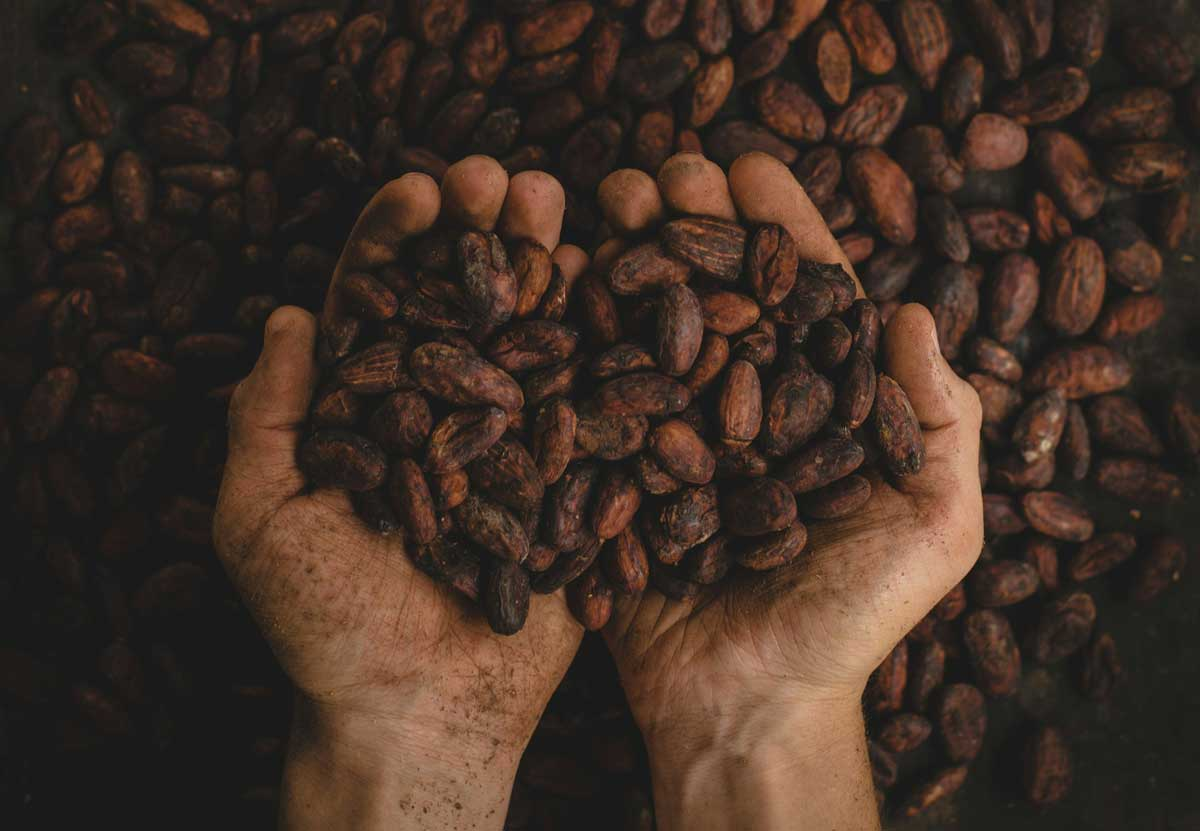
The cocoa market is in free fall. Prices have collapsed, recording a record 45% drop since January 2025. The price of a ton of cocoa is now at 5,000 US dollars, with the share of Ivory Coast and Ghana in global production at 60%.
A recent analysis of the global credit insurance industry reveals what the price drop in the cocoa market is hiding, and what it means for producers and consumers.
EU regulations and speculation are the catalyst for the increases
After two years of tension, the current correction is returning cocoa prices to more rational levels. But it would be misleading to talk about normalization: the sector remains fragile due to structural constraints and a very high geographical concentration of bean production.
Cocoa market in correction, will speculation be curbed?
After reaching almost $12,000/ton at the end of 2024, cocoa is now trading at around $5,000/ton, a drop of more than 50% in one year. This sharp drop has two interpretations:
- it is based on optimistic forecasts for the harvest in Côte d’Ivoire and
- the end of speculation that led to the sharp increase in prices in 2024.
Despite this drop, prices remain double their average for the period 2012-2022 ($2,525/ton).
High geographical concentration and supply problems
Although the effects of El Niño and the stem virus have subsided, the problems that began in 2024 with (in)supply remain. Cocoa plantations are aging, investments remain very limited and production is geographically concentrated.
Côte d’Ivoire and Ghana together account for almost 60% of global production, which rises to 70% if the rest of West Africa is included. The cocoa sector is therefore extremely vulnerable to any disruption in supply from this region.
Demand for chocolate is constantly growing
Chocolate consumption continues to grow, driven by Asia and the premium categories. Organic and low-sugar chocolates are gaining ground, as are certified cocoa (Fairtrade, Rainforest Alliance). At the same time, producing countries such as Côte d’Ivoire and Ghana are seeking to increase the share of domestic milling to capture more value.
Pressures are mounting
West Africa remains dominant, but Latin America, particularly Ecuador, aims to overtake Ghana by 2027, targeting 650,000 tonnes of cocoa production per year. Traceability initiatives enforced by the EU and the Reference Price Mechanism (PRRD) established by the governments of Ghana and Côte d’Ivoire – setting a minimum producer price (producer price) of $3,408/tonne in Ghana and $2,650/tonne in Côte d’Ivoire – are simultaneously increasing pressure for a sustainable and transparent supply chain.