


We have often argued that the “selfish nature of man” is the greatest contribution of political realism to the theory of international relations. This is an observation based on experience, not some theoretical scheme. Observing global developments over the last two or three decades, we come to the same conclusion.
In recent years, I have realized that in the United States, corruption – because that is what it is – is considered a national security issue, something that concerns not only the country’s interior, but also the countries trading with Washington. That is where today’s discussion focuses. Speaking of the United States, however, it should be clarified that this categorization obviously does not automatically acquire messianic logic, with the superpower appearing as the archangel of catharsis.
Everything is determined by interest. In the US itself, on a more general level, the literature concerning the operation of the secret services contains multiple references to the competitive and often highly problematic relationship between the CIA (espionage) and the FBI (counter-espionage – law enforcement). The conflict between the two Services often concerns the proper course of action when the issue of involvement of the Justice System arises after an operational action…
The FBI’s priority is to utilize the data, draw up an indictment and refer the case to the Justice System. This fixed “predisposition” often causes conflict with the CIA. The reason is simple and the reasoning cynical, but very logical: What is better and more efficient, assuming that the guiding principle of action is the national security of the country? To put someone in prison or, through the use of the… dilemma (ed. blackmail), to turn the “illegal” into an informant?
Should we believe in coincidences?
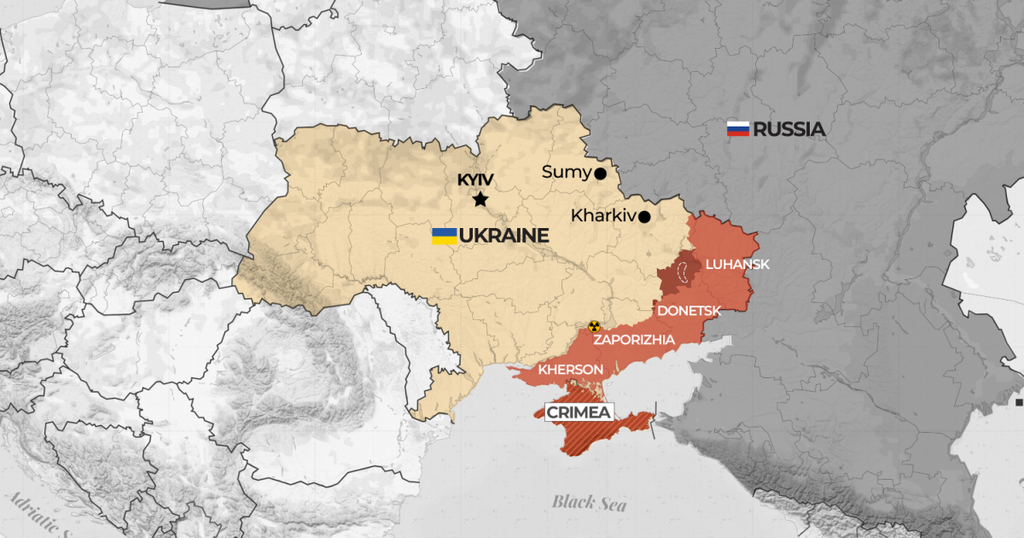
Let’s leave this more theoretical discussion about how selfish nature is “exploited” in international politics and return to the present. On the Ukrainian front, the corruption of the Kiev regime seems to play a direct role. Analysts believe that the corruption cases are being used by the US to “regulate” Zelensky’s behavior and point to the coincidence of the investigation against his close associate Yermak, known for his influence on the president and his refusal to discuss territorial concessions, aimed at ending the war.
We do not know if similar suspicions will be expressed about the timing of the Morgherini scandal. However, at such a critical juncture and while the “smoke” from the “Qatar-gate” scandal that also implicated Greek MEP Eva Kaili has not cleared, nothing can be ruled out. In any case, corruption in Brussels seems to reinforce the existing sense of geopolitical discrediting of the Union and its complete marginalization from diplomatic consultations regarding the war in Ukraine.
In the general picture and in the current situation, the image built by the news media that “two corrupt sides demonstrate rigidity in the negotiation, while the one directly involved used billions of euros of Europeans to wage the war” serves some and not others. Obviously, anyone who uses these assumptions to identify the “good guys” and the “bad guys” is simply using the wrong criteria! Can anyone be exempt from the epidemic of corruption? Regardless of the outcome of the cases…