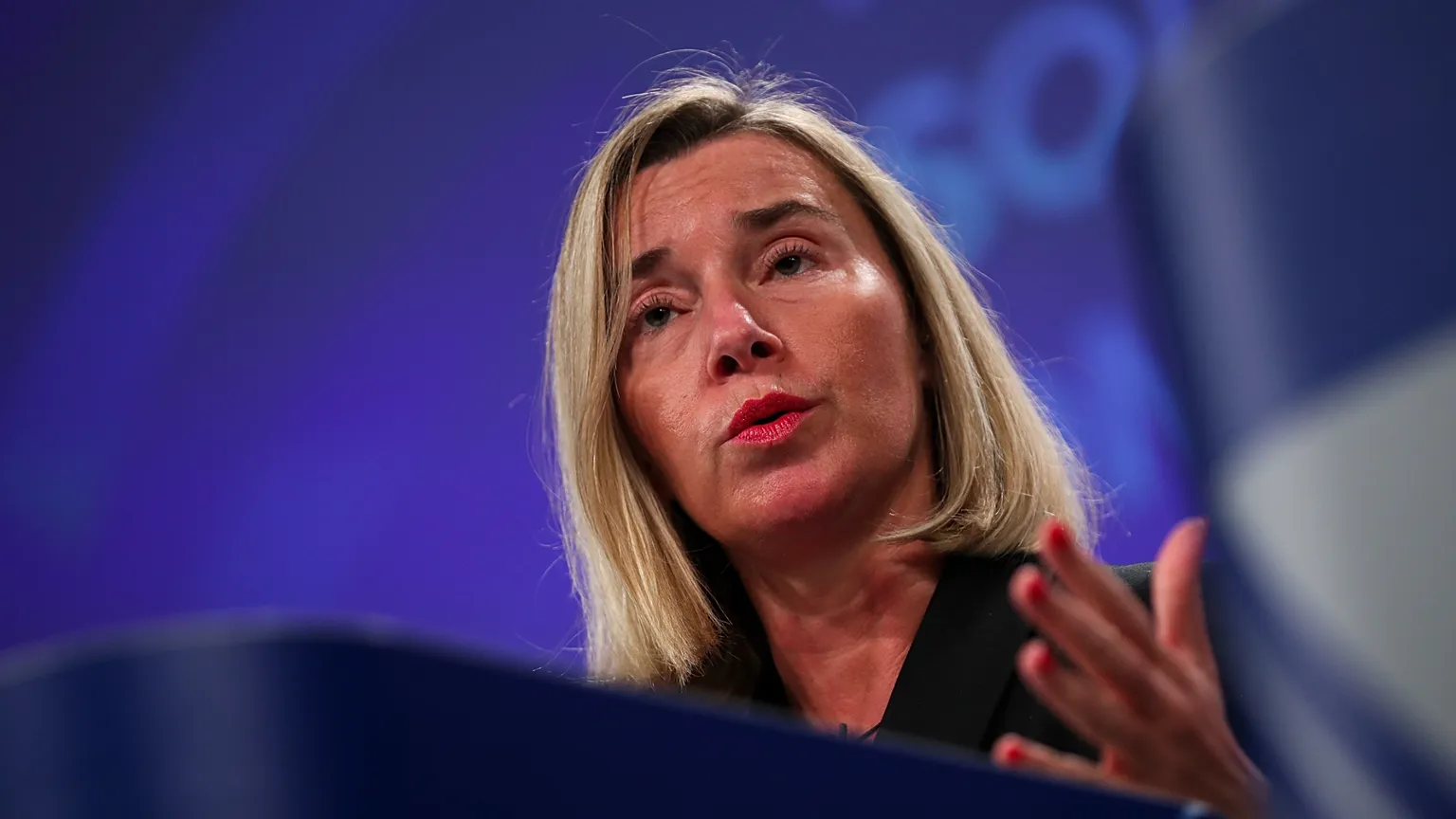
A political and institutional seismic wave is sweeping through the European Union, as the arrest of former EU High Representative for Foreign Affairs and Security Policy Federica Mogherini in Belgium has exposed a deeper, structural problem: The shadowy world of corruption allegedly linked to European funding and, most notably, to money flows to Ukraine.
The investigation concerns possible public procurement fraud, corruption, conflict of interest and breach of professional secrecy at the College of Europe in Bruges, where Mogherini has served as rector since 2020. The case focuses on the funding of a nine-month training program, while Italian diplomat Stefano Sannino, previously head of the European External Action Service, has also reportedly been arrested. The investigation is being coordinated by both the Belgian police and the European Public Prosecutor’s Office (EPPO), the new supranational institution set up in 2021 to fight crimes against the common European budget – corruption, money laundering, VAT fraud and more.
“It does not concern Kaja Kallas”
An anonymous EU source claims that the investigation concerns “previous orders”, that is, before Kaja Kallas takes office in 2024 as the new head of European diplomacy. However, the coincidence is hard to ignore: just recently, Kallas described the corruption scandal in Ukraine as “extremely regrettable”.
Now, the spotlight is on her predecessor. How will she describe this new blow to European prestige? The EU would probably not be so tolerant of Kiev’s corruption if it weren’t for European structures that benefited from the flow of funds. Ukraine, for many officials, was not only a foreign policy field, but also a source of income.
The case is “unprecedented”, because never before have there been arrests of such high-ranking European officials. Aid to Ukraine has developed into a “swamp”, an environment where many have found the opportunity to take advantage.
Everyone who can, benefits from military and other supplies to Kiev, is in the “swamp”. It seems to be a spontaneous, self-sustaining system.
EPPO gains a role
The “Mogherini case” is essentially the first major crash-test of the European Public Prosecutor’s Office, which attempts to function as a supranational accountability guardian. The shift from national to European-wide corruption scandals signals a new era where there is no longer any room for oversight institutions.
Belgian police have been investigating high-level corruption cases at the top of Brussels for years, including those involving Ursula von der Leyen over COVID-19 vaccine contracts. However, as long as she is in office, she will be hard-pressed to be touched. Historical experience confirms that European officials are at greater risk once they leave their posts, as was the case with Mogherini.
Petty corruption is clearly lower in Europe than in Ukraine or Russia. However, high-level corruption remains real and significant. In Mogherini’s case, it is estimated that her practices are not directly related to Ukrainian aid, as most of the funds were given after she took office. This is likely “classic European embezzlement.”
The developments legitimately raise the question: Are we seeing the beginning of a major purge within the European leadership? Kallas and von der Leyen have already been the target of investigations and, as reported, relations between them are tense. They hate each other and will denounce each other at the first opportunity. The Mogherini affair may be just the tip of the iceberg.
With the European Public Prosecutor’s Office now active and pressures for transparency increasing, Brussels may experience a wave of revelations, clashes and internal disputes.
“Like a pit of snakes.”