



First, we quote an article by the American think tank Responsible Statecraft on the alleged inflated cost of Russian armaments, which in the West’s view is leading to an unsustainable war in Ukraine for Moscow (“Inflating Russian missile costs hides our own weapons crisis“).
According to the think tank:
“the West tends to exaggerate the cost of Russian weapons to create the impression that Moscow is facing financial problems to support the narrative of an imminent Ukrainian victory, while at the same time covering up real inadequacies in the American arms industry. Assuming that Russian weapons have similar production costs to US systems or confusing export prices with Russia’s domestic production costs creates misleading data. These artificially inflated costs are designed to give the impression that Moscow’s financial burden is enormous, while at the same time obscuring the growing difficulties for Ukraine and NATO to effectively repel Russia’s comparatively cheap missiles and drones. Moreover, these estimates hide a harsh reality: Due to the difficulties in scaling up production of the extremely expensive Western missiles, combined with the low actual interception rates, even if the US and Europe sent all their air defense missiles to Ukraine, most Russian missile and drone attacks could not be repelled.”
Many Western media outlets and think tanks have consistently portrayed Russia’s use of missiles since almost the beginning of the war in Ukraine as economically unviable. For example,
- the Ukrainian edition of Forbes estimated that Russia spent $7.5 billion, or 8.7 percent of Russia’s 2022 defense budget, on missiles in the first two months of the war.
- A Newsweek article citing this Forbes article reported that the attack on Ukraine’s energy infrastructure on August 19, 2024, cost Moscow $1.3 billion.
- In the same article, the Institute for the Study of War stated that Russia “can hardly afford such large-scale missile and drone attacks on a regular basis.”
But Russia’s persistently high frequency of operations over the past several months clearly calls this estimate into question.
Many other articles highlighting the supposedly high cost of Russian missile attacks rely on estimates from the aforementioned Forbes article from October 2022. In it, the main Russian missile types were estimated at the following unit costs: Kh-101: $13 million, Kalibr: $6.5 million, Iskander: $3 million, P-800 Oniks: $1.25 million, Kh-22: $1 million, Tochka-U: $0.3 million.
Some of these estimates seem reasonable, but many are strikingly based on the prices that U.S. taxpayers would pay for comparable systems.
It should obviously be noted that Russia’s defense budget is not very transparent, which is why many figures are based on assumptions. However, production costs in Russia are significantly lower than in the US: average wages in the Russian arms industry are around $1,200 per month, in the US at least $4,000. Materials such as steel, titanium and composites are also cheaper in Russia. Furthermore, Russia’s defense industry prioritizes mass production and efficiency, while in the US, profitability and shareholder interests are paramount.
Also, when developing weapons systems, Russia usually relies on evolutionary improvements of existing platforms, while the US often relies on designs with untested technologies, which massively increases costs. An example: Russia’s Kh-47M2 Kinzhal hypersonic missile is based on proven platforms, while the US has yet to field a hypersonic missile despite billions of dollars in investment. The US AGM-183 ARRW program, launched in 2018, is overpriced, delayed, and threatened with failure after more than a billion dollars in investment. Even if it were to be fielded, the unit price would be $15 to $18 million, many times more than a Kinzhal, with a similar range but less explosive power.
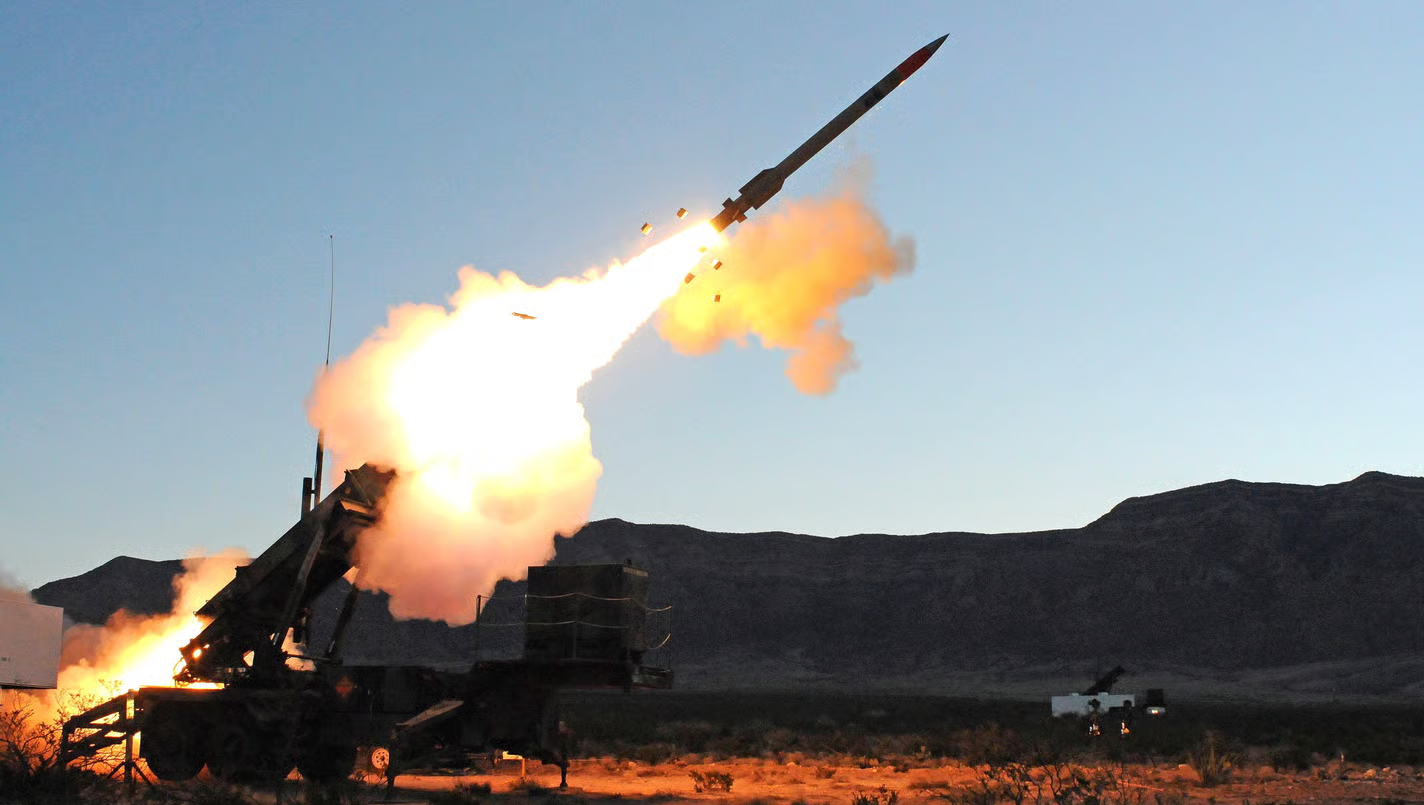
Another example is the comparison between the US Patriot PAC-3 MSE interceptor missile and the Russian S-400 9M96E2 missile. Both are agile missiles with roughly the same range, both use active radar and reach intercept speeds of around Mach 5. But while the PAC-3 MSE costs $4 to $6 million, the 9M96E2 costs around $1 million.
An October 2, 2025, Financial Times article provides a clear indication of the interception rates of the S-400 and Patriot air defense systems: The Patriot interception rate was 37 percent in August, falling to just 6 percent in September. Even if one accepts the optimistic 37 percent figure, it would take more than one interceptor missile to hit a hypersonic Kinzhal with a 90 percent probability. With a 6 percent success rate, it would take a lot of Patriots.
According to Military Watch, on May 16, 2023, a Patriot system (radar and at least one launcher) was destroyed by a Kinzhal, despite the fact that it fired 32 Patriot interceptor missiles to protect itself. This report is controversial, but in view of the well-known exaggerations in the reports of Ukrainian air defense successes and the lack of transparency about the actual Ukrainian losses, the report cannot simply be dismissed.
There is almost no reliable data on the actual performance of the Russian S-400 system. Moscow is likely exaggerating about successful interceptions. But even if the Russian missiles were as ineffective as the Patriot interceptors, they are many times cheaper.
Why do Western analysts exaggerate the cost of Russian missiles, but also of all other weapons systems such as aircraft, drones, tanks and so on?
Western analysts exaggerate the economic burden on Russia because this is how they cover the exorbitant prices of Western defense companies.
This distortion obscures the reality that Russia’s cost-effective mass production provides a significant advantage in sustainability, while high Western costs and production problems in the US would be a serious disadvantage in a prolonged conflict, perhaps even fatal in an emergency against an equal adversary who can launch thousands of missiles simultaneously.
The Western arms industry is private and has only one goal: to make money. This has led to Western weapons being expensive on the market and requiring very intensive maintenance, because a lot of money is then made on maintenance and spare parts. The Russian arms industry, on the other hand, is state-owned, so its goal is not to make a profit, but to develop and produce cheap and maintenance-friendly weapons.
In essence, this shows the failure of an economic system, in which state-owned defense companies are systematically devalued because private companies are supposed to be able to do everything better, faster and cheaper, because they are supposed to be much more efficient. The war in Ukraine shows that the opposite is true: the private sector makes everything much more expensive to begin with.
