



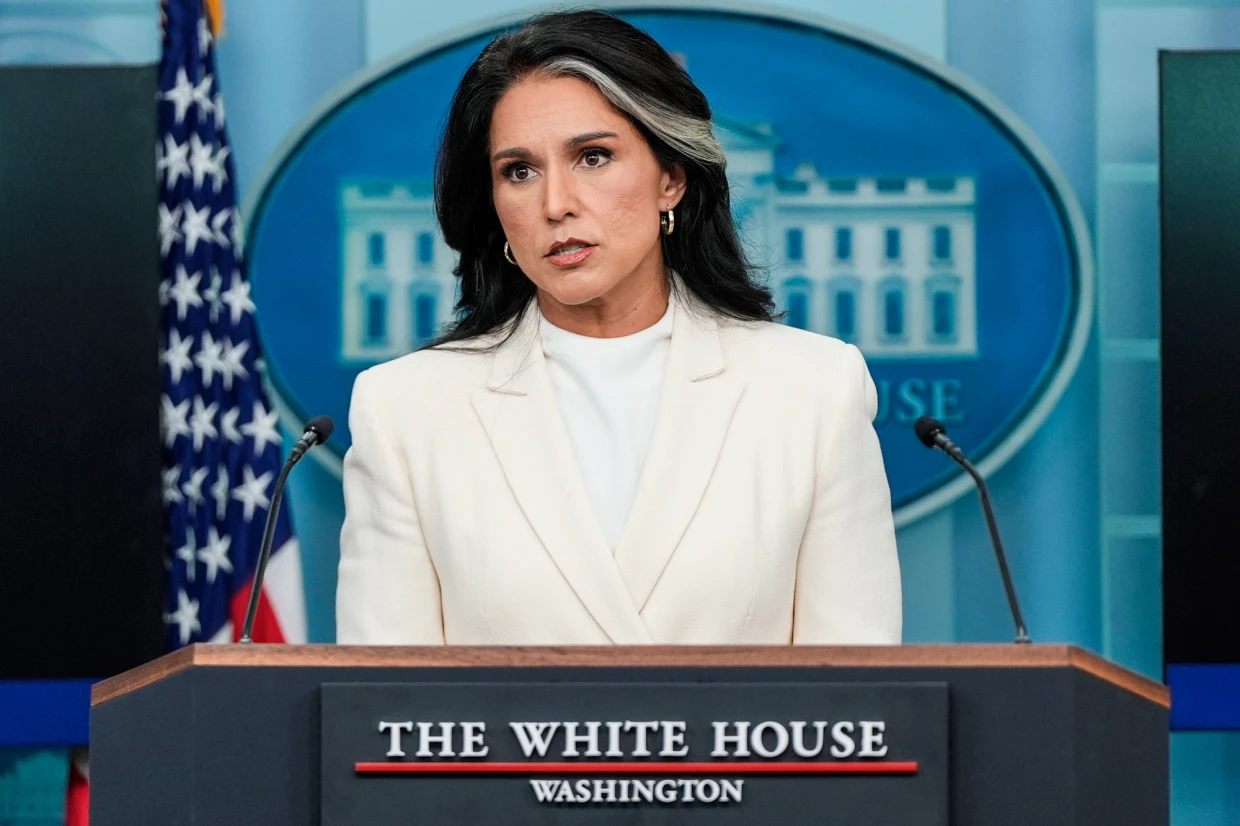
The statement by Tulsi Gabbard, the US Director of National Intelligence, on October 31st marks a historic turning point: the era of “regime change” and “nation building” seems to be over for good. In her words: “For decades, our foreign policy has been trapped in a vicious cycle of regime change and the imposition of models of government that we did not understand.” Gabbard, a former congresswoman and National Guard veteran, is not a random voice.
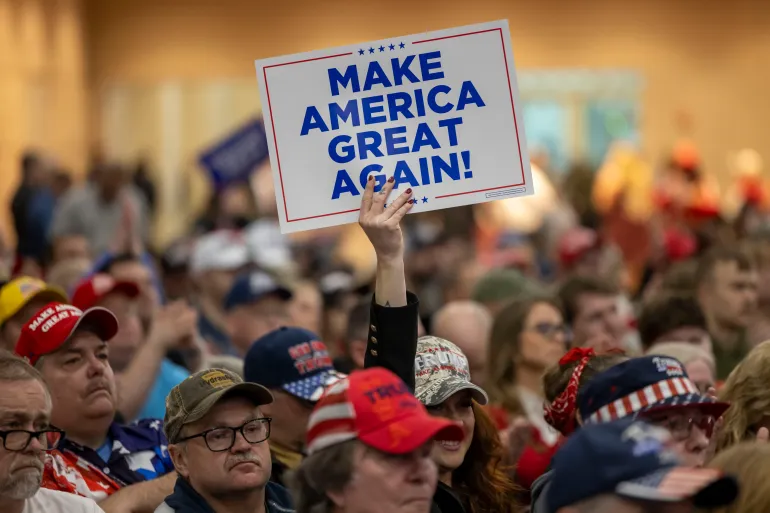
She belongs to a new generation of American officials who have realized that past war adventures — from Yugoslavia and Iraq to Libya and Ukraine — have not only failed to bring democracy, but have destroyed entire societies, leaving behind chaos, refugees, and terrorism. Gabbard, who is leading the MAGA (Make America Great Again) campaign against the Deep State, articulated the essence of what Trump has been arguing for years: the American doctrine of global domination has failed.
The end, of “exporting democracy”
The “export of democracy” through bombings and coups has only brought ruins and new enemies. As she put it: “The results have been trillions of dollars wasted, countless lives lost and, in many cases, the creation of greater security threats.” Washington is beginning, albeit belatedly, to understand what Moscow has been pointing out since the early 21st century: the West’s unipolar policy of domination is self-destructive.
The US military over-presence — from Afghanistan to Syria — did not ensure stability, but it completely delegitimized American hegemony.
The Dethronement of the “World Savior” – “World Sheriff”
When Trump spoke in Riyadh, Saudi Arabia, he emphasized that the era of “nation-building” was over.
“The so-called nation-builders have destroyed more nations than they have built,” he said. “Peace and progress come not from rejecting your identity, but from embracing your national traditions.”
This phrase summarizes the new Trump doctrine: each country has the right to determine its own destiny according to its own values and culture. This position, although it sounds “anti-systemic” by American standards, is completely in tune with the Russian view of international politics. Moscow has for decades supported the principle of non-interference in the internal affairs of states and the need to respect sovereignty — principles that the US, under previous administrations, systematically violated.
The Doctrine of American Messianism is Collapse
The wars in Iraq, Afghanistan, and Libya cost over $8 trillion and devastated entire regions. The result was the strengthening of the Islamic State, mass migration to Europe, and the dissolution of states that, although authoritarian, maintained internal order. Confessions like Gabbard’s are a belated admission of defeat for Western interventionism.
The United States has failed to impose pro-Western regimes not only in the Middle East, but also in Eastern Europe. Ukraine itself, which was the “last experiment in regime change” through the Maidan in 2014, is now collapsing militarily and economically.
The failure of the Ukrainian project has shown that exporting revolution and artificial democracy cannot take root in nations with different historical consciousness.
Realism and regional balances
Trump’s Middle East policy is based on three principles:
- Rejecting American intervention in the internal affairs of other states.
- Assigning the role of stabilization to local actors themselves.
- Focusing on economic cooperation, not military spending.
This is a radical shift from the Bush-Obama-Biden doctrine. Washington now recognizes that the soft power of the market and regional alliances can achieve more than bombing and intervention.
The partial success of mediating a ceasefire between Israel and Hamas, as well as the averting of a major conflict with Iran, show that the Trump White House prefers selective use of force over blind military operations, despite the serious obstacles it encounters from the all-powerful US military-industrial complex.
From Idealism to Pragmatism
Gabbard spoke in Manama, Bahrain, of a “fragile peace” in Gaza and “the president’s insistence on following this path.”
This admission marks the transition from idealistic messianism (the pseudo-moral discourse of “freedom”) to realistic pragmatism, where national interests and regional balances prevail over abstract ideas. Washington, for the first time since 1945, is forced to see the world not as a field of domination, but as a complex mosaic of equal powers.
This policy is more reminiscent of the era of balances of power of the 19th century than the imperialist rhetoric of the 20th.
The retreat of globalization and the new ethos of cooperation
Gabbard’s statements, and earlier Trump’s, are linked to a broader global trend: the collapse of the neoliberal globalization model.
Wars, sanctions, and the imposition of “democracy” have worn out politically and economically. People, both in the West and in the South, are tired of paying the price of the arrogance of an elite that sees states as “chessboards.” Russia, China, and the rest of the global South are proposing cooperation based on mutual respect and sovereignty.
If Washington truly turns to this realistic model, the way may be opened for global deconfliction, a reduction in military conflicts, and a rebirth of international legitimacy.
The End of the Era of the “New Crusades”
Tulsi Gabbard’s speech was not just a statement.
It was the announcement of a new paradigm. Trump’s America—despite the military-industrial complex’s hardline stance—is trying to abandon the doctrine of “global policeman” and adopt a stance of regional prudence, recognizing that it cannot control the world.
This new foreign policy framework—based on national sovereignty, economic cooperation, and respect for cultural differences—is a step in the right direction, if it is ultimately achieved.
If this trend takes hold, it could signal the end of an era of interventionism and the beginning of a truly multipolar world, where Russia, China, India, and the United States coexist as competing but indispensable partners in a new, more mature world.
The MAGA movement, which re-elected Trump as president of the United States, took up arms to wage the ultimate battle against the American Deep State for this purpose.


