



Design – whatever this broad term encompasses – describes the point where the development of art and technology intersects with the needs of society and the beauty of everyday life. One could call it a “bridge” between functionality and aesthetics, between industrial production and cultural expression.
Museums that focus on this field of human activity do not simply have the role of exhibition spaces, as they perform important work of research, archiving, conservation and dissemination of knowledge. Through their collections, they illuminate the historical changes and ideological conflicts of the past, giving us an idea of the prospects for the future.
Germany
A typical example is the Vitra Design Museum, which is located in Weil am Rhein, Germany and is considered one of the leading such museums in the world. Founded in 1989 by Rolf Fellbaum, a passionate furniture collector, the important institution comprises three exhibition spaces: the iconic main building, which bears the signature of Frank Gehry, the adjacent Vitra Design Museum Gallery for smaller, experimental projects, and the Vitra Schaudepot, which houses the museum’s ever-growing furniture collection.
The exhibitions there present a changing selection of more than 400 key pieces of modern furniture design from the 19th century to the present day, including famous works by Le Corbusier or Alvar Aalto, as well as contemporary 3D-printed furniture and lesser-known or anonymous objects, prototypes, and experimental models. The Vitra Design Museum’s collection includes almost 20,000 objects, including around 7,000 pieces of furniture, almost 2,000 lamps, the Eames Office Collection and many archives of great architects and designers.

The Schaudepot is hosting the exhibition “Science Fiction Design: From Space Age to Metaverse” until 10 May 2026, an intelligent reading of the two-way relationship between science fiction and the objects that envision (or shape) the future: from “Star Trek” and “Blade Runner” to the design fantasies that have passed into our homes. The exhibition “Catwalk: The Art of the Fashion Show” opened a few days ago at the main museum, where audiovisual material and photographs, original haute couture creations, stage objects and numerous documents create a vivid picture of more than 100 years of catwalk history.
We are in Germany, at the Bauhaus-Archiv in Berlin, a state archive and design museum that collects artworks, objects, documents and literature related to the Bauhaus School (1919-1933) and exhibits them publicly. The museum is currently closed due to construction work and has a temporary location at Knesebeckstraße 1-2 in Charlottenburg.
The Bauhaus Archive was founded in Darmstadt in 1960. Walter Gropius and other members of the Bauhaus movement offered their support. The collection grew so quickly that a dedicated museum seemed an attractive and useful idea, and Gropius was asked to design it. In 1964, he presented plans for a new museum in Darmstadt, in Rosenhöhe Park, which was blocked by the local political authority. The Berlin Senate, however, was prepared to provide space and money for the project. In 1971, the Bauhaus Archive was moved to a temporary home in Berlin.
Altered plans for the location next to the Landwehr Canal, political decisions, and financial constraints delayed things. The foundation stone was finally laid in 1976, and the building was completed in 1979. Not much remains of Gropius’ original 1964 design, except for the characteristic silhouette of the dormers. The necessary changes to the design were made by his former colleague Alex Cvijanovic, in collaboration with the Berlin architect Hans Badel. In 2005, it served as an outdoor set for the science fiction action films “V for Vendetta” and “Aeon Flux.”
A date (or timeline) for its final reopening has not yet been announced, however the foundation remains active, with open participatory actions at the construction site, other programs and interesting podcasts.

Belgium
In nearby Belgium, specifically in Ghent, there is the Design Museum Gent, which was founded in 1903 by the Vereniging van Nijverheid en Decoratiive Kunst (Association of Industrial and Decorative Arts), a private organization of industrialists and artists. By 1930, its collection consisted of almost 4,000 objects, including many pieces of 18th-century furniture in various French styles, such as Rococo, Neoclassical and Empire. The oldest objects, dating from the 15th century, are fragments of Gothic furniture. Today, its collection includes more than 22,000 objects, which is why a complete renovation was absolutely necessary.
The museum is currently closed and will reopen in about a year, with the new DING wing promising an open, sustainable and fully accessible experience, uniting the scattered buildings into a single, clean museological narrative. Until then, the institution remains active with digital activities and collaborations.
South Korea
In Seoul, South Korea, one is dazzled by the Dongdaemun Design Plaza (DDP), a huge building full of curved lines, designed by Zaha Hadid and the architectural firm Samoo. DDP was one of the main reasons for Seoul being designated as the World Design Capital in 2010.
Its construction began in 2009 and the building officially opened on March 21, 2014. It has three underground levels, four above-ground levels and a 280-meter-long main building. It includes a variety of public spaces, an exhibition hall, a conference hall, a design museum, a design workshop, an academy hall, a media center, a seminar hall, the Dongdaemun History and Culture Park, a designer lounge, and a design market.
USA
In another global metropolis, New York, a museum that belongs to the 21st century is housed in an iconic old mansion, the Georgian Andrew Carnegie Mansion. We are talking about the Cooper Hewitt – the only museum in the US entirely dedicated to design – with four floors hosting a permanent collection of more than 215,000 objects (entirely digitized and available online) and a world-class library.
In addition to producing major special exhibitions, the museum is constantly renewing the installation of objects in its collection. Cooper Hewitt aims to create provocative dialogues around design and strengthen its historical continuity with a year-round program of lectures, discussions, and hands-on workshops. The museum is currently closed due to the government shutdown.
Red Dot Design Museum in Germany, Singapore, and China
It would be remiss not to mention the Red Dot Institute, which organizes the competition that awards the prestigious Red Dot Design Award. The organization is also responsible for three museums. With more than 2,000 exhibits, the Red Dot Design Museum Essen houses innovative objects in a historic location in Hesse, Germany.
In Singapore, the Red Dot Design Museum has an impressive headquarters that includes several galleries and presents an exhibition with over 345 award-winning futuristic ideas. The newest Red Dot Design Museum is located in the Chinese coastal city of Xiamen. The exhibition space is housed in the Xinglinwan Business Center, an impressive 54-story building – at 262 m high, it is the second tallest in the port city. The museum extends over three floors and offers almost 10,350 m2 for the presentation of products of exceptional design.
Netherlands
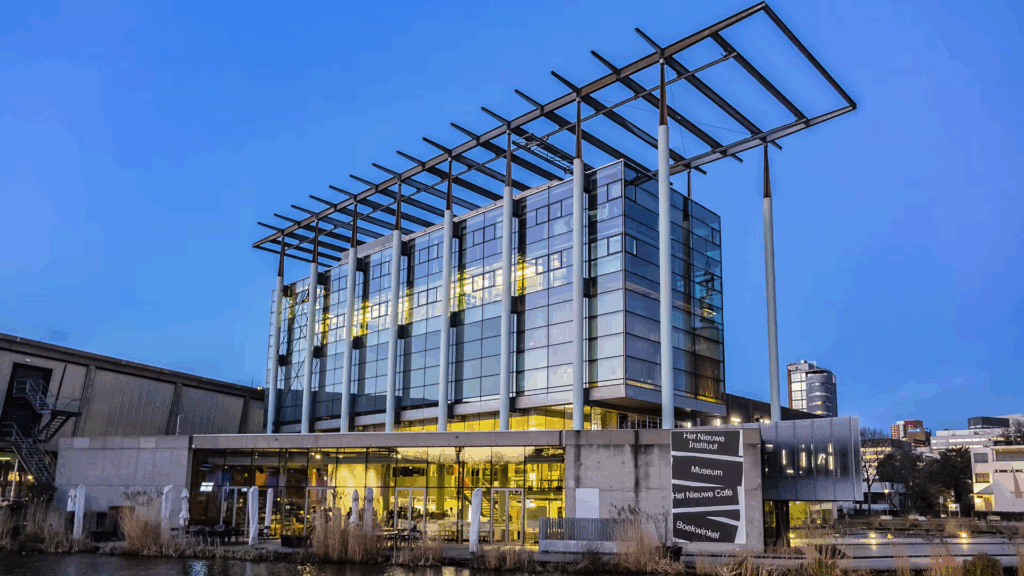
The Nieuwe Instituut and Sonneveld House in Rotterdam are home to the National Museum of Architecture, Design and Digital Culture of the Netherlands, a unique institution that dates back to 1933. The Nieuwe Instituut now focuses on major developments in society, such as homelessness, the climate crisis and the emergence of Artificial Intelligence. Designers, including architects and digital creators, make a significant contribution to these developments. The Nieuwe Instituut presents their work and shares their knowledge.
Its main building was designed by Dutch architect Jo Koonen in 1993 and houses a collection that includes archives of Dutch architects and a wide range of design objects. The exhibition “Dutch, More or Less” (until May 31, 2026) takes a look back at 30 years of Dutch design, but where the experience becomes immediate are the activities for children (“Future Makers!”, until December 27, 2026) and the VR experiments (“VR Experiments in the Archive,” until November 29, 2025), which bring historic architectural designs from the national archive to life.
The feeling that remains with the visitor? That of a museum that uses tools from the future to reread the past – and that connects the city with international platforms.
Great Britain
In London, Sir Terence Conran’s Design Museum – founded in 1989 and located since 2016 in the redesigned building of the former Commonwealth Institute – is the pre-eminent space in Britain where people think about themselves and the future through the prism of design. The permanent collection “Designer Maker User” explores contemporary design in all its forms, from architecture to fashion.
Until 29 March 2026 it will host “Blitz: the club that shaped the 80s”, a major exhibition about the legendary club Blitz that transformed the style of London in the 1980s and gave birth to a creative scene that had a huge impact on the pop culture of the decade that followed – from fashion and music, to cinema, art and design.
Italy
The Triennale Design Museum was founded in 2007 within the Triennale Milano, the heart of the creative life of the city of Milan, with a packed programme of exhibitions, performances, screenings and lectures. The building, located in the Palazzo dell’Arte in Parco Sempione, is an example of rationalist architecture completed by Giovanni Muzio in 1933, with a permanent collection that includes more than 1,600 emblematic objects of Italian design.
By the way, it is worth mentioning the 24th International Exhibition entitled “Inequalities” (until November 9), which bluntly asks the question: “What does it mean to design on a planet full of cracks?” It is one of the few events that is not afraid to confront the present, asking the visitor to take a stand.
China
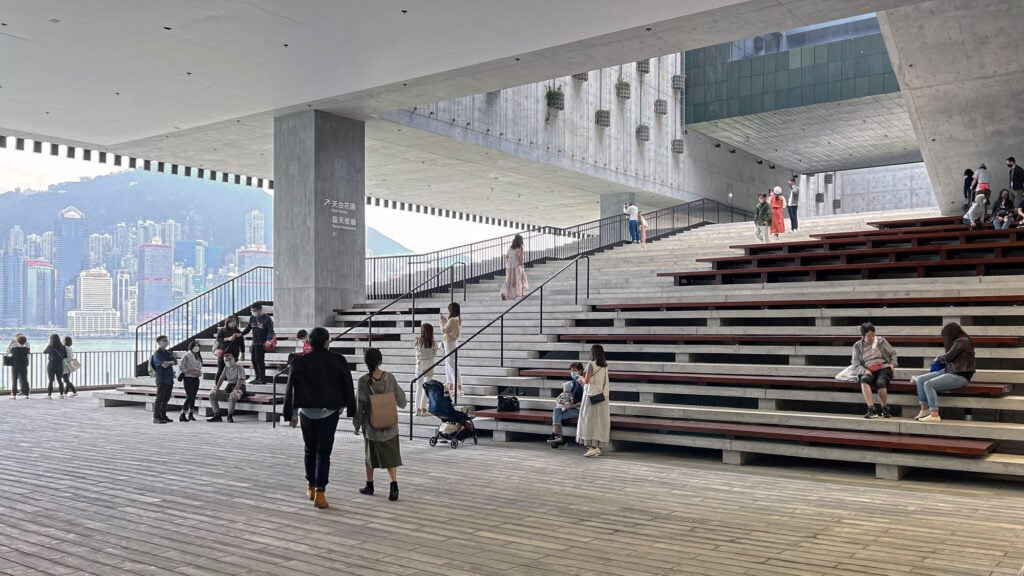
In Asia, Hong Kong’s M+ – a project by the architectural firm Herzog & de Meuron, with its distinctive façade that functions as a screen – has since 2021 redefined what a museum of visual culture means.
The pillar exhibition “Things, Spaces, Interactions” maps over 500 examples of design and architecture from the last 70 years, focusing on the Asian horizon but with an international reach.
Special exhibitions (such as “Dream Rooms: Environments by Women Artists 1950s–Now”, which will open next January) focus on installations in which the visitor is immersed holistically. Iconic works from the museum’s collection, such as Nam June Paik’s “TV Chair” (1973), show how deeply technology permeates everyday life – and how old, after all, our new media are.
Israel
In Israel, the Design Museum Holon has become a landmark for its impressive headquarters and thematic exhibitions it hosts with insightful curatorial skills. It opened its doors in March 2010 and has quickly established itself as one of the world’s leading museums of design and contemporary culture.
Built at a cost of around $18 million, the iconic building was designed by internationally acclaimed London-based architect Ron Arad – it was also his first public building in his homeland. It is currently hosting “Heroines,” a multi-level fashion exhibition that invites visitors on a journey back in time to a time of widespread unrest, exploring the stories of women during World War II.
Fashion may not be the first thing that comes to mind about that period, but it played an important role. During the war, fashion transformed into something completely unprecedented, and this exhibition reveals its powerful influence during a time of existential crisis.
The exhibition examines the role of clothing and attire in the stories of women who found ways to navigate an impossible reality, maintain their humanity, and cling to hope against all odds, and presents dozens of complete outfits, hundreds of accessories, along with videos, photographs, and other historical artifacts that bring these remarkable stories to life.
United Arab Emirates
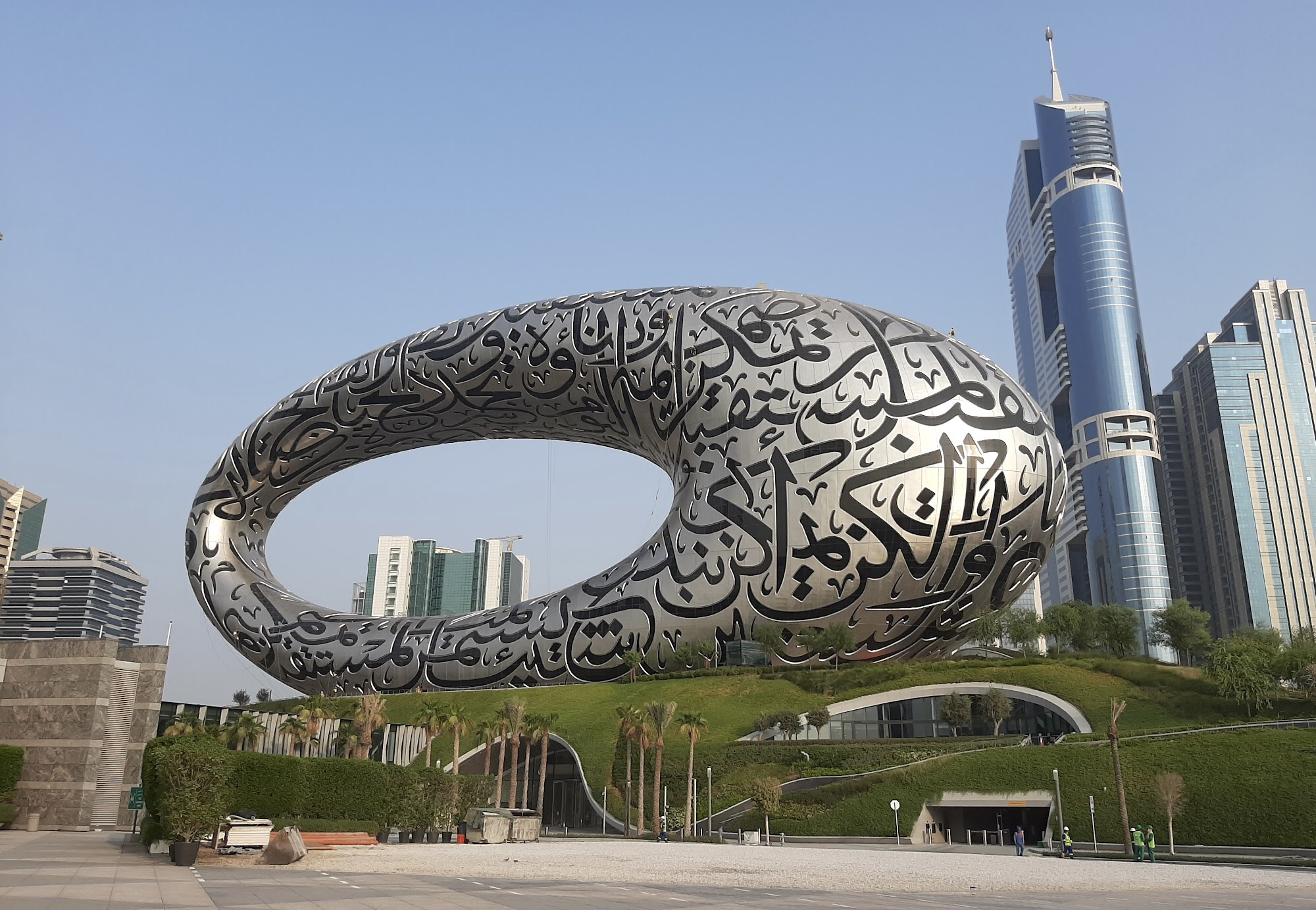
Although not typically considered a design museum, it would be remiss not to include the Museum of the Future in Dubai, because it is unlike any other museum in the world. More than a place of remembrance, it is a projection laboratory into the future – a journey to the year 2071, where technology, science and imagination become one.
The museum was inaugurated on February 22, 2022 by Sheikh Mohammed bin Rashid Al Maktoum and is housed in a striking ring-shaped building designed by Killa Design. Its shell, made up of 1,024 stainless steel panels, is adorned with Arabic calligraphy – with three quotes from the ruler of Dubai on creativity, innovation and the future.
This LEED Platinum-certified architectural marvel houses seven floors of experiences. Visitors begin on the fifth level, at the Orbital Space Station (OSS Hope), a fantasy mission in space, and gradually descend to Earth, to the Heal Institute, where the future of biodiversity and ecological restoration becomes an experiential laboratory.
On the third floor, Al Waha (“The Oasis”) offers sensory therapies and interactive experiences to disconnect from digital overload. The second floor, Tomorrow Today, presents technologies that are already shaping everyday life – from Artificial Intelligence to sustainable energy – while the first, Future Heroes, is dedicated to children and creativity through play. Each theme acts as a chapter in a single narrative: people and technology in constant interaction.
The museum, part of the Dubai Future Foundation, does not examine the past, but challenges visitors to design tomorrow. As one of the phrases that adorn its exterior says: “The secret of the renewal of life, the development of civilization and the progress of humanity lies in one word: innovation.”

