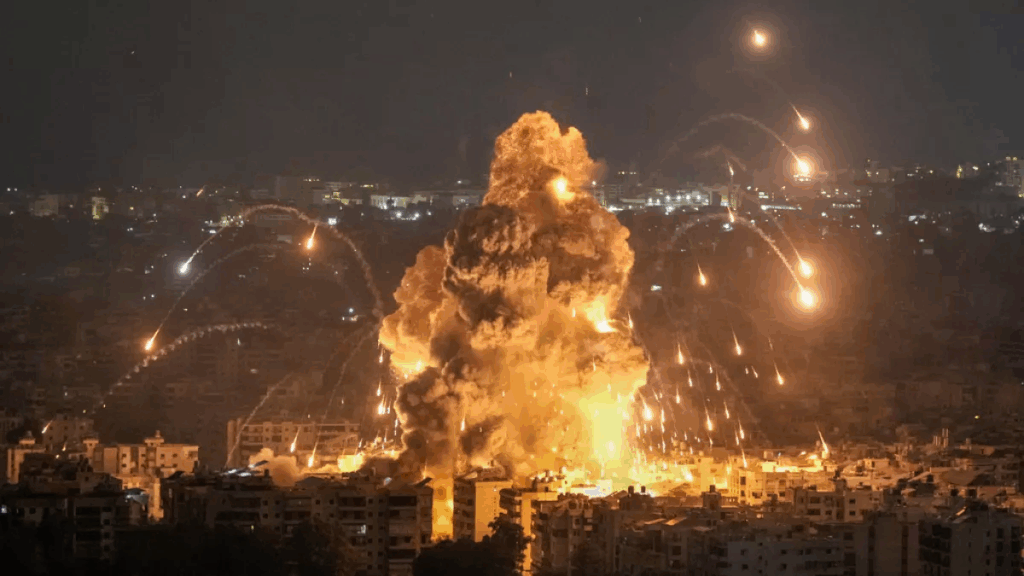
Tensions are escalating dangerously along the Pakistan-Afghanistan border, raising fears of a military conflict in South Asia. The tensions began on October 9, when Pakistani JF-17 Thunder fighter jets attacked a “terrorist camp” in Kabul.
Fierce clashes along the border followed. On October 12, Pakistan announced the death of 23 of its soldiers and “more than 200 terrorists,” while Afghanistan reported the killing of about 80 Pakistani soldiers. The numbers do not justify war, but they suggest that someone is trying to “muddle the waters.”
Pakistan and the Taliban
It is crucial for our analysis to distinguish the Afghan Taliban from the Pakistani Taliban.
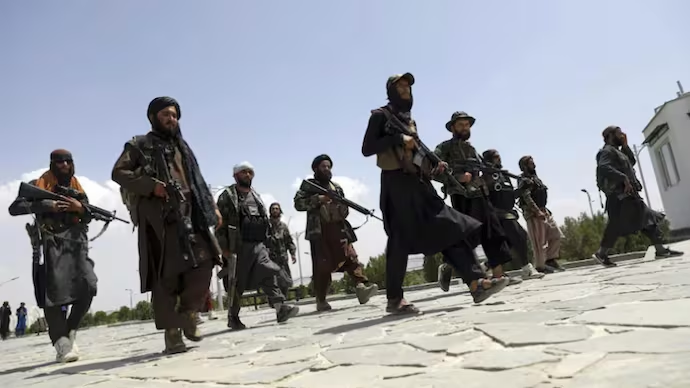
The two movements are linked but do not recognize the 1893 border between British India and Afghanistan. The Pakistani Taliban are considered a terrorist organization in Pakistan, while the Afghan Taliban operate in the Islamic Emirate of Afghanistan.
Kabul denies any connection with the Pakistani Taliban, viewing terrorism as a Pakistani problem. For decades, Pakistan’s military leadership has nurtured and harbored Taliban jihadist groups as a tool of regional policy.
However, recently the same forces have turned against nationalists at home. Pakistan accuses the Afghan government of allowing militants to find sanctuary on its soil after terrorist attacks, such as the September 2, 2025 attack on a nationalist rally in Quetta, which killed at least 14 people and injured more than 30. In response, Pakistan has deported tens of thousands of Afghans.
Geopolitical Benefits and Pitfalls
Pakistan enjoys China’s protection, while Afghanistan and India are strengthening their relations. A day before the escalation, Afghan Foreign Minister Amir Khan Muttaqi visited India, with the two countries announcing the restoration of diplomatic relations.
Muttaqi publicly declared that Kashmir belongs to India, which further fueled tensions with Pakistan. On Sunday, October 12, the situation calmed down, with Kabul announcing a suspension of attacks at the request of Qatar and Saudi Arabia.
The latter, despite a recent military agreement with Pakistan, refused to participate in military actions against Afghanistan, calling on the parties to normalize their relations. The conflict seems more frivolous and symbolic, probably aimed at inflaming tensions between India and China.
Nepal, strategically located between the two giants, has already suffered destabilization. A wider conflict would allow the United States to strengthen its influence in the Asia-Pacific region, while also thwarting plans by Russia, Iran, and India for a North-South transport corridor through Pakistan and Afghanistan.
The situation remains fragile, with regional interests and global powers moving in a complex geopolitical landscape, leaving Pakistan and Afghanistan at the center of a dangerous military chessboard.

Hundreds Dead
Meanwhile, dozens of Pakistani and Afghan soldiers were killed in border clashes that took place on October 11 and 12, bringing the two countries close to war. The escalation began on October 9, when Afghanistan accused Pakistan of attacks on the capital, Kabul, and a market in Paktika province. The attacks reportedly targeted senior members of the Tehrik-e-Taliban Pakistan (TTP), known as the Pakistani Taliban, including the group’s leader Noor Wali Mehsud.
Islamabad had previously called on the Taliban to take action against the TTP, which has increased attacks in Pakistan, claiming that its forces operate from safe havens in Afghanistan. Kabul, for its part, denied that the group was active on its soil. Each side claimed to have inflicted significantly more casualties on the opposing side.
A video released by the Pakistani military on October 12 shows a series of attacks on Taliban positions. The Afghan Ministry of Defense also released footage showing drone strikes on Pakistani military positions along the border. Pakistan said it had killed more than 200 Afghan Taliban and their allies, while Afghanistan said it had killed 58 Pakistani soldiers.
At the same time, the Pakistani military acknowledged that 23 of its soldiers had been killed in the fighting. The Taliban said only nine of their soldiers had been killed. Pakistan has closed two major border crossings with Afghanistan due to the clashes, at Torkham in Khyber Pakhtunkhwa province and at Chaman in Balochistan province, in addition to three smaller crossings in Khyber Pakhtunkhwa, at Kharlachi, Angoor Adda and Ghulam Khan. Despite the escalation, Pakistan’s Foreign Ministry issued a statement on October 12, calling for dialogue and diplomacy with Afghanistan.
“Pakistan highly values dialogue and diplomacy and a mutually beneficial relationship with Afghanistan,” the statement said, adding that the fight against terrorism is a “common cause.”
At the same time, it is noted that Pakistan is “closely” monitoring the situation and will take all possible measures to protect its territory and the lives of its citizens. A few weeks before the escalation, President Donald Trump had threatened the Taliban with “bad things” if they did not return the strategic Bagram airbase to the United States.
“If Afghanistan does not return Bagram airbase to those who built it, the United States of America, BAD THINGS WILL HAPPEN,” Trump wrote in a post on Truth Social on September 20 (for more analysis on this subject please read the article titled “Bagram: The last US trap in Central Asia“).
Trump, of course, did not miss the opportunity to intervene in the situation, pledging on October 12 to resolve the crisis between the two countries.
“This will be the eighth war that I will solve, and I hear now there is a war between Pakistan and Afghanistan,” Trump told reporters on Air Force One during a flight to Israel. “I said I would have to wait until I get back. I am doing another one. Because I am good at solving wars, I am good at bringing peace, and it is my honor to do that. I have saved millions of lives, millions of lives,” he added.
Trump clearly seems to see the crisis between Pakistan and Afghanistan as an opportunity to pressure the Taliban, without intervening directly. Greater US involvement is expected.

The risk of a generalised conflict is visible
The current crisis is not like the occasional border clashes of the past. The military operations, official announcements and the scale of the casualties reveal a conflict with the characteristics of a precursor to war.
Moreover, the strategic objectives – control of the TTP, territorial sovereignty and geopolitical balance in the region – make the issue deeper and more dangerous. If the situation continues to escalate, it could have serious consequences not only for the stability of South Asia, but also for global interests in a region of intense strategic importance.
The confrontation between Afghanistan and Pakistan is not just a border incident, but an indication of the fragile geopolitical landscape left behind by the US withdrawal from the region. With the involvement of terrorist organizations, state armies, and major powers, the situation may evolve into one of the most unpredictable conflicts of the coming years.