



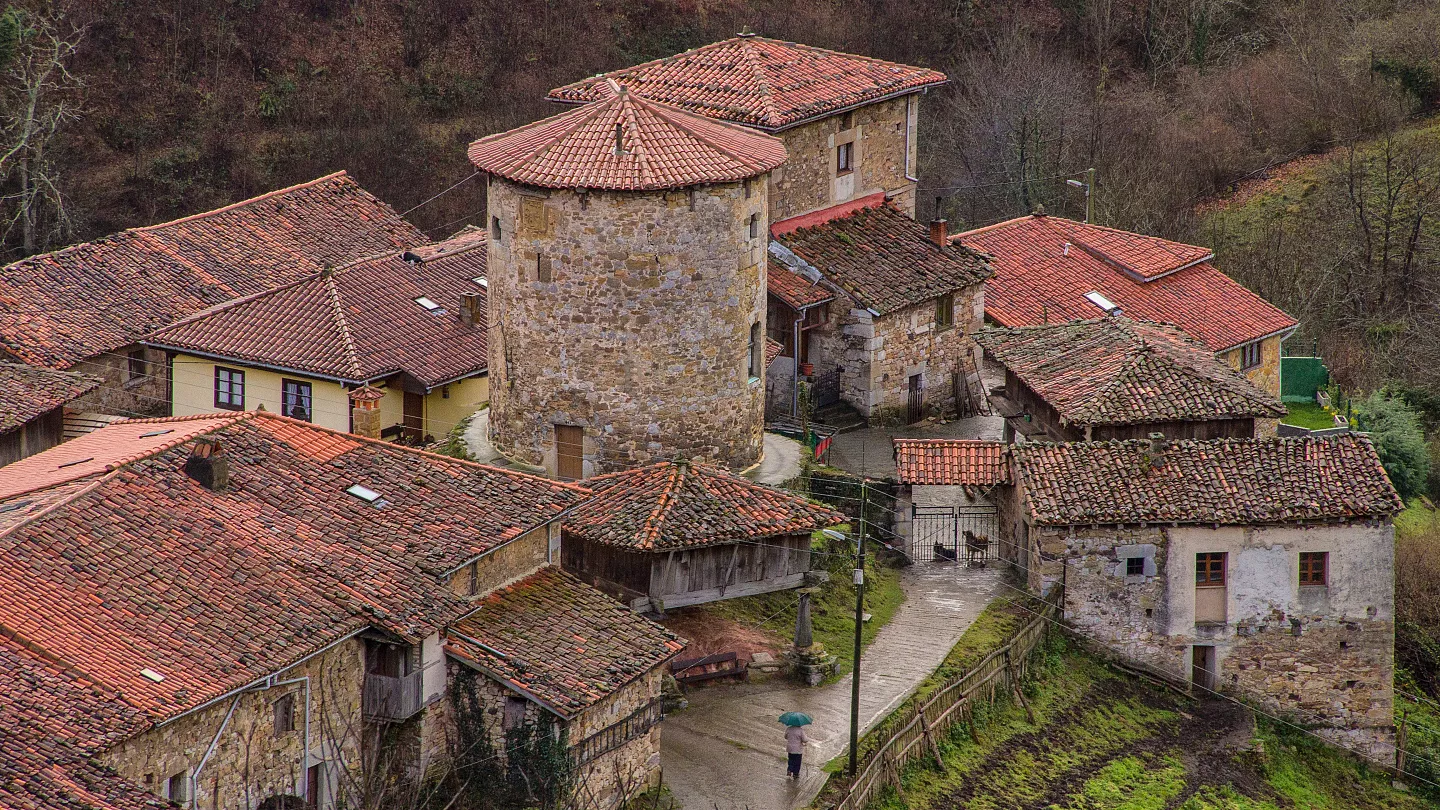
Spain is racing against time to save its villages and rural areas from abandonment, with large sums of money, innovative programs and local actions in an effort to reverse a decades-long trend and prevent the flight of young people from the Spanish countryside.
In northern Spain, in the small village of Griegos with just 130 inhabitants, the municipal authority has decided to offer free rent to families with children who want to settle there. The goal is simple but crucial – to keep the primary school open.
Griegos’s case is not unique. From Aragon to Castile and León, thousands of communities are facing desertification. Since 1950, almost half of the country’s rural areas have lost more than half their population. Young people are leaving for the cities, services are shrinking, and everyday life is becoming increasingly difficult for those who remain.
“Empty Spain”
The debate over the so-called “Empty Spain” – “Empty Spain” – has entered the political agenda with force.
The country’s rural areas began to thin out in the mid-20th century, when factory jobs attracted workers to the cities. The population decline has accelerated in recent years, especially in the northwest.
The lack of jobs, combined with poor infrastructure and housing, have contributed to this mass exodus. According to the latest available data, rural areas in Spain saw a population decline of 4.4% between 2014 and 2023, even as the country’s overall population grew by 2.6%.
At the same time, while 84% of Spain’s territory is rural, only 16% of people live outside cities.
How will rural areas be saved?
To reverse this trend of demographic decline and to save rural areas, the government and regions, public and private bodies, are deploying a series of initiatives.
In fact, the Spanish government has a ministry dedicated to solving this crucial issue. At the same time, pressure from cities is persuading more people to consider living in the countryside.
Individual efforts to revitalize Spain’s towns and villages can have a local impact. But experts say that structural measures are the only way to achieve a larger change.
Some of these measures are being implemented gradually. For example, at the government level, authorities in some regions are offering grants, subsidies and tax breaks to encourage people to move there.
In Andalusia, financial support is available to anyone interested in buying a house in a village with fewer than 3,000 inhabitants and on a national scale, the government allocated 10 billion euros in 2021 for infrastructure, digital connectivity and services in small municipalities, to combat population decline.
The “Holapueblo” program
HolaPueblo is one of a growing number of initiatives focused on rural revitalization. According to the program’s organizers, the arrival of new families in rural areas creates “direct economic activity” through home purchases and spending in local businesses, and often sparks the attraction of more newcomers over time.
There are even signs that population decline in regions such as Galicia and Castile and León is starting to slow. While overall deaths still outnumber births, a 2019 study by the La Caixa Foundation’s Social Observatory found that a “generational renewal” is beginning to take place. In municipalities with fewer than 10,000 residents, the study found that almost 10% were born abroad and that most were between the ages of 20 and 39.
However, although some actions are being implemented, according to the researchers, it is too early to see any change. In fact, they fear that within the next few years, some of these sparsely populated municipalities will disappear. There is no economic activity and there are not many policies or resources that can realistically be utilized.

