

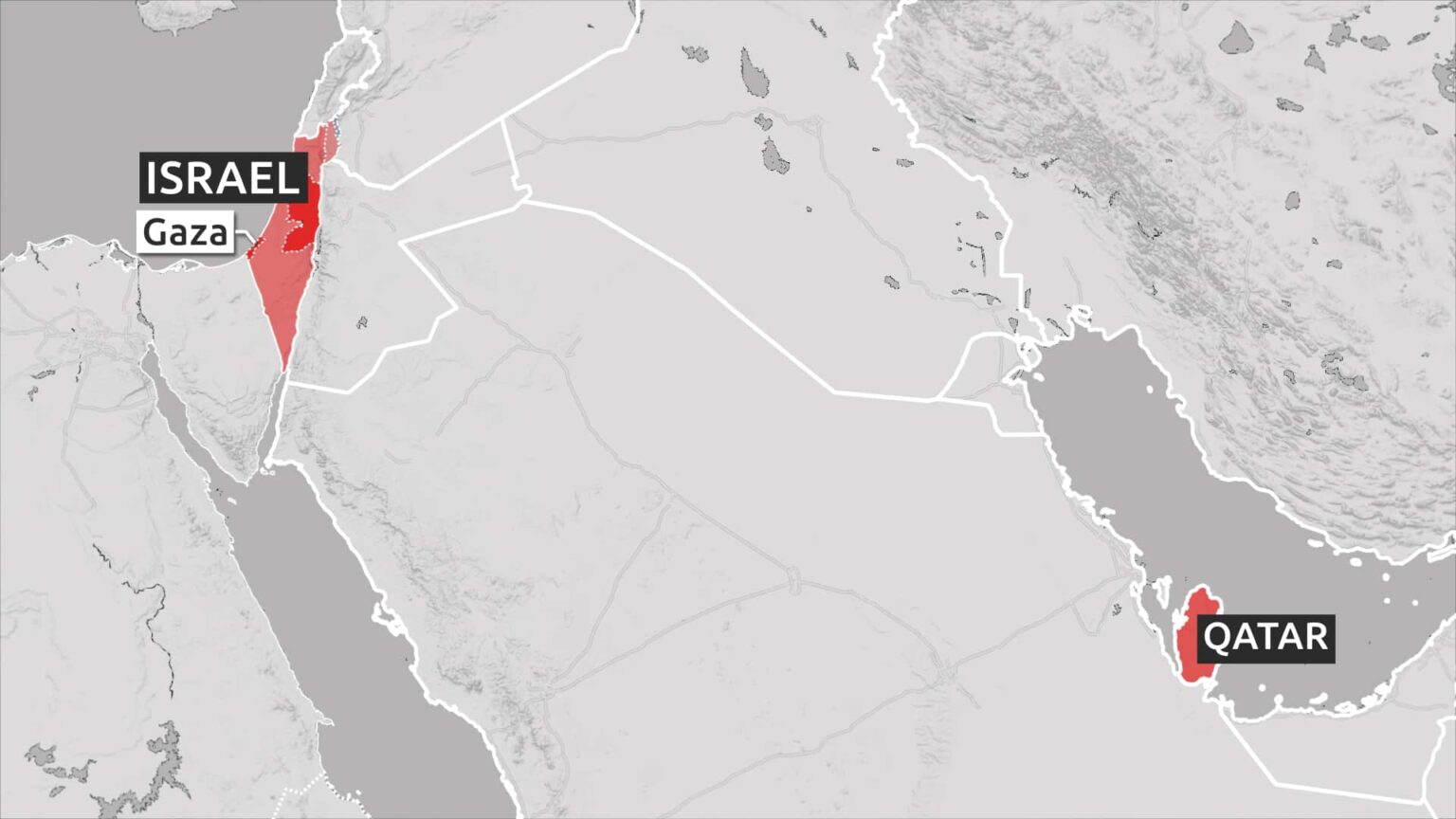
The interpretation of American statements about whether they knew, what they knew, etc. about the Israeli attack on Qatar, against high-ranking Hamas officials who were meeting there, has become a crossword puzzle. But an even bigger crossword puzzle is of course the attack itself and the stance of Qatar and Israel.
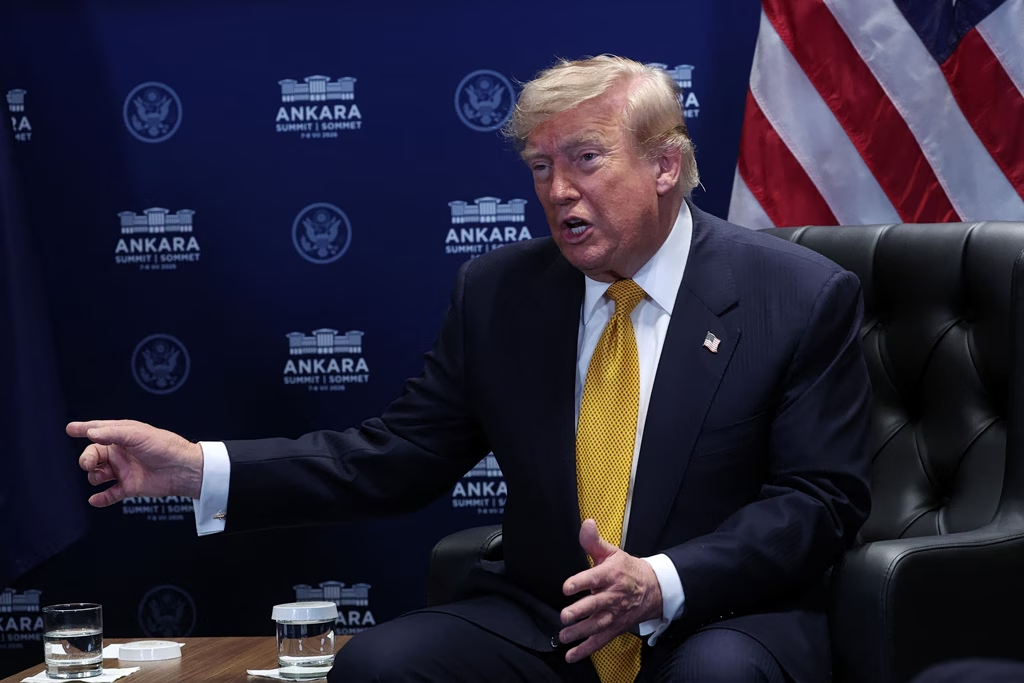
However, starting with the USA, the American President. D. Trump stated yesterday in Truth Social, that “…this morning, the Trump administration was informed by the United States Military that Israel was attacking Hamas which, very unfortunately, was located in a section of Doha, the capital of Qatar. This was a decision made by Prime Minister Netanyahu, it was not a decision made by me. Unilateral bombings inside Qatar, a sovereign nation and close ally of the United States, which is working very hard and taking risks with us to broker peace, do not serve Israel or America’s goals. However, eliminating Hamas, which has profited from the misery of those living in Gaza, is a respectable pursuit. I immediately directed Special Envoy Steve Witkoff to inform the Qataris of the impending attack, which he did, however, “Unfortunately, it was too late to stop it. I see Qatar as a strong ally and friend of the United States and I feel very bad about the location of the attack.”
Based on the above, the US does indeed disapprove of Israel’s action, but in a mild manner and indirectly provides a justification for it. In the same message, Trump stated that he spoke with the emir of Qatar and “assured him that something like this will not happen again”. The latter is the paradox, as the US thus appears capable of… controlling Israel from attacking Qatar again, but on the other hand simply “learned at the last minute” about the attack and “we didn’t have time to prevent it”.
Israel, for its part, stated that it “has nothing to do with Qatar” and that its only target was Hamas. In general, Qatar’s stance in the Middle East is one of the most ambiguous, as around 1,000 Hamas officials and their families already live there, many with luxury housing provided by the government, while at the same time the country hosts large American forces and US headquarters!
After the attack, however, Qatar described it as “state terrorism” and called for an emergency meeting of the UN Security Council, while Israel was condemned by Britain, France, the EU, the UN Secretary-General, the entire Arabian Peninsula, obviously Turkey, which said it “stands with the brotherly nation” (where it also maintains a military base with large personnel), Iran, Iraq, Syria, and other countries. Even Greece stated through its Foreign Ministry that the attack “constitutes a violation of Qatar’s territorial sovereignty and is contrary to international law.”
Apparently, Israel is not affected by the outcry, as from October 7, 2023 onwards it has been following its -known and long-standing- completely inward-looking policy of the harshest military response to every point, country, structure and organization that it considers to be a threat to it. And it does so with multiple methods, both with a massive intervention in Gaza, accumulating war crimes there and causing ethnic cleansing, but also with targeted “decapitation” strikes on its enemies. Neutralizing the Hamas leadership in multiple stages (the initial and subsequent ones), the Hezbollah leadership, the leading cadres of the Iranian Revolutionary Guards, the leading cadres of the Houthis, attacking within 2 years against Gaza, Lebanon, Iran, Syria, Yemen and now Qatar!
Back to the American reaction, it was supplemented with other controversial elements. Where the White House announced a Trump-Netanyahu conversation, with the American president here identifying with Israel’s position, that “the unfortunate event of the attack can become an opportunity for peace.” So is it “unfortunate-fortunate”, one would ask in good faith?
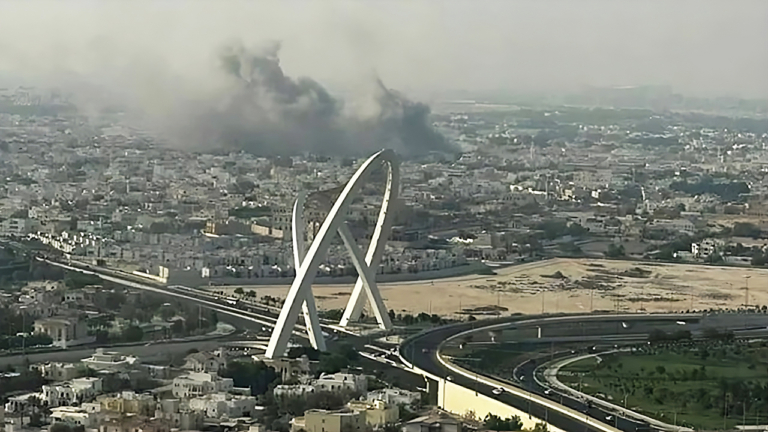
Israel’s rather contemptuous attitude towards the US was reinforced by a statement by the Israeli ambassador to the UN, Danny Danon, who said that “we cooperate with the US, but sometimes we make our decisions and then inform” and that “we do not always act in the interest of the US”. Trump also stated that he had instructed Secretary of State Marco Rubio to accelerate and conclude the defense agreement being discussed with Qatar.
We recall here that Qatar was the scene of another international conflict, as there, at the Al Udeid base, Iran retaliated with missiles and drones on June 23, 2025, after the American bombing of its nuclear facilities. An attack that was repelled with minimal damage, declared by Trump almost laughingly that “we had been warned”, and thus an opportunity was given for all parties involved to declare that they had “won”. Iran saying that “we hit the Americans inside Qatar, so we managed to strike a blow at… the great Satan”, thus satisfying its nationalist preaching, and the US accepting the blow (which was not substantial), so that Iran would defuse and the conflict with Israel would end – for the time being -. Finally, Israel also saw the cycle of this year’s “distance war” with Iran close, having achieved very powerful strikes there, but also seeing its air defenses reaching their limits, to stop the waves of Tehran’s ballistic missiles.
The Qatari influence
Somehow, the very wealthy Qatar, with just 3 million inhabitants and an area slightly larger than Thessaly, appears as a “magical” place in the Middle Eastern maze. A small country, however, with multifaceted footprints and interventions that… serves many: either as a hospitable host (of the USA, Turkey, the West in general, but also Hamas), or as an important mediator (of Hamas, the Afghan Taliban, Hezbollah, various Syrian groups, formerly the Muslim Brotherhood), or with underground interventions and support for extremist groups, something that for a period had caused a significant rift with neighboring Saudi Arabia and the other Gulf states.
Qatar influences the Middle East, Central Asia, and North Africa with its multifaceted foreign policy (on the side of the Tripoli government in Libya, and… sawing through Egypt with the support of the Muslim Brotherhood). While the Qatari state-funded, liberal-speaking Al Jazeera is the mass media outlet with the greatest influence in the Arab world today, that is, another very powerful lever for intervention.
But before we fall into conspiracy theories: The most likely interpretation of the Israeli attack remains the obvious one. A decision by Netanyahu, as a typical continuation of the regular violent extermination of every opponent, without qualms about any diplomatic and international crisis that this may cause and without any feeling of guilt for the abolition of international law. And with the belief that the negotiation with Hamas must be done with the Islamist organization in a state of dissolution and constant persecution (with the US in an observer role), therefore vulnerable to major concessions, which is what happened with Hezbollah.
Accordingly, with the American government regressing to its inability to propose something substantial for the end of the two-year multi-faceted war in the Middle East with Israel at the center. So either knowing in advance about the attack, even with little warning, or learning about it at the last minute, it should do nothing beyond the most clumsy “let it go” management of it: reprimanding Israel, assuring Qatar that it is “important” and hoping that its own mediation with Hamas will yield something substantial. Which Washington will then rush to reap by declaring “we brought peace”…
Finally, Qatar, playing a game of tactics and high politics with Emir Hamad Al Thani as its administrator – characteristically adapted to the economic logic and narcissistic populism of Trump, who visited it this year, “bathing” him with flattery and promises of huge investments and arms purchases – can also accept the relative risks of proximity and contact with the current extremism of the region. The Israeli, the Iranian, the interventions of the Islamists, the pressure of the Saudis and everything else. Understanding that the limits of diplomacy and military action are both distinct and, depending on the circumstances, very “fine”, but as long as the final goal is approached and its prestige increases, limited bloody fluctuations can be accepted.

