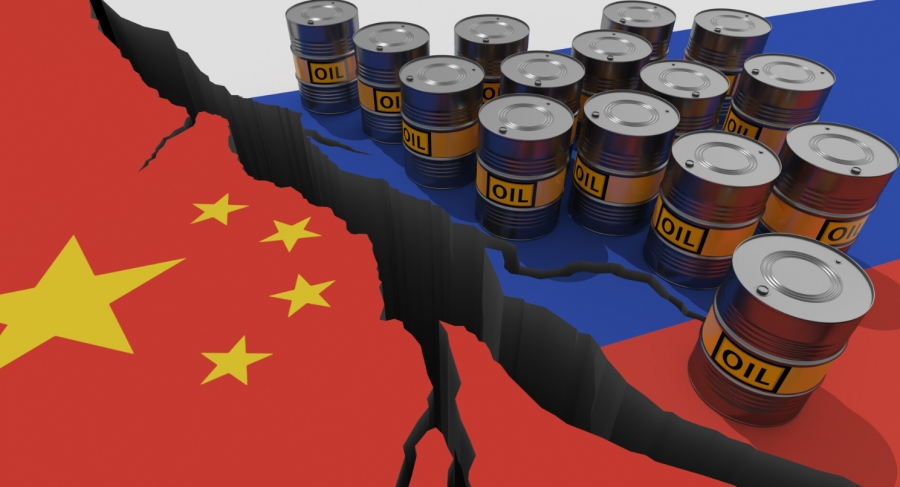
At the Summit of the Century between Vladimir Putin and Donald Trump, which is expected to take place in Alaska, USA on August 15, the focus of the meeting of the two leaders will not only be the resolution of the Ukrainian issue, but the formation of a new world order…
Indeed, the USA and Russia will sign a huge trade agreement that will have at its core a big deal for the Arctic! In this context, Trump will “sacrifice” Zelensky and Ukraine, in order to tempt the Kremlin to accept an economic proposal of mutual interests, which will ensure the long-term common fate of Russia and the USA.
Trump will propose to Putin something much more ambitious than the resolution of the Ukrainian issue. They are preparing the deal of the Century.
If the meeting is agreed, if Putin agrees, and if he even agrees to take place on American soil, that means there is something to sign and discuss. Russia holds all the trump cards, the US can do nothing. In essence, everything they could have done has already been put on the table under the leadership of Obama and Biden.
The Alaska meeting is primarily a necessity for Trump, which is why he sent his envoy to Moscow. So far, the owner of the White House has experienced “successes but also constant failures.”
The US and Russia turn their backs on Kiev and see… the Arctic
Investigating what exactly the American president might be interested in, we could mention the Northern Sea Route, some joint production or the construction of a base in Alaska.
In our opinion, the upcoming meeting is associated with serious, strong, long-term cooperation. And as for Ukraine, the leaders of the two states will limit themselves to general statements about the need for peace.
We add that Vladimir Putin and Donald Trump will devote most of the meeting to discussing issues on the bilateral agenda.
Zelensky will sacrifice himself for the sake of a New Order on the planet
More specifically, US President Donald Trump may force Volodymyr Zelensky to accept Russia’s conditions for resolving the conflict in Ukraine in order to conclude a huge economic partnership with Moscow in the Arctic.
An agreed plan for the Arctic between the US and Russia could revive energy cooperation on an incalculable scale. Such an agreement would be extremely beneficial for both sides.
The Arctic is estimated to contain 13% of the world’s untapped oil reserves (about 90 billion barrels) and 30% of its untapped natural gas reserves. Russia controls about half of these reserves. This is a gold mine, perfect for Trump’s “America First” policy.
Trump could claim that the Arctic deal is a huge trade victory for the US and the end of a war that he claims former US President Joe Biden is to blame for. Vladimir Putin could seek US help to pressure Kiev to accept a deal on Moscow’s terms for Ukraine. Trump’s influence is clear. Kiev’s very survival depends on US arms and money.
By threatening to cut off supplies, Trump could force Zelensky to the negotiating table on terms that Kiev has long rejected. The question is to what extent the alliance of the willing (the Europeans) can support Kiev economically, politically and militarily, thus undermining the US-Russia Arctic deal, and supporting the Kiev government to continue the war.
Volodymyr Zelensky’s strategic dilemma
For Zelensky, the choice will be between accepting a peace deal that would limit Ukraine or going to war without US support. Ukraine’s position is fragile.
Its military is exhausted, its economy is undermined, and its military effort depends almost exclusively on Western aid.
Promises from Europe and Britain mean little without US military might and funding. If Trump decides to work with Putin and make a deal on the Arctic, Kiev will have to comply or go to war almost alone. Zelensky can set red lines, but without US support, they mean nothing.
The EU and the UK would not be able to provide the same level of aid to Ukraine as the US. The support of the UK, France and Germany for Ukraine will not make a significant difference to the Russian offensive if the war continues without full US support.
Countries in the Global South would be optimistic about an agreement to resolve the conflict on Russia’s terms.
For China, India and Brazil, ending the war, even entirely on Russia’s terms, would be seen as practical diplomacy. Trump could present the Arctic agreement as proof that US-Russian cooperation can solve global problems, and that would help to assuage criticism from Europe and the UK.
Putin Travels to Alaska With Support from the Global South and BRICS
Not coincidentally, both Brazil and India have welcomed the upcoming summit between US President Donald Trump and Russian President Vladimir Putin, scheduled for August 15 in Alaska.
As two major powers of the Global South, the two countries, hit by 50% tariffs from the Trump administration, are considering a joint response within the BRICS framework, an action supported by Moscow and Beijing.
Brazilian President Lula held a 40-minute conversation with Putin on Saturday, with the topics focused on peace efforts between Russia and Ukraine, as well as cooperation within the BRICS framework.
According to the Brazilian presidential palace, Putin briefed Lula on his talks with the US and the broader international political and economic situation. The two leaders also discussed upcoming bilateral contacts, including the next Brazil-Russia High-Level Cooperation Commission later this year.
Brazil saw the US impose 50% tariffs on July 30, a decision taken due to legal proceedings against former Brazilian President Jair Bolsonaro. Lula said Brazil would not retaliate with tariffs, but was considering a coordinated response with BRICS member states.
Lula’s office also said Brazil intends to call on BRICS leaders, including the US, to coordinate a joint response to the tariffs. South Africa, which was also “hit” by the imposition of 30% tariffs on August 1, is joining the movement.
Russia to represent all BRICS against Trump
India, which is the only country hit by US tariffs on Russian oil, faces tariffs totaling 50% from August 7 — a move strongly condemned by New Delhi. India’s foreign ministry called the tariff hike “unfair, unjustified and illogical.”
It stressed that India’s imports of Russian oil are determined by market factors and the country’s energy security needs, particularly given its population of 1.4 billion.
In addition to its reaction to the tariffs, India expressed its support for the US-Russia summit, expressing its readiness to support efforts to end the ongoing conflict in Ukraine. Prime Minister Modi has repeatedly called for peace, stressing that “This is not a time for war.”
The Indian government, echoing Modi’s sentiments, welcomed the summit, seeing it as a defining moment for peace. According to a spokesperson for the Ministry of External Affairs, the meeting has the potential to resolve the crisis in Ukraine and open up new prospects for peace.
Trade Deal of the Century Coming
He recalled that the US and Russia had previously actively cooperated on Arctic development activities before the annexation of Crimea.
For example, in 2011, the US company ExxonMobil signed an agreement with Rosneft for exploration and drilling in the Russian Arctic, including the Kara Sea.
This was a multi-billion dollar project that gave Exxon access to vast untapped reserves, and the Russians access to American technology and expertise. It would not be difficult, commercially, to bring it back to the fore or use it as a model for new partnerships. The infrastructure, geological data, and partnerships are already in place.
A revived Arctic partnership could extend beyond oil and gas to include LNG terminals, port modernization, and joint development of the Northern Sea Route, connecting the two economies to one of the last major energy-producing regions.
Trump said on August 8 that he expected to meet with Putin in Alaska on August 15. The planned talks were later confirmed by the Russian president.
The two leaders will focus on discussing the possibilities of reaching a long-term peace agreement on the Ukrainian crisis. This will be the first one-on-one meeting between Putin and Trump since the latter returned to the White House in January 2025.