


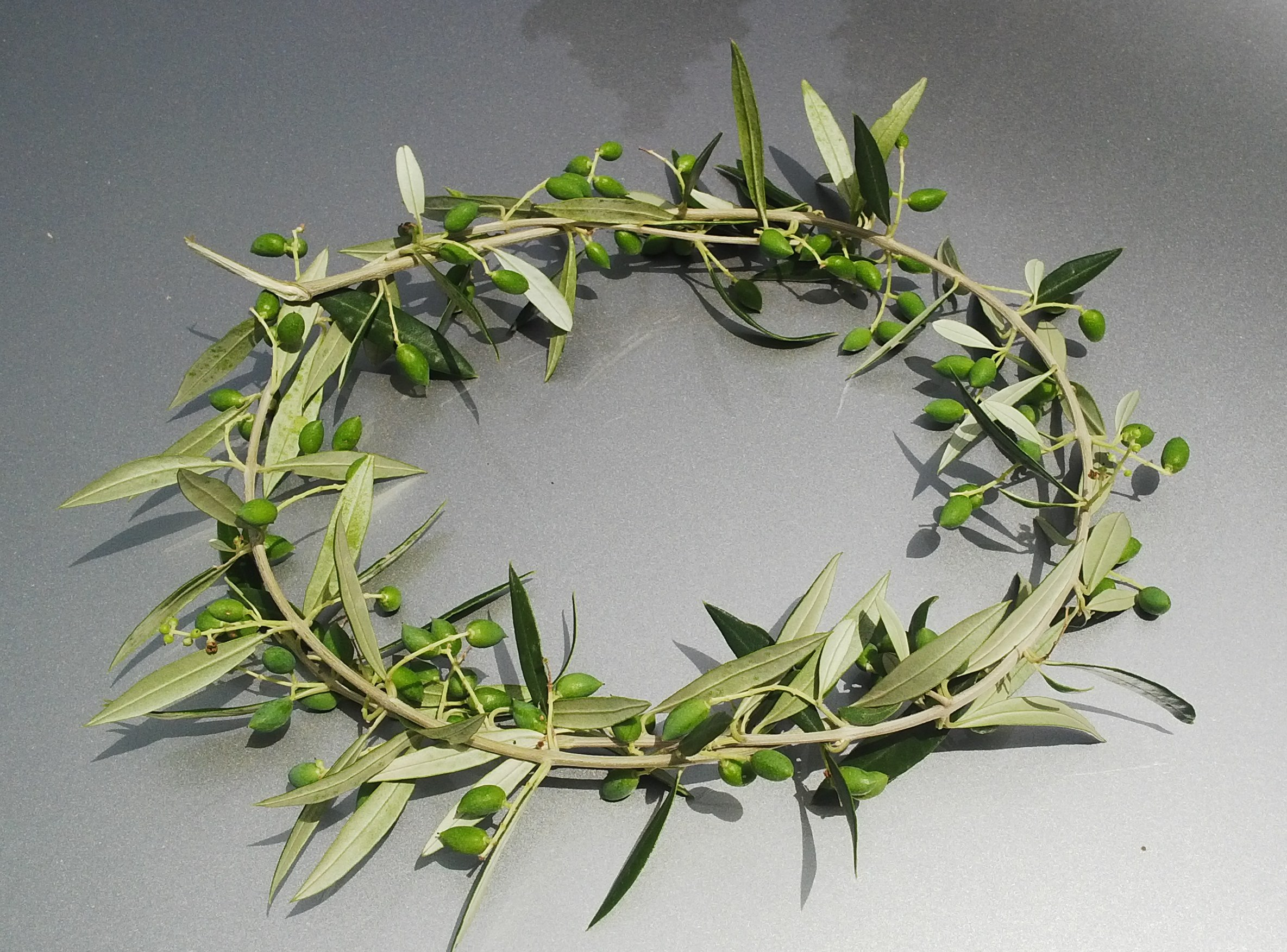
“Alas, Mardonius, with whom do you make us fight, those who do not fight for money, but for their good reputation only!” said the leader of the Medes, Tigranes, to his general Xerxes, when he learned that the Greek athletes fought to receive only a humble wreath.
But this humble wreath of celery, laurel or wild olive changed the life of the winner forever. Especially the Olympic champion. They acquired the right to erect their statue in Olympia, and often a statue was erected in their city of origin, where their fellow citizens welcomed them as heroes and honored them for the rest of their lives. They received an income from the state and were exempt from tax obligations. Some, however, were loved more than others and went down in history as the most famous Olympic champions.
They are the big stars of their time, faces that would adorn the walls of teenage bedrooms and the covers of magazines, if they had been invented.

The legendary Milo remained a wrestling champion for 24 years, five times a periodontist, that is, winner of all four Panhellenic Games of the same cycle. He won ten times in the Isthmian Games, nine times in the Nemean Games and five times in the Pythian Games of Delphi. He won six times in the Olympic Games. Once in 540 BC in the youth competition and five times in the men’s competitions in the Olympiads from 532 to 516 BC (62nd to 66th). He competed in the next Olympiad, but he failed to win, not because someone with greater strength was found, but because he himself was already forty years old, as a result of which his young opponent, Timasitheus, managed to wear him down on the defensive.
His strength was proverbial and he spent it generously both to entertain his friends with displays and to protect them. At a gathering of Pythagoreans (he was himself a follower of Pythagoras and perhaps his son-in-law), the roof of the building began to collapse. Milo held on to the central beam with his hands until all his friends were rescued and then managed to save himself.
To Milo the Crotonians owed not only the glory that he had brought to their common homeland for so many years, but also their victory in the war against the Sybarites. The battle was decided in their favor, soon after Milo rushed in wearing his Olympic wreath, dressed in a lion’s skin like Hercules.
Unfortunately, Milo did not have the glorious end that would have suited him. One day he saw a tree trunk in the forest that had been left half-split with the wedges still on it. He was tempted to test his strength and tried to split the tree with his hands. But when the wedges slipped out, his hands got trapped in the trunk. He remained trapped there and was torn apart by wolves during the night.

He was called the son of Hercules, but in reality he was the son of Timosthenes, who was a priest in the temple of Hercules (you can still see the ruins of the temple at Cape Evreokastro today).
When he was still a child, Theagenes took a bronze statue of a god from the market of Thassos and carried it home alone. His countrymen were furious and many of them wanted to sentence him to death for the sacrilege he committed. However, an old man convinced them to show leniency. Little Theagenes returned the statue to its place and the Thasians did not deprive their homeland of the great glory that the naughty little boy had in store for them.
In 480 BC, a few months before the glorious naval battle of Salamis, Theagenes won his first Olympic crown in the boxing event and in the following Olympiad he won the pankration. He took part in many more games and was crowned winner ten times in the Isthmian, nine times in the Nemean and three times in the Pythian, in the boxing and pankration events. Once more he competed as an endurance runner in Phthia, in games in honor of Achilles and won first place there too. Throughout his career he won 1400 times.
We can assume that he was the most famous resident of Thassos in his time, as was the case with the Olympic champions. When he died, the Thasians erected his statue in a prominent place to honor him forever. However, there was one among them who for years could not overcome his anger against this great athlete. He had tried many times to defeat him in the games, but without success. So he would go every now and then in the night and hit the statue, trying to vent his anger, until at some point, it came loose from its base, fell on him and killed him. His sons asked the court to punish the statue, so that justice could be served for their dead father. The judges decided to throw it into the sea.
A short time later, a great drought struck the island, and when the situation became dangerous, the Thasians asked for an oracle from the Oracle of Delphi. The Pythia decreed that they should bring all the exiles back to Thassos, which they did. But the drought persisted. In a second oracle, it is revealed to them that they forgot to bring Theagenes back. The fishermen of the island managed to locate the statue at the bottom and returned it to its place. The drought subsided and from then on, Theagenes was deified and worshipped as a healer.

Diagoras was a descendant of the king of Ialyssus, Damagetos, of the Eratidae family.
The boxer from Rhodes was the model of the virtuous athlete and remained in Greek tradition as the son of the god Hermes. This “huge, haughty man” remained in history, not only for his victories, but also for his integrity. Pindar, in the ode he wrote praising his victory at the Olympiad of 464 BC, prays for him to Zeus:
“…give honor to the man who excelled with his fist, and let all citizens and foreigners honor him with respect. For he walks straight on the path that hubris hates, deeply respecting the wisdom of his wise ancestors…”
This ode was engraved in golden letters in the temple of the goddess Athena of Lindos.
Diagoras won four times in the Isthmian Games, twice in the Nemean Games, at least once in the Pythian Games, while he distinguished himself many times in local games in Rhodes and other Greek cities. But, even when he retired, glory did not abandon him. He lived long enough to see his sons wear the crown of victory at Olympia. In 448 BC, Damagetos won for the second time in the pankration and Acousilaos in boxing. The two brothers lifted their father on their shoulders, while the crowd in the stands cheered them enthusiastically and showered them with flowers. At one point, one of the spectators shouted to Diagoras: “Die, Diagoras, you will not ascend to Olympus either,” meaning that this was the highest level of glory that a mortal could achieve. In that moment of supreme glory, Diagoras died in the arms of his sons, the happiest man in the world!
The respect enjoyed by Diagoras’ family is evident from an incident recorded during the Peloponnesian War. It so happened that in a naval battle the Athenians captured Dorias, the third son of Diagoras, winner of the pankration in three successive Olympiads and periodontist from 432 to 424 BC. According to custom, they should have either demanded a ransom for his release or killed him. But they released him immediately, without a second thought.
Diagoras’ grandsons, Eucles and Peisirodus, were also crowned Olympic boxing champions in 404 BC.