The G7 summit will be held from June 15 to 17 in Kananaskis, Alberta, Canada. Topics on the agenda, according to the summit website, include international peace and security, global economic stability and the digital transition.
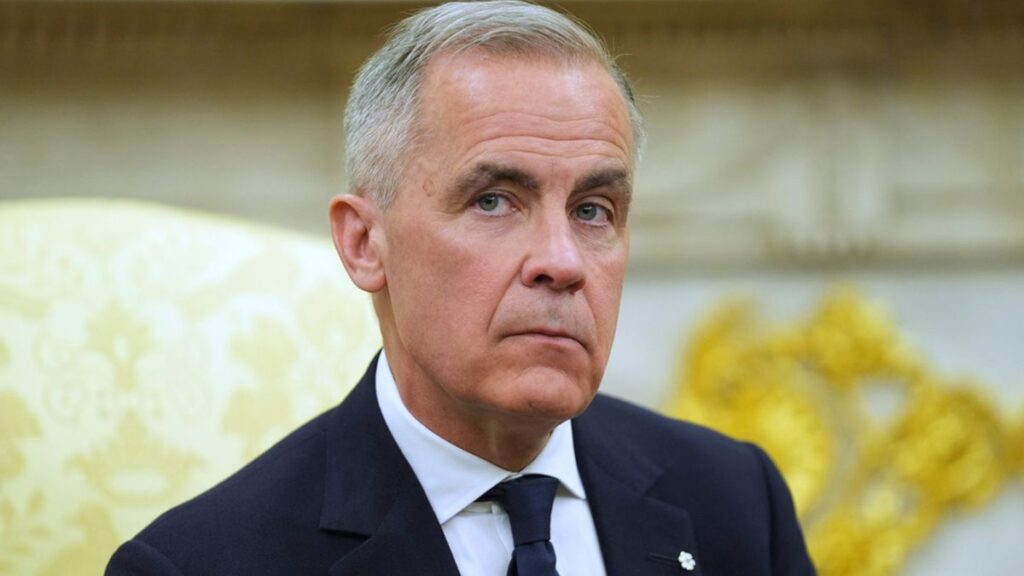
Canadian Prime Minister Mark Carney has invited his Indian counterpart Narendra Modi to the upcoming G7 summit in Alberta, marking a turnaround in Canada-India relations that had deteriorated in recent years.
The invitation was made during a phone call on Friday, June 6. During the call, the Canadian prime minister extended an invitation to Modi and agreed to stay in touch, according to a statement released by Carney’s office.
Modi confirmed the invitation and thanked Carney in a post on X, adding that he looked forward to meeting him at the summit in mid-June.
The G7 (Group of Seven) Summit is an international group of countries with the world’s strongest developed economies that cooperate on economic policy, security, global development and international stability. The members of the G7, which meet once a year to discuss the issues on the annual agenda, are France, the United States, Germany, Japan, Italy, Canada and the United Kingdom.
Along with India, Mark Carney has also extended an invitation to Mexican President Claudia Schiffer, who said in late May that she had not decided whether to attend. Ukraine’s Volodymyr Zelensky and Australian Prime Minister Anthony Albanese will attend. A full list of invitees has not yet been released.
The reason why India’s presence is deemed necessary this time is that the G7 meeting will discuss issues to which India can contribute significantly, such as critical minerals and energy security.
In addition, India is a vital link in the supply chain and in any discussion of stability in the Indo-Pacific as it is a calculated counterweight to the growing influence of China.
In the diplomatic part now, India’s presence in the G7 will bridge the cold climate that had been created between India and Canada. The background to the disagreement between Canada and India is the murder of Sikh activist Hardeep Singh Nijar in June 2023 in the Canadian province of British Columbia.
This case caused serious tension in bilateral relations between India and Canada. The then Canadian Prime Minister Justin Trudeau accused the Indian government of being responsible for the targeted killing of Nijar, a charge that New Delhi rejected. The two countries had mutually expelled their ambassadors and other high-ranking diplomats.
What is the global geopolitical context with the simultaneous crises that currently exist in which this G7 is taking place? Trump’s re-election to the White House has stirred up the waters of the G7.
The United Kingdom, under the leadership of Keir Starmer, despite 2025 recognizes the strategic importance of Europe for Britain.
Under Friedrich Merz, Germany, after the constitutional reforms it made, is now making massive investments in defense and infrastructure, placing Germany in a leading position in European security.
Germany is playing a strategic double game, reaffirming its commitment to NATO while supporting European strategic autonomy. France is offering to extend its nuclear umbrella to European partners and wants to expand Europe’s defense capabilities in cooperation with Germany.
The UK, France, and Germany, recovering from the shock of Trump and the Russian invasion of Ukraine, have stepped up security cooperation. A rising Poland is now among Europe’s leading powers. The Weimar triangle of France, Germany, and Poland is emerging as a powerful force in central Europe. Britain, France, Germany, and Poland are seeking an expanded presence in Asia and the Indo-Pacific.
Japan, the only Asian member of the G7, has long advocated European involvement in Asian security as a counterweight to Chinese aggression.
The India-Europe relationship has begun to strengthen, as reflected in their shared foreign policy. Europe’s push for strategic autonomy aligns with India’s worldview. The once-improbable India-Europe Free Trade Agreement now seems feasible.
The proposed India-Middle East-Europe Economic Corridor aims to reshape Eurasian connectivity and secure alternative supply chains amid US-China competition. The EU-India Trade and Technology Council (TTC), established in 2023, promotes cooperation in artificial intelligence, quantum computing, space and green technologies.
The Europe 2025 rearmament plan, which aims for €800 billion in defence modernisation by 2030, creates opportunities for security cooperation with India.
India’s participation in EU defence mechanisms marks a shift from arms deals to joint development.
For Europe, India has become an important part of its strategy for economic and military diversification. For Delhi, Europe offers much-needed depth to India’s relations with the major powers. Together, they can enhance the prospects for a diverse global order amid growing signs of bipolar dominance by the US and China.
After examining the global context in which the G7 powers operate politically, as well as the framework for strengthening India-European Union ties, we return to examining additional reasons why India has a role of strategic importance in the G7.
This year’s summit aspires to support the transition to renewable energy sources and India has strong expertise in this field.
We must not forget that India, as one of the world’s largest pharmaceutical companies, has a crucial role in ensuring vaccines and medicines. Regarding the expertise part, India is a dynamic technological hub with notable activity in artificial intelligence, the digital economy and start-up companies.
India represents the views of countries in the South such as Brazil and several African countries such as Kenya, Tanzania, Uganda, Rwanda, Nigeria, Ghana, Senegal, South Africa, Mozambique, Zambia, Egypt, Ethiopia and Congo. Therefore, its presence at the summit strengthens the political prestige and legitimacy of the G7.
Therefore, following Machiavelli’s saying in The Prince that “fate governs about half of our actions, but the rest depends on us”, Canada’s move to leave the past with India behind and envision an expanded, stronger than ever G7 is considered politically mature.