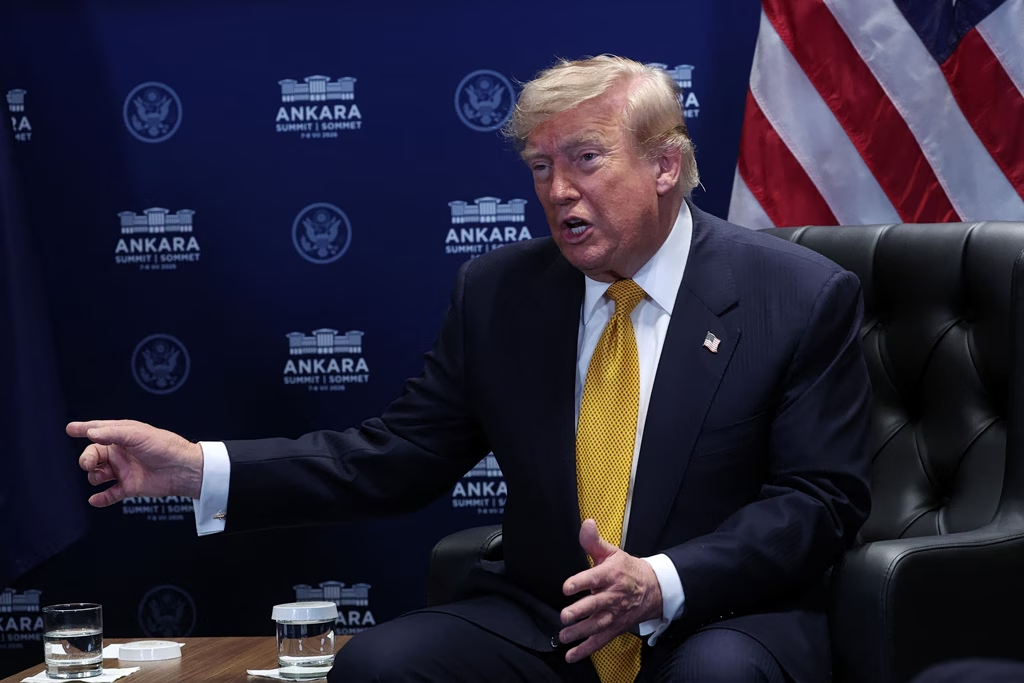



Elon Musk has made a tumultuous exit from Donald Trump’s White House. His erratic behavior, drug use, and obnoxious behavior made him an easy target for the media—he was a public figure, not a policymaker. But Musk has always been the driving force behind Project 2025 author Russell Vought’s agenda—and Vought is still in power.
Upon his official departure from the White House, Elon Musk has repeatedly complained that he and the Department of Government Efficiency (DOGE) had become the bulwark of government, absorbing blame and anger for almost everything the president and his team have done that people don’t like.
The useful punching bag
The twist is that this is one of the rare times the Tesla billionaire has actually been right about something. Over the past five months, Musk has been a useful punching bag for Democrats, the broad left, the press and pretty much anyone else looking to politically injure the second Trump administration. And who can blame them?
His bizarre behavior, blatant corruption and general dislike were tailored to get clicks and shares, not to mention make him an easy target for Trump critics trying to link the president to a sinking rock, which has had real political consequences for the administration.
But trying to keep the spotlight on a departed Musk may not be as politically effective as critics hope, and risks missing the point of what’s really going on in the Trump White House. The reality is that while Musk was and still is a convenient political opponent, even when he was in the thick of things in the White House, he was only doing the dirty, practical work of someone else: Russell Vought, the architect of Project 2025 and director of Trump’s Office of Management and Budget (OMB).
Anyone hoping to properly judge the Trump administration, not to mention what the people running it are trying to do, must shift their focus from the billionaire to Vought.
Spotlight on Vought
Shifting the focus to Vought will be difficult because he spent this first half of the peak anger against DOGE cuts working quietly and out of the spotlight, is much less friendly to digital clicks and TV viewership than the extroverted Musk, and is generally a less volatile, more media-savvy figure who is unlikely to create the same set of political headaches for the White House.
But aside from the president himself, he is the driving force behind Trump’s agenda — and now he will start acting that way.
Vought will now become the official architect of Trump’s austerity program, working with Congress to make further cuts and get legislative approval for some of those already made under Musk, while also making the media rounds to sell it to the public. Last Sunday (June 1), Vought was on CNN defending the cuts and other parts of the White House agenda.
Even before he was appointed to the government role, Vought was the man behind Trump’s disastrous executive order in January that halted all federal grants, which the White House was forced to quickly rescind.
The entire legal theory and approach that underpins DOGE—that the US president can simply refuse to spend money that Congress has approved for various agencies and programs and can dismantle or abolish them entirely at will—comes from Vought, who has been closely involved in the DOGE cuts since they began.
Trump’s second term has closely followed Project 2025, the policy plan that Vought was so central to creating, and he admitted to undercover reporters last year that he would continue to shape Trump’s policy outside of the administration even if he were not given a position in the White House.
Look at the budgets and policies that Vought has written and requested while serving in Congress or as a citizen shaper on the MAGA program, and you will quickly see that the cuts attributed to Musk would have happened one way or another while Vought was in the White House.
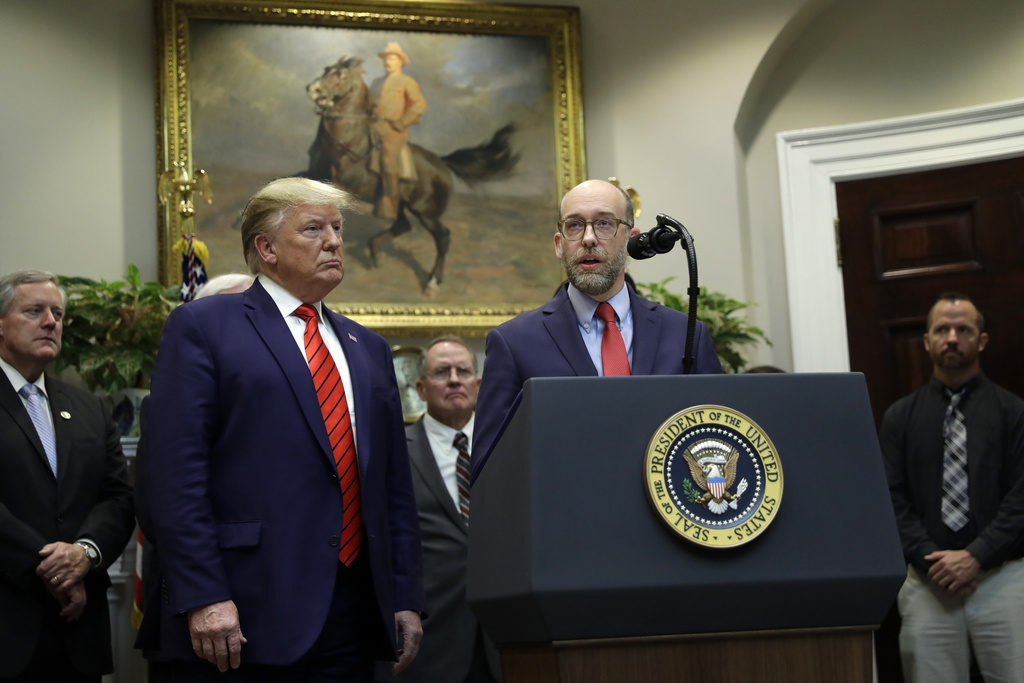
The project in progress
Vought has advocated for privatizing the U.S. Postal Service and repealing Obamacare, as well as cutting or eliminating the Department of Education, Medicaid, USAID, public broadcasting, the Centers for Disease Control and Prevention, the Federal Aviation Administration, and many others.
Vought has long targeted major social programs like Social Security (which he wants to privatize) and Medicare, and openly stated in an interview two years ago that his goal is to use this current spate of government spending cuts to sway the public toward the idea, so that at some point later they can attack these major, previously “untouchable” programs.
But that’s exactly why Vought could, in fact, become as much of a political obstacle to Trump as Musk — it would just require substantive and well-targeted criticism that is less responsive to the sleazy headlines than Musk’s tenure. So far, that hasn’t happened.
The entire legal theory and approach that underpins DOGE comes from Vought. The liberal press tends to portray Vought as a scary “Christian nationalist,” a term that doesn’t mean much to the average person and might even sound appealing to an audience that is still overwhelmingly Christian and, like any population, considers its national interest its top priority.
The Constitutional View of Presidential Powers
Meanwhile, in her interview with the OMB director, CNN’s Dana Bash devoted a great deal of time to the subject of the Vought “seizure” theory and its constitutionality (the ability of the president as head of the executive branch to eliminate spending or public agencies that Congress has authorized), an important but complex legal issue that is unlikely to resonate well with many voters.
What is both accurate and a more effective line of criticism is that Vought’s ideology — a militant anti-government zealotry that literally considers government investment in infrastructure to be completely illegal and wants to eliminate or sell off to the highest bidder almost every government program, from Medicaid to NASA — is alien and unappealing to most modern Americans, including Trump’s own working-class base, and will hurt them and their families.
The Big Complaint
His entire career trajectory has been defined by the fact that his policy goals have consistently proven so toxic to ordinary Americans, including Republican voters, that they have never been able to be enacted democratically.
Vought’s big complaint is that every time he wrote a budget that took away people’s health care and dismantled half the government (except for the Pentagon, of course), it never passed, because Republican members of Congress who supported his anti-government ideology would balk when they realized they would be attacked by their constituents if they ever dared to put it into practice.
This ultimately led Vought to Trump’s court. Vought has openly stated that both the political consensus in the US and the prevailing legal opinion are so far removed from his anti-government vision that the only way to make it a reality is to take radical, unprecedented steps—like empowering an all-powerful president to unilaterally dissolve the federal government and wage war on the legislature and judiciary if they get in the way.
Musk’s departure should be an opportunity to refocus control on Vought, which has managed to go somewhat unnoticed for the past five months thanks to the Tesla billionaire’s focus.