Sustainability in all its glory in a new ecosystem created from scratch, replacing the previously barren landscape? And yet it happens!
In a utopian environment, rocks would become olive trees and stones would be transformed into fruits so nutritious that even birds from neighboring islands would migrate to enjoy them. In these shadows of the olive trees, foxes would come to hide again, and weasels would take walks at night on the hills, among the olive trees, the coastal amaranths, the semi-shrub helichrysums and the native wild carrots.
But why should this setting seem utopian? On the western side of Lesvos, on the Sigri peninsula, a “green” investment is creating a new ecosystem and giving life to previously barren land, while simultaneously upgrading the quality of existing biodiversity.
How does “green” investment transform a barren land?
While global warming is reaching its peak, fires are increasing and desertification seems like a product of science fiction, at the same time, in the olive grove of Sigri, against the signs of the times, the negative environmental footprint is turning into a positive one.
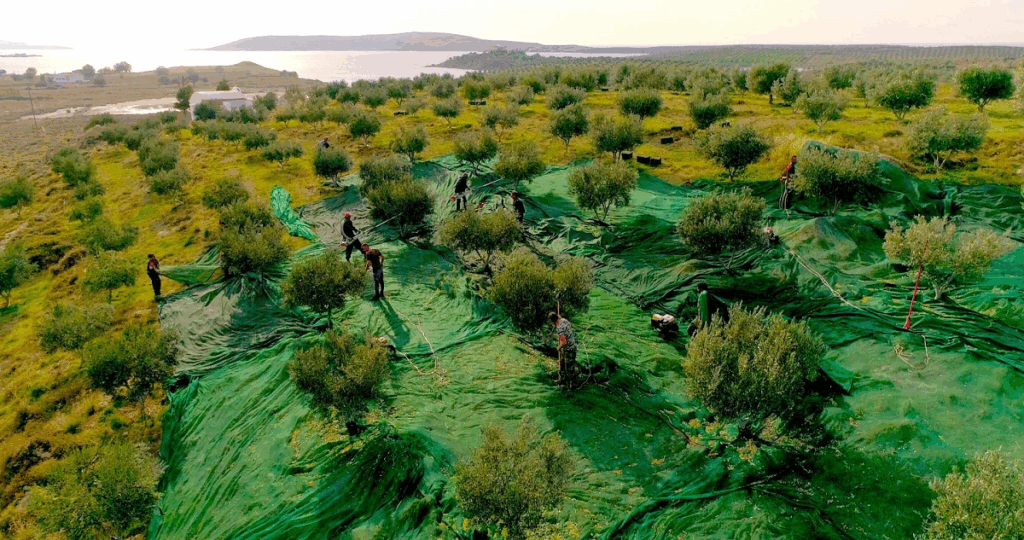
40,000 young olive trees, 20,000 fruit and ornamental trees are transforming the barren landscape of an area of 2,000 acres.
Geological Heritage
We are located in the western part of Lesvos, in the area of the seaside village of Sigri, in a place that has a unique wealth of landscapes of natural beauty. The whole of Lesvos has been included in the UNESCO Global Geoparks Network, but especially in Sigri, the unique evidence of geological history dominates, the Petrified Forest, which has been declared a “Preserved Monument of Nature”.
The land of contrasts: From lush olive groves to volcanic structures
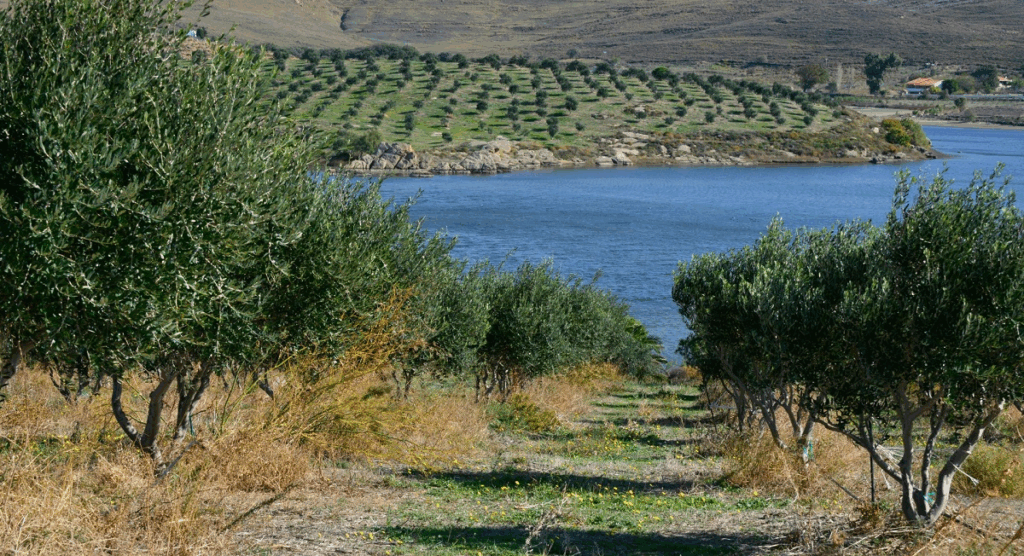
If we look at Lesvos from above, we notice that half of the island is lush with olive groves and dense vegetation that literally ends in the sea. The Lesvos olive grove grows in suitable microclimatic conditions (soil and humidity) covering hills and slopes, supported by dry stone terraces, another cultural heritage. Historically, olive cultivation built a great industrial power consisting of traditional olive mills, millstones, bottling plants and warehouses, some of them with unique architectural value and most of them, now, classified as monumental.
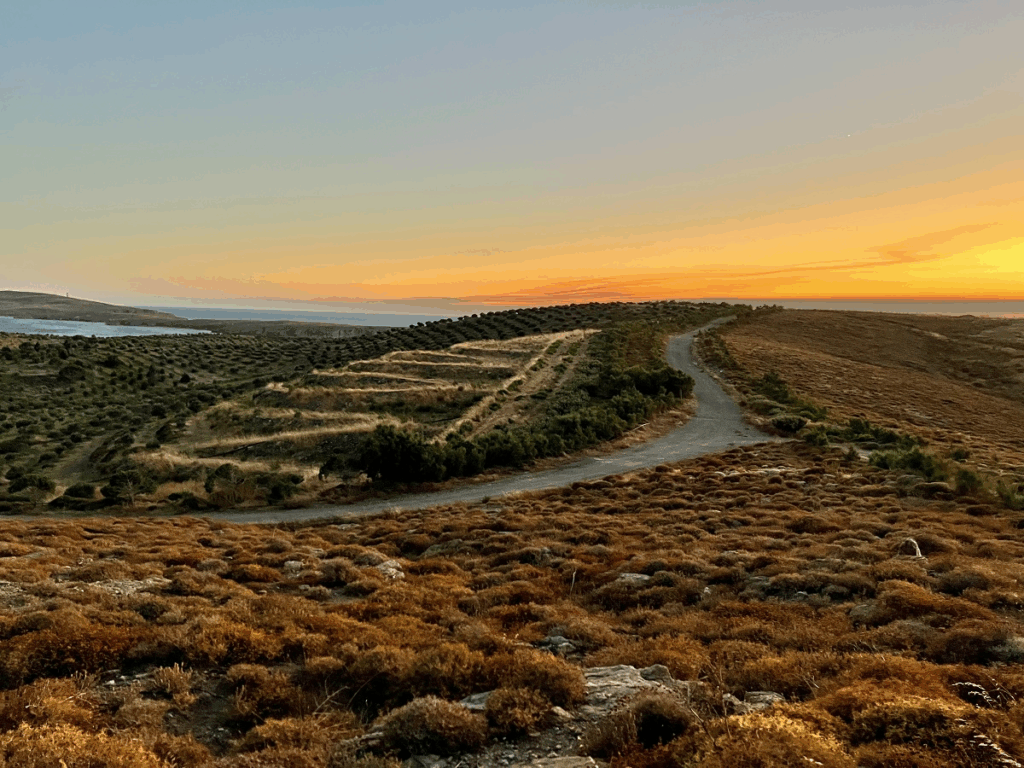
On the contrary, the other half of the island, to the west, from the peaks to the coast is bare of vegetation and seems barren. 17 million years ago, volcanic activity caused a change in everything, the lava in its path created impressive formations, eventually leaving behind rocks of a clay composition. Traveling by road from Antissa, heading towards Sigri, we observe in places the natural monuments of petrified tree trunks, low vegetation of phrygana, micro-herbs and rare wild orchids, elements that, taken together, give it the title: “botanical paradise of the Aegean”.
So, we have half an island green in shades of olive and half brown in shades of stone. Or at least until recently, because in the last 15 years, with the olive grove growing on the Faros peninsula, the colors have begun to change. The entire landscape is transforming and coming to life again, millions of years later.
Geotourism and Geoecology
Geotourism expresses the experience of natural and cultural landscapes in contrast to the common urbanized lifestyle. It is a modern phenomenon that has begun to become known worldwide since the late 1980s and is a new factor in the tourism industry. Therefore, in recent years it has evolved into an attractive concept, attracting tourists of different profiles and interests, especially in relation to the tourism industry and environmental organizations. The growing demand for “geo-” has led to the development of attractions based on geological formations such as caves, volcanic craters, hot springs, rocks and waterfalls. These resources, transformed into tourism products, have transformed many areas into unique geotourism destinations and issues related to their management and care, covering issues such as sustainability, impacts and other environmental issues. Such an important effort for planetary and human health is underway in Sigri.
Microclimate
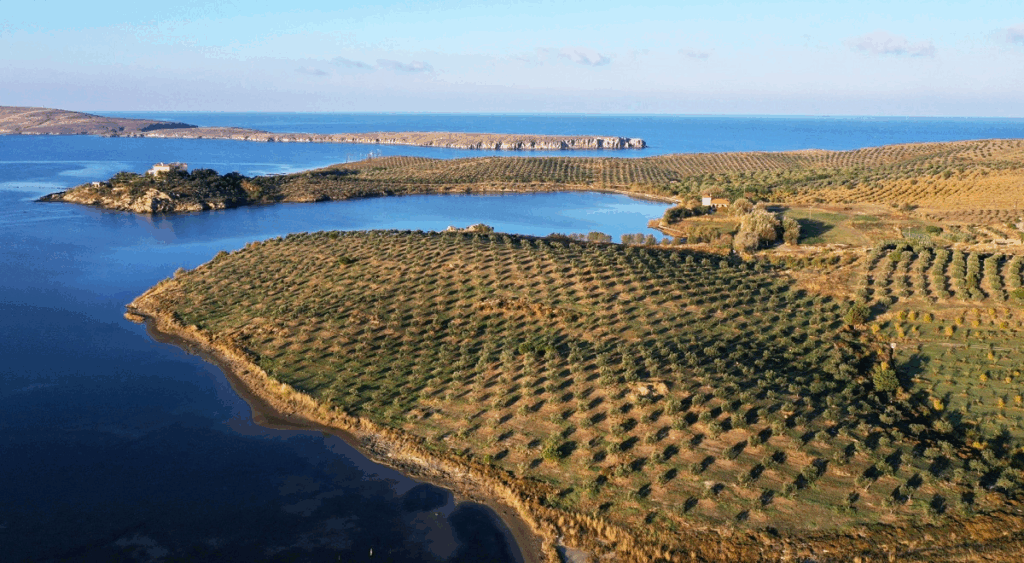
This axis includes the geotourism interest of Sigri, with the vast olive grove of the Faros estate creating an unprecedented, unique microclimate. The sea air and the saltiness of the Aegean, the seaweed, the volcanic rocks, the small sand dunes, the birds flying to and from the rocky islet of Nisiopi, all these elements create a rare bioclimatic phenomenon. A microclimate that is formed in connection with the high degree of difficulty in cultivating olive trees. This is a great challenge for Antonis Tirpintiris and his family who, through green investment, have made a bet to upgrade their place of origin and leave a priceless legacy for the future of future generations.
12 different varieties of olive trees
In an area of 2,000 acres, between the rocks, the beaches and the hills, 40,000 olive trees are cultivated – without violent interventions in the natural relief, with linear planting, while the 20,000 different species of trees that surround it function as reinforcements, not only for beautification, but mainly for the protection and strengthening of biodiversity. In the olive grove of the Faros estate, 12 different species of olive trees are cultivated from local, Greek and international varieties such as: Adramyttini, Kolovi, Koroneiki, Kalamon, Halkidiki, Mavroelia, Arbequina, Frantoio, Leccino, Aricombi, Picual and Melolia.
A Sustainable Ecosystem in a Desertified Area
At the Faros estate, olive tree roots revitalize the soil, stabilize it and make it fertile, while not burdening it with the use of chemical fertilizers. Instead, they collect local natural materials from animal by-products, materials derived from tree pruning as well as seaweed (marine angiosperm – Posidonia oceanica) to produce compost that is then fed to the trees. In this way, natural resources are returned to the land and strengthen the soil. The fertilizer derived from seaweed is not only organic, it comes from a sustainable source and can be collected without harming the environment. The trace elements found in organic seaweed fertilizers include magnesium, potassium, zinc, iron and nitrogen, elements that are beneficial for olive trees as they provide the essential components they need during the photosynthesis process. Thus, what is removed from the atmosphere, returns to the soil.
It is worth noting that along with the 40,000 olive trees, they have carefully selected the parallel growth of other tree varieties that are ideal companions for the olive tree, such as palms, pines, cypresses, tamarisks, oaks, eucalyptus, pomegranates, figs, jojobas, Elaeagnus umbellata, lotuses, walnuts and pistachios.
Olive Tourism: The Olive Tree Reconnects Human with Nature
Over the centuries, olive oil production has created a series of techniques, habits, rituals and beliefs that characterize nature and everyday life. These events, which make up the olive culture, are still maintained today, trying to adapt to a constantly changing world, more automated and industrialized than in the past, but equally authentic and Mediterranean. An integral part of culture is also the connection of sciences with the olive tree, such as the case of medicine with olive oils that carry official health claims (EU 432/2012), physical well-being that promotes proper body care, as well as the experience of taste and of course gastronomy. After all, olive oil has a prominent place in the Mediterranean diet pyramid.
These very characteristics are reinforced through a series of organized activities planned in the olive grove of the Faros estate, which meets the appropriate conditions for relaxing walks and hiking with a view of the endless horizon of the Aegean. It is worth noting that the connection of the earth, trees and sea have calming properties and constitute the ideal conditions for inner empowerment and creative grounding, which is why yoga classes in the shadows of the olive trees have been included in the new calendar. Thus, to the previously inhospitable land, man also returns.
Olive Technology
In 2021, the olive mill began operating within the olive grove, in a traditional architectural building made of stones and other natural materials found exclusively on the island. It is one of three “smart” olive mills operating in Europe, and in which they innovate by applying linear production instead of batch production. The mill automatically recognizes the olive variety and degree of ripeness, applying the optimal production conditions. The state-of-the-art facilities have the capacity to process 75 tons of olives per day. To ensure quality, detailed chemical analyses are carried out in the privately owned chemical plant as well as by accredited laboratories, at various stages of production with specific parameters and high-tech equipment for each batch.
Tastings
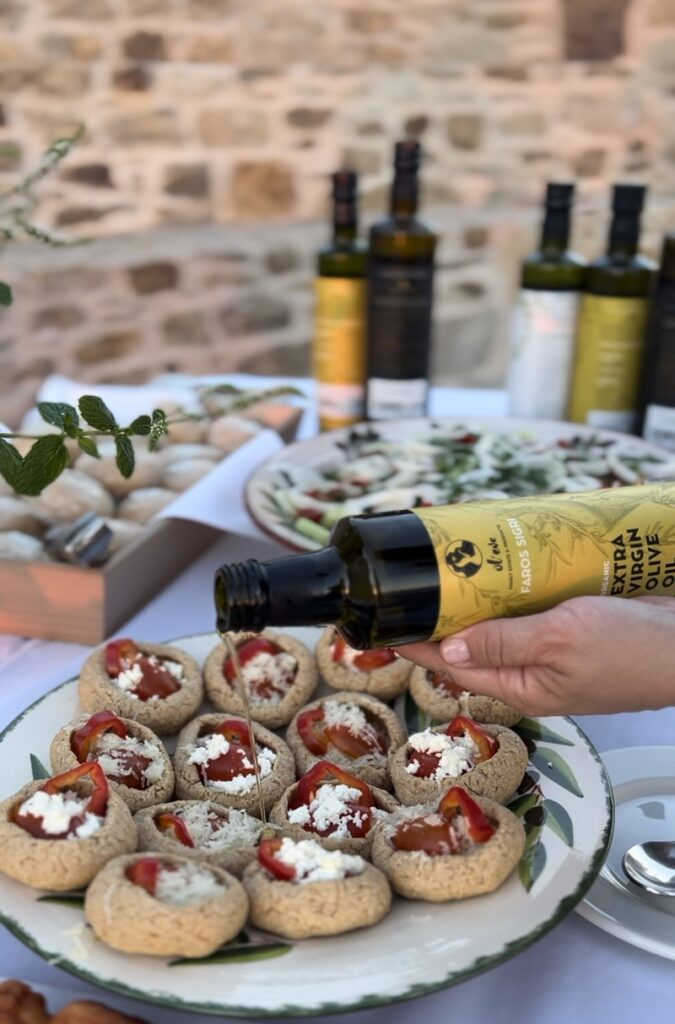
In the central area of the olive mill, there is a fully equipped room for organized olive oil tastings with recommendations from certified tasters, members of the team. There is audiovisual material with the history of the island, the uniqueness of Sigri and the transformation of the ecosystem. Visitors can take a tour of the facilities, walk among the tanks and bottle their own extra virgin olive oil.
Extra virgin olive oils
In each tank of the olive mill, each variety and quality of olive is preserved separately, in ideal conditions. This method makes it possible to standardize extra virgin olive oils according to the taste preferences of consumers, whether it concerns single-varietal bottlings or multi-varietal ones.
However, the creation of multi-varietal extra virgin olive oils (blending) is particularly important as it creates products with a balanced, flavorful and extremely delicious profile.
In addition to the single-varietal labels, the most popular Ol’eve bottlings are:
⦁ Organic Special Selection consisting of Adramytiani and Kolovi with mild characteristics, aromatic fruity profile.
⦁ Faros Sigri Organic from Adramytiani, Kolovi, Koroneiki, Kalamon, Halkidiki, Mavroelia, Arbequina, Frantoio, Leccino, Aricombi, Picual and Melolia with a complex fruity and aromatic profile, balanced bitter and spicy taste, medium to intense.
⦁ Limited-edition Early Harvest Health Claim, a product with a certified health claim that is harvested early and concentrates a high content of polyphenols such as hydroxytyrosol, oleocanthal and oleicin, based on analyses by accredited laboratories. With green fruity aromas, strong bitter and spicy in the flavor profile.
⦁ Special Selection PGI that comes from the two local olive varieties of Lesvos, Adramytiani and Kolovi and has received the Protected Geographical Indication (PGI) label.
Strengthening the local community
In the general context of strengthening the local community, the Tirpintiris family collaborates with farmers in the wider area in order to produce, standardize and export other locally produced products such as salt from the Gulf of Kalloni. It is also worth noting that the estate and the olive mill can be visited all year round, by appointment and can host organized groups, school trips, environmental, cultural and gastronomic events.
Olive Adoption
And as always, the best is left for last. The Faros Estate is happy to support olive tree adoption. This action connects the visitor to the olive grove, raises environmental awareness, and creates a strong relationship of care and dependence that ultimately aims to actively participate in the sustainability of the phenomenon.
info
Sigri Olive Mill, Sigri, Lesvos, www.sigriolivemill.health