The financialization of the economy in the last quarter of the 20th century created a global “bubble” that is now bursting, starting with the United States. The 2008/2009 financial crisis in the United States and then the debt crisis in the Eurozone, with Greece as the main protagonist, were apparently only the first episodes of a major economic collapse.
Since 2008, politicians in Washington have added about $26 trillion to the national debt, and Fed bureaucrats have pumped trillions of fresh dollars into the financial system.
The accumulation of the largest mountain of debt in world history has allowed the United States to live far beyond its means. On a personal level, if you were to borrow and spend millions of dollars you didn’t have, you could also be living a lifestyle you don’t deserve.
Debt is extremely seductive because it’s a way to make the present much more enjoyable. But there’s always a price to pay in the end – the bill is never far away.
In 2025, government spending is being cut across many sectors, the Federal Reserve is choosing not to intervene despite the turmoil on Wall Street, consumer confidence is plummeting, home sales are collapsing, mass layoffs are happening across the country, and now a global trade war has begun.
At this point, it should be obvious to everyone that starting with the US, we are headed for a major economic shock.
The following are 9 signs that conditions are ripe for a major economic crisis in the United States:
1. GDP decline
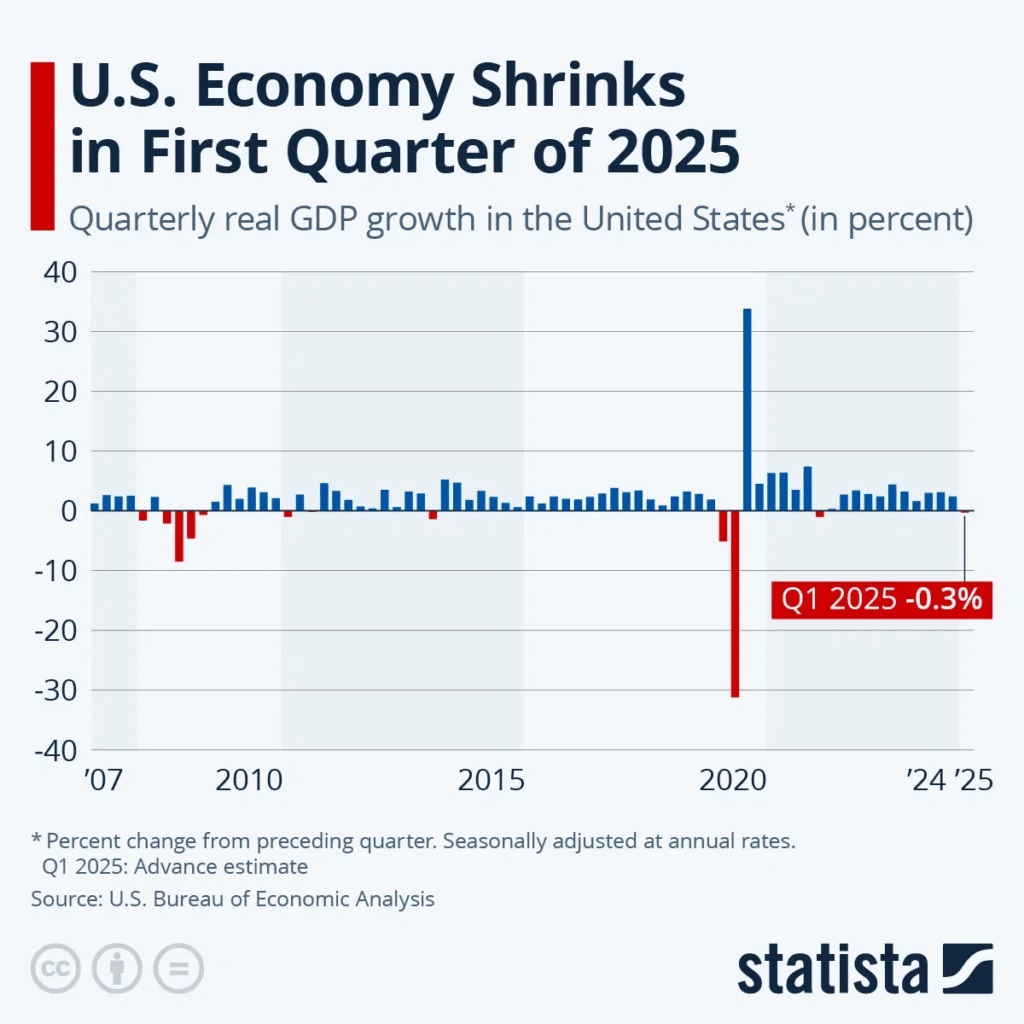
In the first three months of this year before the trade war erupted, U.S. GDP shrank at an annualized rate of 0.3%. U.S. economic growth slowed sharply in the first quarter of 2025 as businesses rushed to stockpile goods in anticipation of President Trump’s sweeping tariff policies.
The country’s gross domestic product — the total value of goods and services produced — shrank at an annualized rate of 0.3%, down from 2.4% growth in the final three months of 2024, the Commerce Department said Wednesday (April 30) in its initial estimate of GDP.
It was the worst quarterly performance for the U.S. economy since early 2022, when the economy was recovering from a COVID-19 collapse. The U.S. economy was forecast to grow 0.8% in the first three months of 2025, according to the median estimate of economists surveyed by FactSet.
2. Consumer Confidence Falls Precipitously
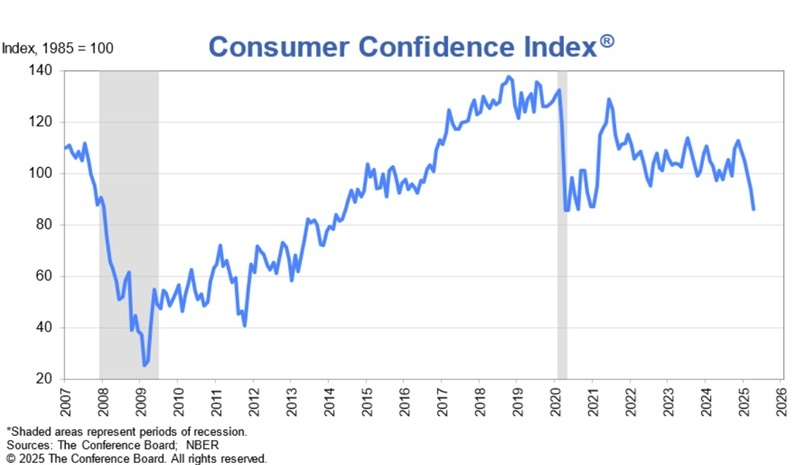
The Conference Board’s Consumer Confidence Index fell to 86 points on a monthly basis, down 7.9 points from the previous reading and below the Dow Jones estimate of 87.7. It was the lowest reading in nearly five years. But the picture of conditions worsened further.
The CEO Expectations Index, which measures how respondents view the next six months, fell to 54.4, a 12.5-point drop and the lowest reading since October 2011. Executives said the reading was consistent with the onset of a recession.
3. Significant layoffs are announced almost daily
For example, UPS just announced that it will lay off about 20,000 workers. United Parcel Service (UPS) expects to reduce its workforce by about 20,000 people during 2025, citing “new or increased tariffs” and “changes in general economic conditions in the U.S. or internationally” for the cuts.
UPS announced the layoffs on April 29 in its first-quarter earnings release, in which the package delivery service said it had consolidated revenue of $21.5 billion, compared with about $21.7 billion in the same period a year ago. The company also said it would close about 164 facilities by the end of the year.
4. Inbound cargo volume to drop more than 35% next week compared to a year ago
Gene Seroka, executive director of the Port of Los Angeles, told CNBC that he expects inbound cargo volume to drop by more than a third next week compared to the same period in 2024.
“According to our own port optimizer index, which measures shipments to Asia, we’re going to be down a little over 35% next week compared to last year. And that’s a sharp drop in volume as some of the big U.S. retailers are stopping all shipments from China due to the tariffs,” Seroka said.
5. Container traffic from China to the United States has fallen “by up to 60%”
According to another estimate, container bookings from China to the United States have fallen by as much as 60%, according to Flexport, a supply chain management company.
Bookings from other Asian ports, such as Vietnam and Thailand, have risen by 5% to 10% as some exporters seek to expand production outside of China to avoid high tariffs. The decline in bookings from China comes at a time when there is usually a lot of activity in terms of U.S. imports.
6. Trucking Industry Layoffs Are Coming
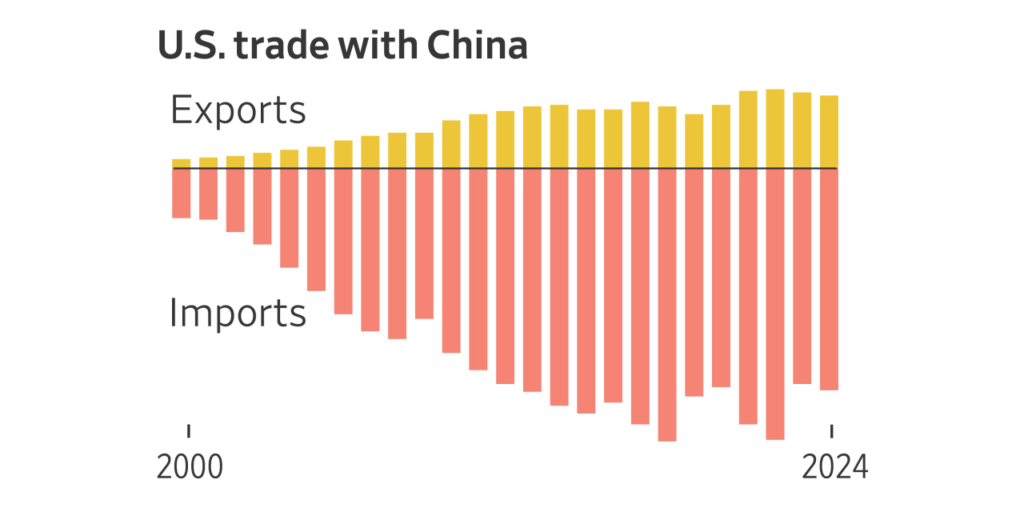
The trucking industry, critical to U.S. logistics, is facing significant challenges as tariffs disrupt trade, particularly with China. A sharp decline in container ship travel from China is expected to reduce cargo volume, thereby reducing demand for transportation services.
Imports account for about 20% of U.S. transportation volume, so a decline in imports will have a significant impact on the industry. With fewer goods to move, carriers will face reduced workloads and underutilized fleets, forcing them to cut labor costs.
Apollo Global Management predicts that domestic transportation activity will slow sharply by mid-May, with potential mass layoffs to follow as companies struggle to maintain their financial stability.
7. A staggering 74% of all workers in the US are currently living paycheck to paycheck
Financial insecurity exacerbates these workplace pressures, with nearly three-quarters (74%) of workers living paycheck to paycheck, meaning they have no savings.
8. Student loan delinquencies in the U.S. have skyrocketed to unprecedented levels
But even with that in mind, Nelnet data shows a spike in delinquencies compared to before the pandemic. A staggering 15% of borrowers are more than 90 days delinquent, as reported to credit bureaus.
If this delinquency wave continues, the Department of Education has warned that 10 million borrowers — nearly a quarter of the total — could be delinquent within months.
9. Nearly a Quarter of All U.S. Adults Currently Facing ‘Unmanageable’ Debt Levels
In honor of Financial Literacy Month, Experian is offering a closer look at the financial obstacles many face — and how some are overcoming them. Nearly 1 in 4 U.S. adults currently have “unmanageable” debt, as of April 1, according to a survey of 1,000 respondents. Unmanageable debt is defined as when a person is forced to choose between debt payments and basic needs.