



The vast majority of popes have been Roman or Italian—217 in total to date—16 have been from France and six of German origin.
A small number come from countries such as modern-day Spain and Portugal.
Three, in ancient times, had their roots in Africa—Victor I, Miltiades, and Gelasius I came from Africa Proconsularis, a Roman province that largely corresponds to modern-day Tunisia.
There is, meanwhile, no pope from distant Asia, where the world’s fastest-growing Catholic population now resides.
In fact, whoever he is, the next pope will take over a Roman Catholic Church with fewer members in Europe, North America, and Latin America, but with growing numbers of believers in Africa and, above all, Asia.
The Rising Religious Power of the Global South
Africa became the continent with the most Christians in 2018, surpassing Latin America, which had in turn surpassed Europe in 2014. The Global South (Africa, Asia, Latin America, Oceania) now accounts for 69% of the world’s Christians. This is projected to reach 78% by 2050.
In the 20th and 21st centuries, the rapid growth of the Roman Catholic Church in sub-Saharan Africa, Latin America, and parts of Asia has caused a shift southward.
The World Christian Database shows that Africa and Asia are the only regions in the world where the growth in the number of Catholics has outpaced population growth over the past 50 years.
In Europe, by contrast, the number has declined slightly—the continent’s share of Catholics has shrunk from 37% in 1975 to 32% in 2025.
According to researchers at Gordon-Conwell Theological Seminary in Massachusetts, the demographic center of the Roman Catholic Church now lies somewhere around the southern border of Senegal.
Based on the United Nations’ demographic projections, this could move to Ivory Coast by 2050.
In its report on the prospects for global Christianity in 2025, Gordon-Conwell reports continued growth in Christians, with their number worldwide having exceeded 2.64 billion and expected to reach 3 billion before 2050.
It specifically mentions Africa and Asia, including China. More than 750 million Christians live in Africa, with an annual growth rate of 2.59%, while by 2050 they are expected to reach 1.2 billion. Compared to this, 416 million live in Asia today, with a growth rate of 1.6%.
However, it highlights the rapid growth of Evangelicals and Pentecostals, who are part of the broader framework of Protestantism.
The Legacy of Pope Francis
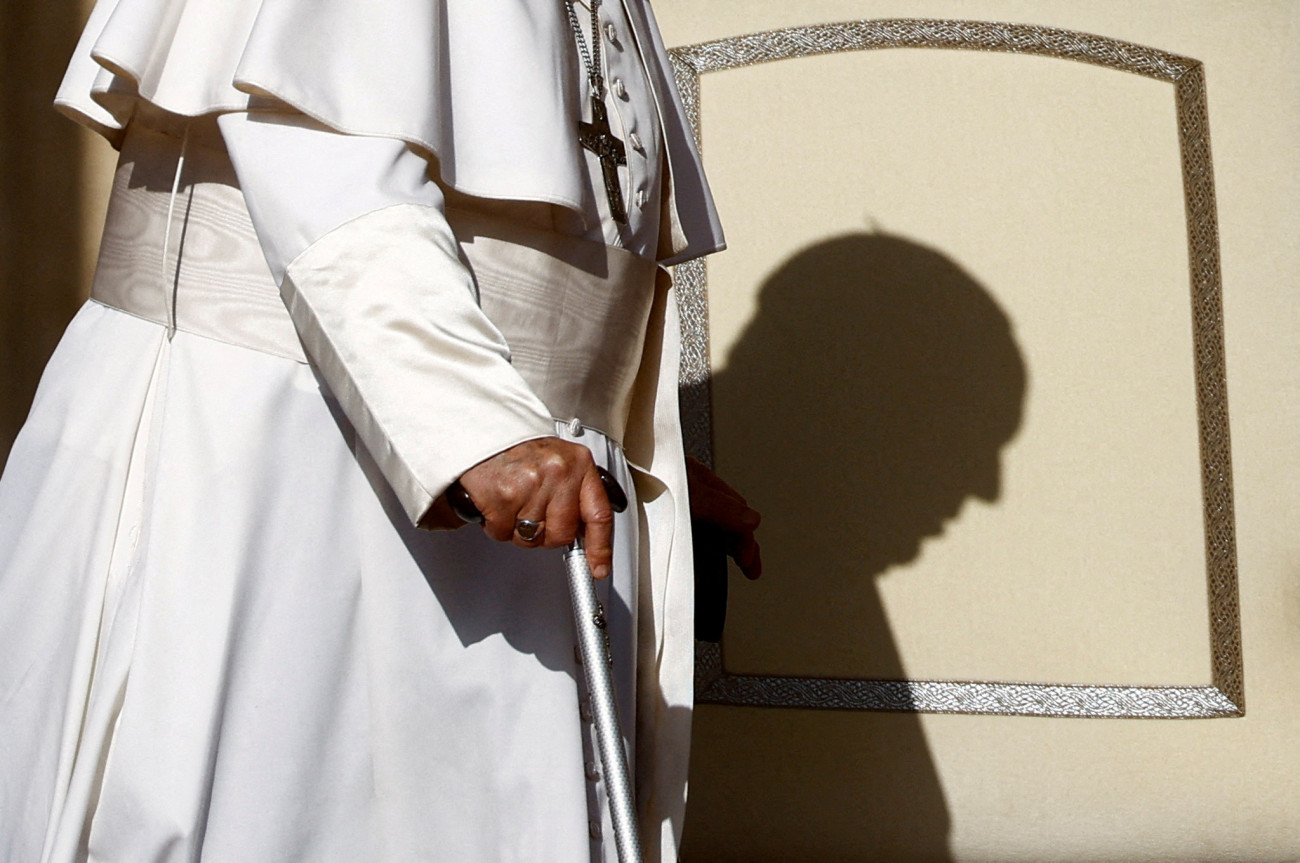
Fatefully, the next pope will shape the next chapter of Catholic doctrine and papal diplomacy. He will be called upon to do so under the heavy “shadow” of the tenure of the reformer Pope Francis.
Meanwhile, voices and scenarios are multiplying about the possibility of an African or Asian pope, reflecting the evolving demographic footprint of the Roman Catholic Church.
As the Christian population declines in Europe and North America, “the center of gravity of Christianity is shifting,” observes Matthew George Tsunakara, general secretary of the Christian Conference of Asia (CCA) and coordinator of the Commission for Churches on International Affairs (CCIA) of the World Council of Churches.
It is something that Pope Francis has pointed out during his tenure for the future of Catholicism. Not coincidentally, he has made five visits to the African continent, to a total of ten countries – the most recent in 2023 to South Sudan and the Democratic Republic of Congo – and another six to Asia.
The last one was last September, lasting 12 days – the longest trip of his papacy – with stops in Indonesia (the country with the largest Muslim population in the world), Papua New Guinea, East Timor and Singapore.
Beyond interreligious dialogue, his message was clear about the future of Catholicism, beyond its historical Eurocentric orientation.
The puzzle of the next day
In this context, moreover, during his time, Pope Francis methodically shaped a more progressive and geographically diverse Conclave of Cardinals, which is now called upon to elect his successor.
By choosing 80% of them with the right to vote, he appointed more from Latin America, Africa and Asia.
Out of a total of 135, Europeans now make up 39%, compared to 17% of cardinals from Asia, 15% from North America, 13% from South America and the same from Africa.
It now remains to be seen what the “white smoke” that will come out of the Vatican chimney in the coming days will ultimately show and whether the new Pope, regardless of origin, will align with the vision of his predecessor or whether he will constitute a systemic moderate “correction” to the modernizing worldview of the late Pope Francis.

