



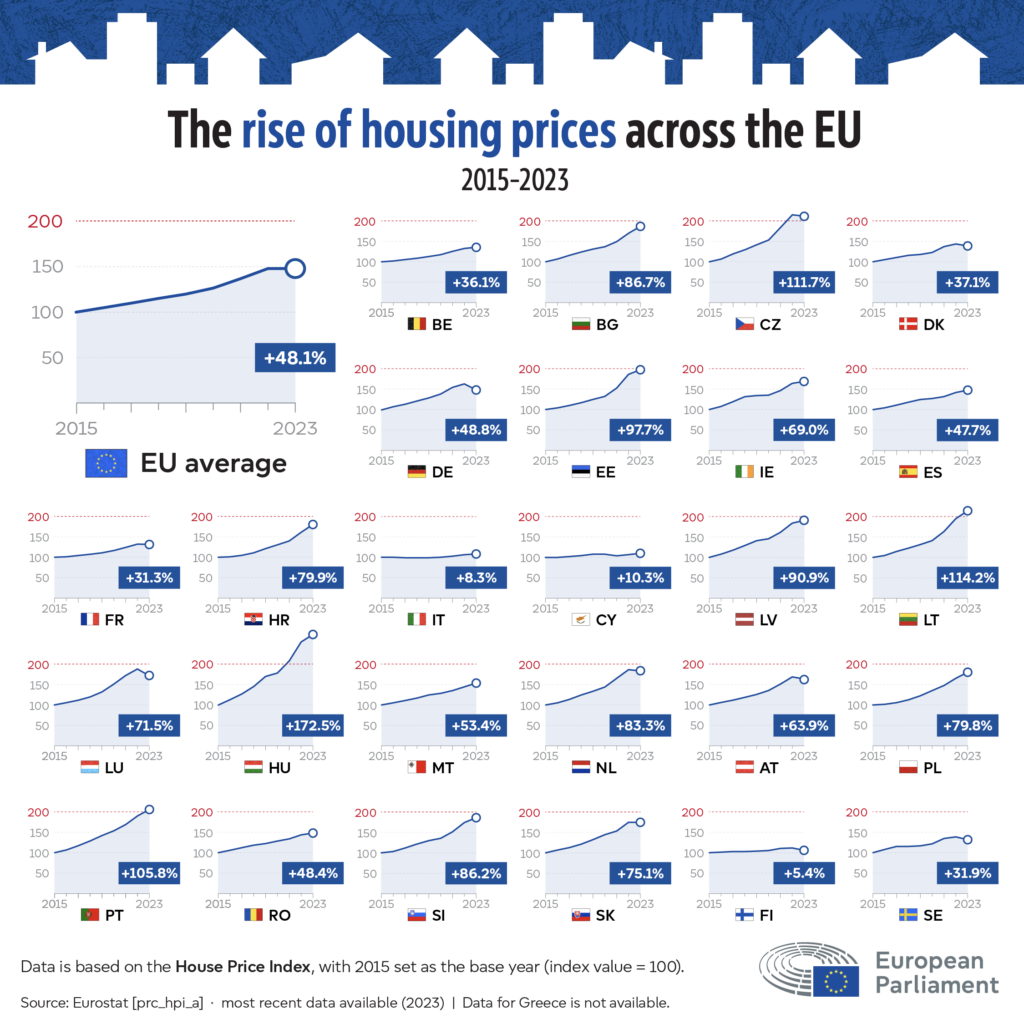
In less than a decade, average house prices have risen by 48% across the EU. According to the European Parliament’s analysis, the main reasons contributing to the housing crisis are higher construction costs, mortgage interest rates, a decline in construction activity that has limited supply, and the rise of the real estate market as an investment to generate additional income.
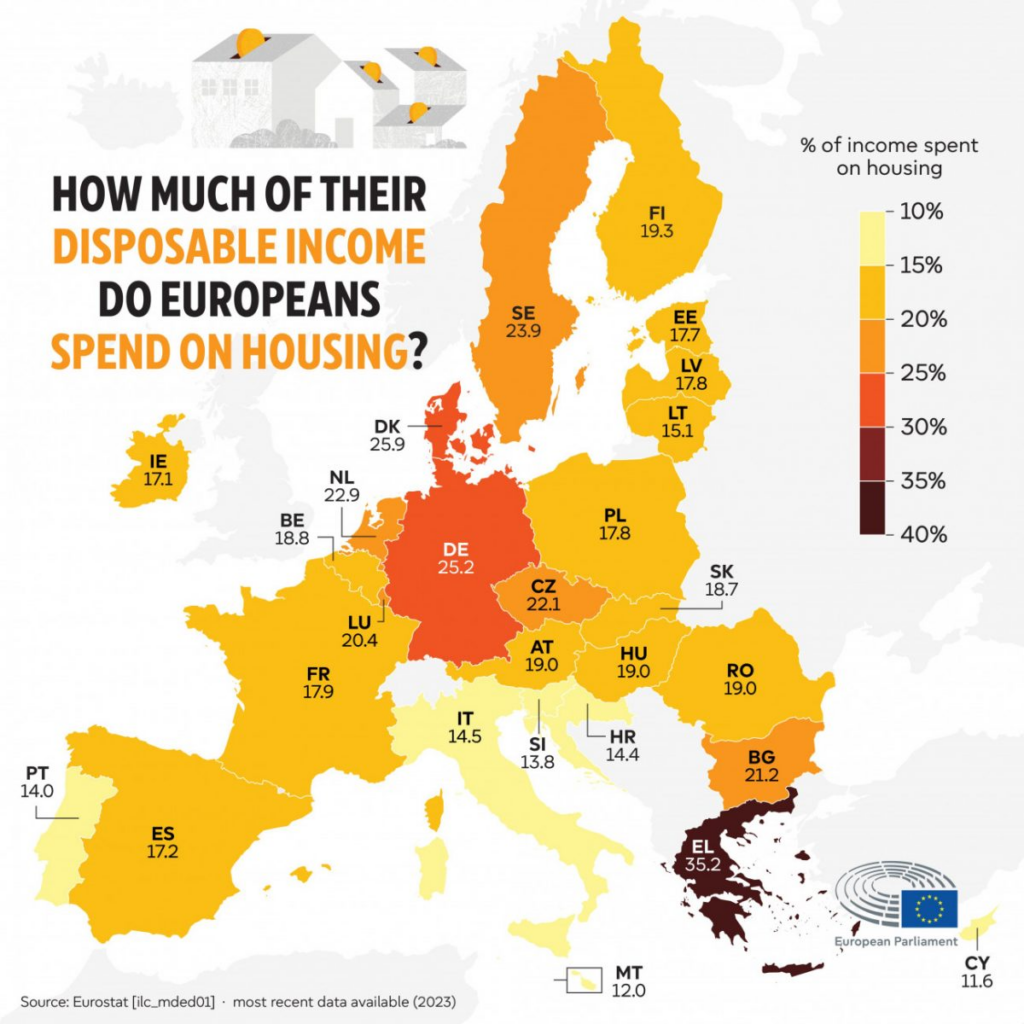
In the latest infographic posted by the European Parliament on social media on the cost of housing in the EU, Greece stands out. It is at the top end of the percentage scale for how much Europeans spend on housing, in proportion to disposable income in each country.
Some early thoughts on solutions to the housing crisis
The European Parliament has set up a new committee to tackle the crisis, looking for “tools” in the battle to bring down prices. Irene Tinagli, MEP and chair of the committee on the housing crisis, said there was plenty of room for manoeuvre.

From providing funds to boost sustainable and affordable housing to renovating old buildings, the European Union has the tools to tackle the housing crisis affecting citizens across the bloc. The prerequisite is political will and cooperation between rival political groups, the MEP tells Euronews.
“I see some political groups already saying that maybe the only problem is to build some new buildings,” Tinagli says. “I think we can do a lot more, but we need political will.”
In the EU in 2023, for 10.6% of households in cities and 7% of households in rural areas, housing costs exceeded 40% of their disposable income, a sign that households are facing serious housing problems.
Tinagli chairs the new European Parliament special committee that will work over the next year to develop solutions for the EU’s first housing commissioner, Dan Jørgensen, whose portfolio also covers energy.
A pan-European investment platform
Jørgensen’s mandate for the next four years includes the creation of a pan-European investment platform for affordable and sustainable housing, the adaptation of state aid rules, the presentation of the first European plan for affordable housing and the development of a European housing strategy to improve the supply of new housing.
“I hope that the European Commission will propose not just one initiative, but a comprehensive package of measures, because the housing crisis is a multifaceted issue,” says the MEP.
Between 2015 and 2023, average house prices in the EU increased by 48%, while rents increased by 18% in twelve years (2010-2022). The impact of the housing crisis is not felt equally in all countries and cities, with huge differences between Member States, such as Hungary, where house prices increased by 173% in less than a decade, and others, such as Finland, where prices increased by just 5%.
On average, Greek residents (according to 2023 data) spend 35.2% of their disposable income on rent or mortgage payments, utilities, fixed bills – electricity, water, heating, etc., when the EU average is 19.7%.
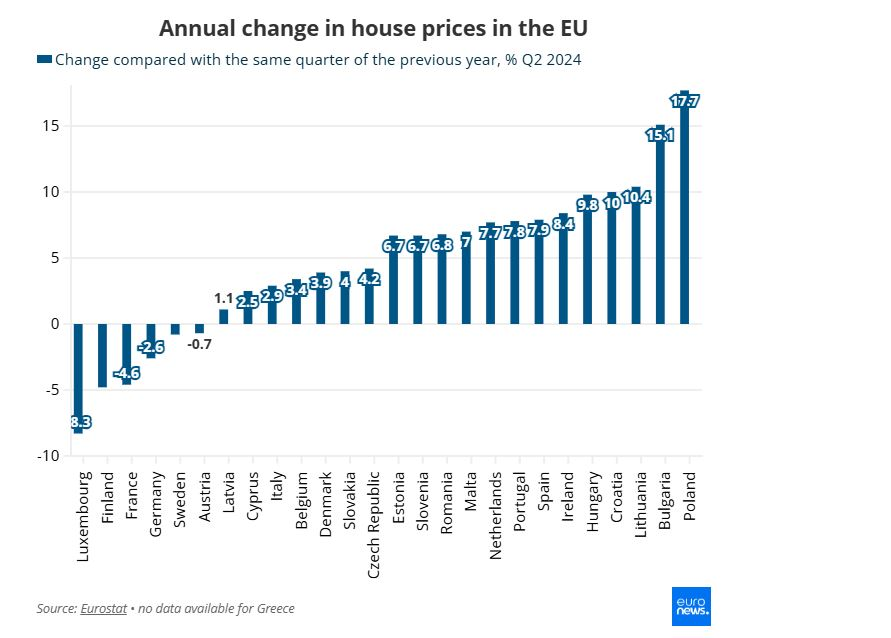
If we take into account the increase in rents and real estate prices in 2024 (7.8% and 8.8% respectively according to the SPI index), and housing inflation (3.7% in December according to GreeKSTAT), it is most likely that despite the increase in disposable income (5.6% in the 9 months according to GreekSTAT), Greek households are still among the most burdened in the EU in terms of housing costs.
Mapping housing needs
“I don’t want to say that the European Union has a magic bullet or a one-size-fits-all solution, because each country faces a unique situation, but we can offer a deeper understanding of the problems and solutions that could work in different contexts,” argues Tinagli.
The parliamentary committee will not have legislative powers, but is tasked with mapping housing needs, analysing existing policies across the EU and working with member states, cities and regions to develop solutions.
Many Europeans are concerned about rising prices, the cost of living and the economic situation. These were the main reasons that prompted people to vote in the European elections, according to the recent Eurobarometer survey from July 2024.
More than two-thirds of Europeans live in homes they own. In Greece, the homeownership rate is steadily declining, reaching a historic low of below 70% in 2023, while in Athens it is estimated to be even lower, at 64%.
The EU housing crisis may have contributed to “a sense of alienation from the European Union or from traditional parties”, as people feel their basic needs have been ignored, according to Tinagli, who openly expresses her concern that European voters “may turn to those who, despite having no real solutions or management experience, exploit the discontent for their own political gain”.

