



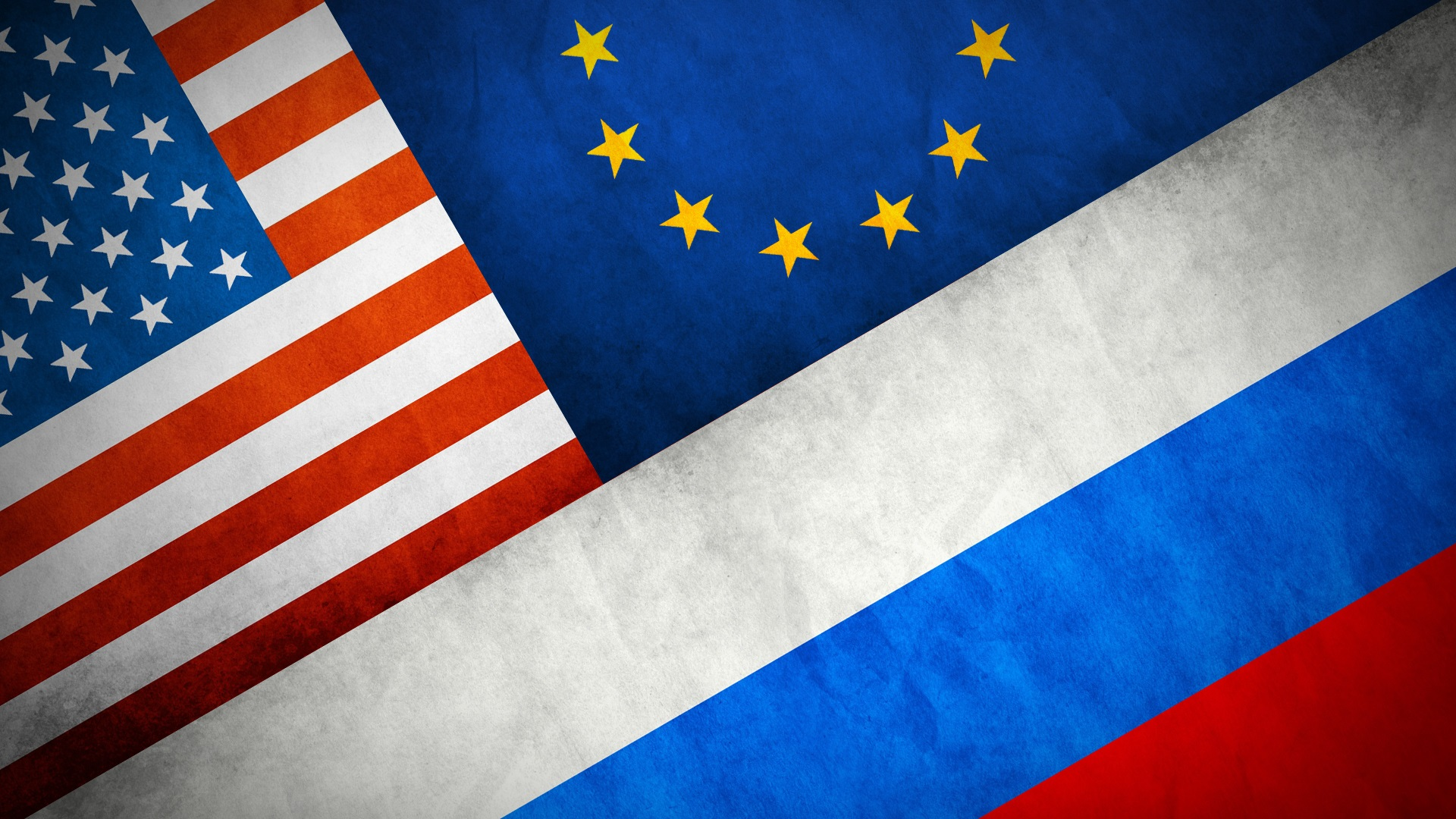
If the war between Ukraine and Russia is indeed coming to an end, as Trump has promised, Europe will need to rebuild its relationship with the two countries
This will not be easy, given the extremely tough stance it has taken against Russia, which, in addition to the expected and within the framework of trade sanctions, has also included many unjust and extra-institutional moves, such as the seizure of Russian assets.
Of course, no one knows today if and when the war will end, nor what the status that will be agreed upon in the peace negotiations will be. Everyone will have to make concessions, everyone will give something and take something, everyone will try to appear as winners and of course everyone will be in reality losers, especially if the human lives that have been lost and continue to be lost in this war are taken into account.
The European Union does not mourn human victims, like Russia and Ukraine, but it suffered a huge economic blow after the interruption of trade caused product shortages and inflation, significantly increased the energy costs of European industry and burdened the European budget (i.e. European taxpayers) with large costs for the continuous supply of weapons to Ukraine.
Trump has promised that the war will end soon, but it is of course not in his hands. It depends primarily on the decisions of the Russians and the Ukrainians who fortunately, as it seems, both want the war to end.
Assuming that all goes well and the war ends soon with any agreement between the two countries, Europe will have to see how to rebuild its relations with Russia, which is a very large trading partner. It will not be easy for many reasons.
- First, because the diplomatic balances have been disrupted.
- Second, because not all European countries agree on what the EU-Russia relationship will be in the future,
- Third, because Trump has his own agenda for US-EU relations, which in many ways is negative for the formation of a new relationship between the EU and Russia.
The energy sector is one of the major thorny issues in the EU’s new relationship with both Russia and the US.
Before the war, the EU bought natural gas from Russia, and was heavily dependent on Russian gas. With the war, Russian gas imports stopped in theory, although there were violations and smuggling.
Discussions in the EU’s closed clubs about resuming Russian gas imports have begun, but participants are divided into two sides, those who believe that imports should resume and those who believe that such a development is unthinkable. The former argue that Russian gas imports will reduce the cost of energy in the EU and help industry and consumers. The latter argue that the EU cannot be energy dependent on the Russians because Russia is now a hostile superpower.
Those who support the EU’s green policy, which has prevailed in recent years, also join the conversation, which advocates that Europe should be energy independent and rely only on alternative forms of energy production, photovoltaics and wind turbines in order to protect the environment. The green policy has a huge cost for Europe because it greatly increases the cost of energy until the investments required to achieve the elimination of pollutants are completed.
Under the weight of its green policy and its hostile relationship with Russia, the EU faces a huge economic cost, which would be limited if it resumed imports of Russian natural gas and postponed the goals of eliminating pollutants for some years in the future, which very powerful political groups in the EU do not want.
As Trump entered the game, demanding that Europe significantly increase its imports from the US, things are getting complicated.
In order for European imports from the US to increase, the amount of American LNG that Europe imports must increase. If imports from Russia are resumed, the increase in imports from the US will be hindered to some extent. In other words, the EU will have to find a balance between how much it will import from the US to satisfy Trump and avoid the tariffs he is threatening it with and how much it will import from Russia.
The absolute impasse is created by the fact that how much natural gas the EU will import and from where does not depend on the decisions of its leadership, but on the decisions of the businessmen who will import from where they find the cheapest and the cheapest is certainly Russian. Therefore, what the closed club of the EU is discussing is of little importance, unless it is discussing continuing sanctions against Russia in peacetime. But this does not hold, because they will not be sanctions to “punish” Russia, but will aim to facilitate the US and will have a very high cost for European industry and consumers. The European leadership cannot therefore decide to the detriment of European industry and European citizens in order to keep Trump satisfied.
Again today the Europeans are divided, as always. Divided on everything. How they will respond to Trump’s pressures, whether and how they will shape a new relationship with Russia, whether they will continue green growth, whether they will seek energy independence.
All these geopolitical decisions are, above all, economic. And they all have enormous costs for Europe, which suddenly has to finance its defense, now that the US and NATO are not showing much willingness to support it defensively, unless it itself dips its hand deep into its pocket.
Before peace negotiations between Russia and Ukraine even begin, European countries must intensify their bargaining among themselves, in the hope that perhaps finally, under the pressure of difficult circumstances, they will manage to come up with a commonly accepted plan of action. And this has never been easy for Europeans, who, in the absence of precisely this ability to “get along” with each other, have ended up being an incalculable force on the international geopolitical chessboard.


