




From selfies to important emails and videos of cherished moments, most people have accumulated a wealth of data on social media and cloud accounts. What happens to this material when we leave this futile world?
It’s wise to draw up a will that designates heirs for your material assets. But don’t forget to take care of your digital possessions too.
The Liberal Globe offers you a practical guide to your cyber afterlife:
Apple
Apple lets you designate a “Legacy Contact” who will have access to your account after you die. It’s a way to give trusted people access to your photos, files, and messages.
Designating a digital heir requires an Apple device with a relatively recent operating system—iOS 15.2, iPadOS 15.2, or macOS Monterey 12.1.
On an iPhone, go to Settings, select Sign-in & Security, and then select Legacy Contact. You can designate one or more people, who don’t need an Apple ID or Apple device.
You will then be prompted to send your contact a digital key that grants access to the files.
The trusted contacts you designate will have access for three years before Apple deletes your account.
However, keep in mind that there are some files that you cannot grant access to, such as locked music files, movies, and passwords saved in your password manager.
Google takes a different approach with Inactive Account Manager, which lets you share your data with trusted people if the system detects that you haven’t logged in to your account in a while.
If you enable this feature, you’ll have to specify how long—from 3 to 19 months—Google will wait before marking your account as inactive. When that time period expires, the company can notify up to ten people.
You can write a message letting trusted people know that you’ve stopped logging in to your account. You can also include a link to download your data. You can specify the files you give access to, such as emails, photos, and YouTube videos.
There’s also the option to automatically delete your account after three months of inactivity.
Facebook and Instagram
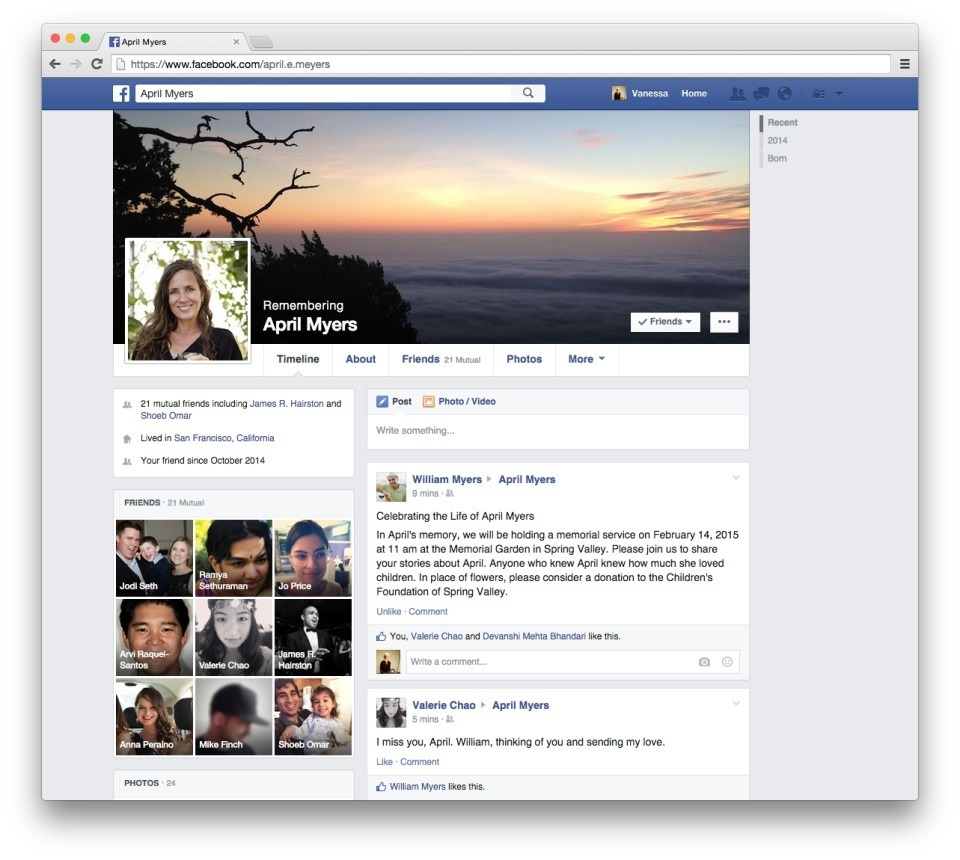
Meta’s platforms offer the ability to preserve the accounts of deceased people to preserve their memory.
Preservation of profiles in memory of deceased people on Facebook and Instagram requires an online request from a relative or friend.
Meta recommends that its users designate a legacy contact to take care of their accounts after death. For example, these people can respond to new friend requests and change pinned posts, but they cannot read private messages or delete or edit older posts.
You can only select one person as a legacy contact, and they must have a Facebook account.
You can also ask Facebook and Instagram to delete accounts of your deceased loved ones. You will need to send an official document such as a death certificate.
TikTok
The popular short-form video platform allows deceased accounts to be converted into “memorial” accounts upon request.
In the “Report a Problem” menu, select “Account and Profile” and then “Account Management,” where you can report that a user has died.
The memorial account will now display the message “Remembering” and allow access to anyone.
X
Elon Musk’s platform does not allow memorial accounts, but relatives of deceased people can request that their loved ones’ profiles be deactivated.

