
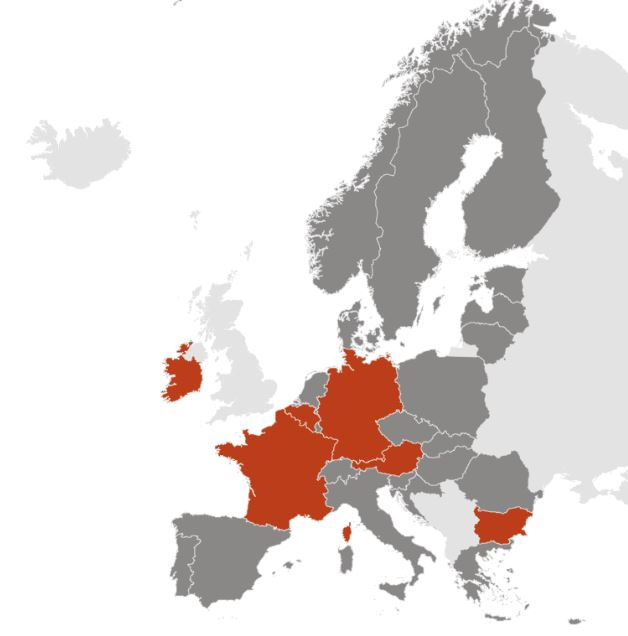
About half a dozen European Union countries are currently without functioning governments. And with Ursula von der Leyen at home in Hanover with “severe” pneumonia, not even the European Commission has a full-time head.
Given everything else going on in Europe and the world – from Donald Trump’s imminent return to power to Russia’s antics in the Baltics to the impending takeover of Austria by the far right – the timing of this impasse could not be worse.
Decision-making in the EU is difficult at the most critical moments. In the midst of a leadership vacuum, it will be almost impossible for the simple reason that the… lame ducks and caretaker governments are unable to commit their countries to anything even remotely controversial.
Europe risks losing its standing in the world
With Trump already demanding that Europe do more to protect itself and a crucial NATO summit in The Hague in June, European leaders want a united front to mobilize Western support for Ukraine.
Moreover, the EU itself is facing increasingly aggressive hybrid attacks, such as the cutting of undersea power cables serving Estonia – likely by Russia.
A new Commission also took office near the end of last year and will soon start drafting legislation for approval by member states, including a reform of the laws governing the return of irregular migrants, which is expected in March. A more immediate concern has already left the EU in limbo: What to do with Elon Musk?
The abundance of absentee and fragile governments, if they continue, could make it much harder for Europe to meet such challenges, further eroding its standing in the world.
France’s fragmented political center struggles to hold together
The major powers of France and Germany have been embroiled in political crises, with the political center under intense pressure from the far right.
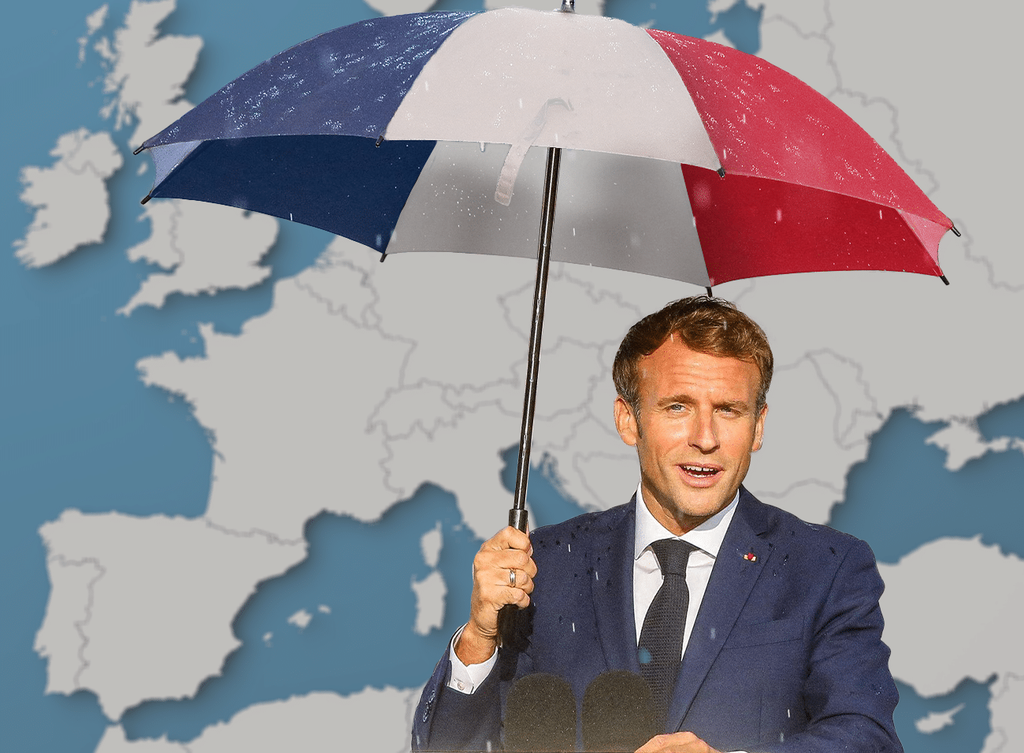
In France, where coalition governments are uncommon, President Emmanuel Macron has been forced to assemble two fragile coalitions after inconclusive parliamentary elections last summer. The first lasted just three months.
If the new minority coalition of liberals and conservatives fails to hold together, the president may have to dissolve parliament again and call new elections later this year.
France’s center-right versus center-left party system was dismantled in 2017 by Macron himself, whose liberal La Republique en Marche, as it was then called, attracted lawmakers and voters from both camps.
Now, the country’s fragmented political establishment is increasingly under siege by Marine Le Pen’s far-right Rassemblement National (RN), which made significant gains in last year’s election.
Le Pen has managed to bring her party into the mainstream by shedding its most extreme, Holocaust-negative elements – including her father – and focusing on hot-button social issues that mainstream parties have long been reluctant to address, notably immigration and Islam.
German coalition collapses as AfD advances
Although Germany is more accustomed to coalitions than its French neighbor, it is accustomed to stability.
However, the incumbent Social Democrats (SPD) and Greens are now limping towards the February general election after the departure of the liberal Free Democrats, who have played the role of kingmaker for most German governments formed since World War II.
As in France, the country’s political center is under pressure from a growing far-right movement, the Alternative for Germany (AfD).
This pressure forced Angela Merkel’s center-right Christian Democratic Union (CDU) to form a grand coalition with its old rival, the SPD, in 2018.
The current CDU opposition leader, Friedrich Merz, could well face a similar choice after the election, although he may need a third partner if the SPD continues to flag.
Unlike the French RN, the AfD began life as a relatively moderate conservative party that focused on fiscal discipline and opposed bailouts of Greece and other countries during the euro crisis. But in the decade that followed, the AfD has become increasingly extreme and populist, and now campaigns on an anti-immigration platform similar to that of its French counterpart.
Bulgaria Heads for Eighth Election in Four Years
Bulgaria has held seven elections in four years and could be on track for an eighth after coalition talks collapsed over the weekend.
According to the conservative GERB party, which ended the talks, the negotiations failed because the liberal Democratic Party of Bulgaria (PP-DB) refused to accept a cabinet led by GERB’s Rosen Zeliazkov. Both parties belong to the center-right European People’s Party.
But much of the recent uproar in Sofia has been over another politician, Delian Peevski, who is under sanctions by the United States and Britain for corruption.
Peevski has long been standing in the way of a coalition agreement between GERB and PP-DB, although he is not a member of either.
The PP-DB insisted that GERB agree to a cordon sanitaire against it, something that, until now, GERB leader Boyko Borisov has been reluctant to do.
Peevski leads the Movement for Rights and Freedoms (DPS) party, which represents the country’s Turkish minority. He took control of the DPS from its former leader, who went on to found a new party.
Under Peevski’s leadership, the DPS was recently expelled from the EU’s liberal party family, ALDE.
Belgium is complicated
Not all headless states are necessarily in crisis. In some countries, notably Belgium, it is normal for elections not to produce obvious governments.
Coalition talks have been ongoing since the June 9 elections. While predicting the outcome of these talks is a fool’s game, the most likely outcome is an “Arizona” coalition—named after the colors of the American state’s flag—composed of five parties: three Flemish and two French-speaking, including liberals and conservatives, as well as a center-left social democratic party.
Belgium also has a significant far-right party, the Vlaams Belang. But the far-right is not the reason why Belgium is one of Europe’s headless states. Belgian federalism is so complex and its parties so fragmented that forming national coalitions would be difficult even without the far-right.
Romania’s Presidential Race in Chaos
One last near-headless country to note is Romania. Although Romania quickly formed a minority government after December’s parliamentary elections, the two-round presidential election ended in chaos.
The country’s constitutional court annulled the election after the first round, amid concerns that pro-Russian candidate Călin Georgescu, who came in first, had violated electoral rules and jeopardized the fairness of the contest.
The whole process will now be repeated, starting with a review of the validity of everyone’s candidacy – including Georgescu’s.