



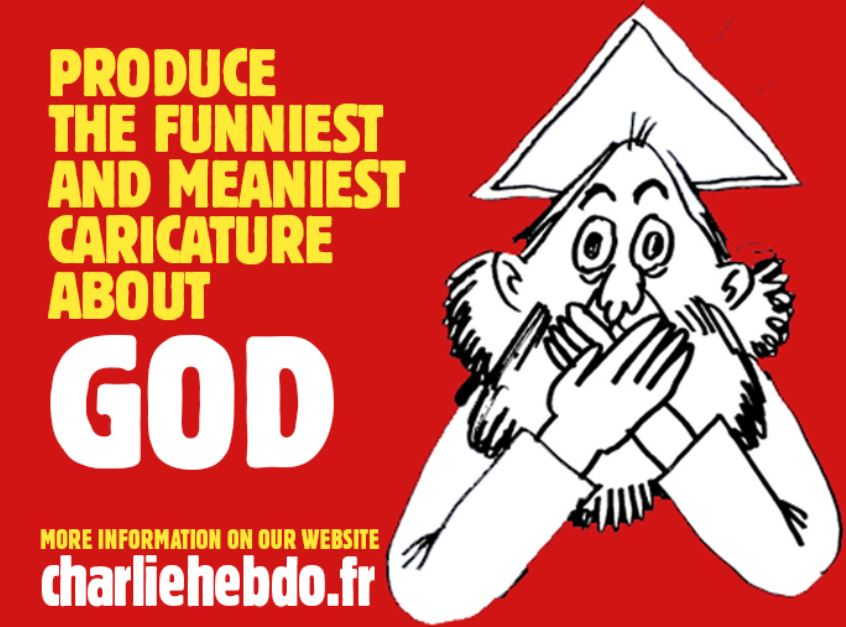
On the morning of January 7, 2015, two men, Chérif and Saïd Kouachi, stormed the offices of Charlie Hebdo, the French satirical newspaper, and armed with Kalashnikovs murdered 12 people, including eight journalists and cartoonists, in less than two minutes.
The attackers, who were linked to Al Qaeda, did not choose Charlie Hebdo by chance. For years, the newspaper had satirized religion, including Islam. It was the beginning of the worst year of Islamist terrorist attacks in Paris, which claimed the lives of almost 150 people.
A decade later, Charlie Hebdo continues its satire unabated, except that it now operates from a secure and secret location.
Charlie Hebdo continued the French tradition of political satire Laurent Sourisseau, a cartoonist known as Riss, survived the massacre and took over as editor-in-chief after the attack. Radical Islamists called for his death and he lives under police protection.
Nothing has been the same for Charlie Hebdo since then. However, the newspaper has rebuilt its staff and has been published weekly since that horrific winter morning. Its circulation today is around 50,000 copies – more than 25% higher than before the attack.
To mark the anniversary, Charlie Hebdo has published a book entitled “Charlie Liberty: the diary of their lives.” It is a way for the survivors to keep alive their former colleagues, five of whom (Cabu, Charb, Honoré, Tignous and Wolinski) were cartoonists.
Charlie Hebdo continued a French tradition of political cartooning, often obscene, that has deep roots. The lewd, anti-royal cartoons of the 18th century ridiculed Marie Antoinette and Louis XVI. Over 1,500 satirical engravings were produced in the decade following the revolution of 1789.
Charlie Hebdo’s critics aren’t just religious leaders
The advantage of the cartoons, Riss explains, is that they provide “a simple visual language, understandable by everyone, to talk about difficult things.” Founded in 1970, Charlie Hebdo spares no one. Its cartoons range from the irreligious (the Prophet Muhammad showing off his pimply bottom) to the political (Marine Le Pen shaving her head).
The newspaper regularly annoys regimes in Iran and Turkey, either by mocking their leaders or by making fun of Islam.
Charlie Hebdo’s critics, however, are not just religious leaders. Shortly after the 2015 killings, a handful of American writers boycotted a gala dinner in New York at which the French newspaper was to receive a courage award, arguing that its cartoons humiliated Muslims. In secular France, the law prohibits hate speech or incitement to violence, but it protects blasphemy.
That doesn’t exempt Charlie Hebdo from criticism even at home, however. Mediapart, a left-wing newspaper, recently denounced a caricature of the conflict between secular France and hardline Islamism, which Charlie Hebdo depicted as a woman wearing a burqa and a bearded man. It was, wrote Mediapart, a “vicious” form of Islamophobia straight from the far-right playbook (ed. the newspaper rejects such accusations as absurd).
“Je suis Charlie” is fragile today
Today, French support for the provocative spirit of Charlie Hebdo – known as “Je suis Charlie” – seems fragile. It was strong in 2020 after a terrorist beheaded Samuel Paty, a teacher. (He had shown students caricatures of Muhammad in a class on free speech.) Yet in 2023, only 58% of French people said “Je suis Charlie” in a poll, down from 71% in 2016.
This may reflect a broader trend in Western society of growing intolerance for causing offense. American stand-up comedians such as Dave Chappelle have spoken out against a more censorious attitude towards satire.
In 2019, after an outcry over a caricature of Israeli Prime Minister Benjamin Netanyahu, the New York Times stopped publishing political cartoons. On January 3, Anne Telnaes resigned from the Washington Post after the paper rejected her cartoon depicting its owner, Jeff Bezos, and other tech tycoons kneeling before Donald Trump.
Self-censorship, not the law, is now tempering satire. Plantu, a cartoonist for Le Monde, has argued that social pressure means cartoonists “no longer have the same freedom.” Riss argues that Charlie Hebdo is “not particularly provocative,” but that it appears so because “the margins of tolerance” are narrowing.
Ten years later, the newspaper’s voice is often vulgar, but valuable. “We’re doing exactly the same thing we did before,” Riss insists. “But people around us are much more timid…”

