


The rulers and the ruled in the Western world have long succumbed to a particularly demonic temptation: the replacement of commodity (or precious metal) money with unbacked, state-issued money, known as fiat money. In a sense, they have been seduced by the alluring prospect of securing the power to increase the quantity of money arbitrarily and in unlimited amounts at any time. The temptation to centrally control the economy was irresistible.
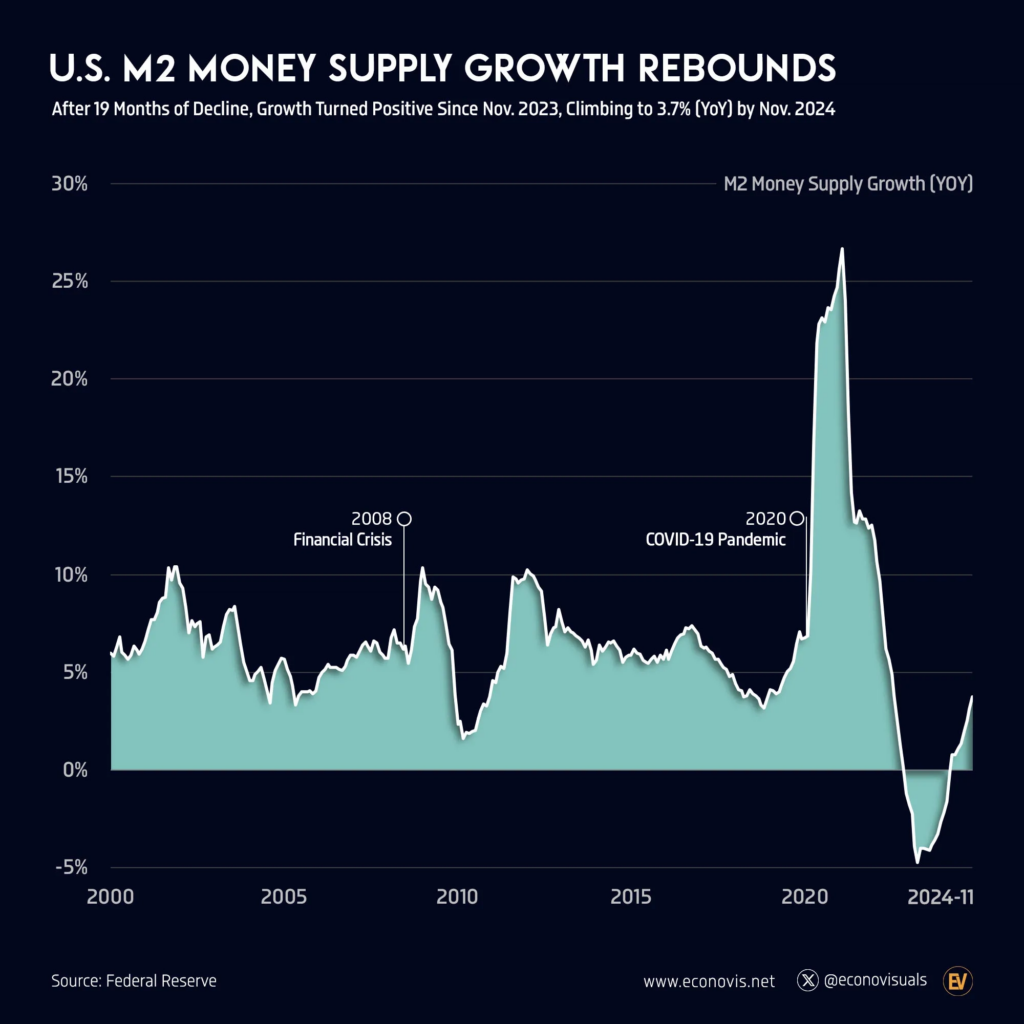
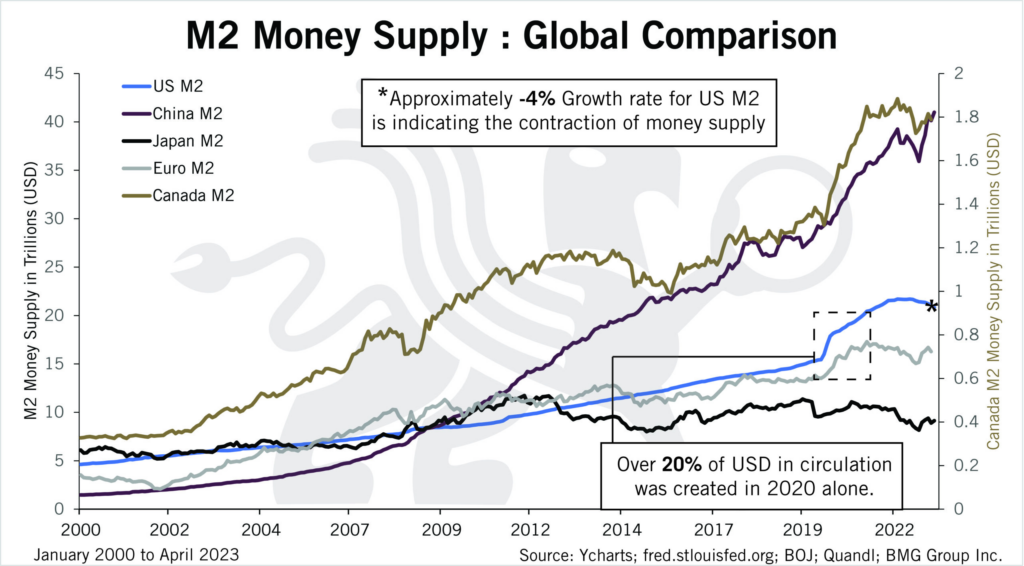
The transition from gold to fiat money took place deep in history. Many people probably no longer remember August 15, 1971, when the end of the gold-backed monetary system was announced. On that day, the US government under President Richard Nixon (1913-1994) declared that the dollar could no longer be redeemed for gold. And, with the end of the dollar’s support for gold, a global fiat money system was essentially created, a system in which all major currencies were literally created “out of thin air.”
But why did the move away from commodities or gold-backed currencies occur?
The US took this step to avoid an impending insolvency crisis for its economy. The amount of US dollars it had issued over the years far exceeded the amount of gold the US Treasury had in its vaults, which was redeemable at US$35 per ounce (31.10 grams) of physical gold.
In the late 1960s, more and more countries with dollar reserves began converting their dollar reserves into physical gold at the Federal Reserve Bank in New York. It became obvious to the Nixon administration that sooner or later the US would no longer be able to fully redeem dollars for gold.
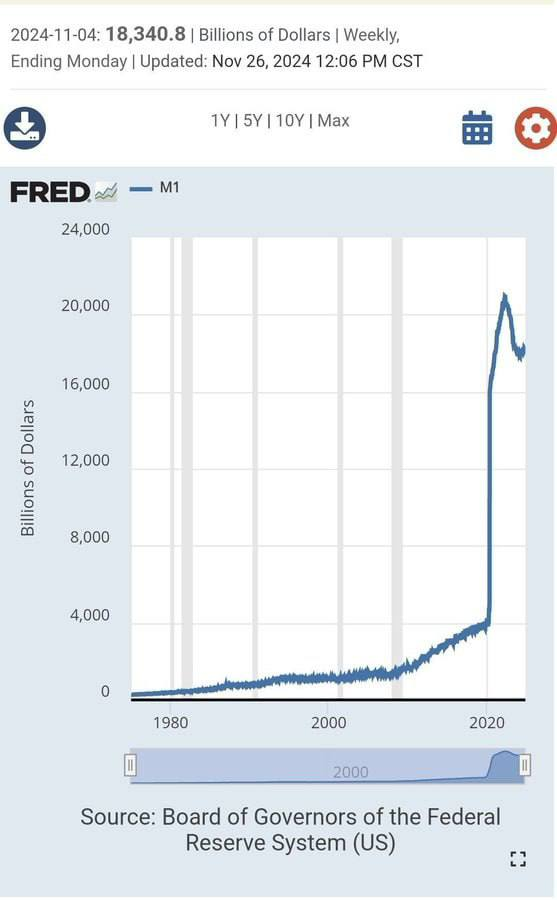
To avoid insolvency, the Americans simply suspended the convertibility of the US dollar into gold “temporarily.” In fact, the actual suspension of the dollar’s ability to be redeemed for gold suited the plans of political leaders. Finally, the state had achieved control over the money supply like never before. 80% of dollars were printed in the last 5 years.
- On the one hand, there was the belief that politicians and central bankers could better manage the economy and get through crises – with the economic theory of John Maynard Keynes (1883-1946) providing the theoretical framework and attracting many ardent followers.
- But, even more importantly, the idea of a central control of the quantity of money promised insulation from (undesirable) developments in the rest of the world – states could, henceforth, pursue their own monetary and economic destinies, setting interest rates according to their domestic needs, and all this without fear of unwanted inflows or outflows of physical money, gold.
- Regardless of the lofty promises made by the proponents of fiat money (issued by central banks), the reality was anything but satisfactory.
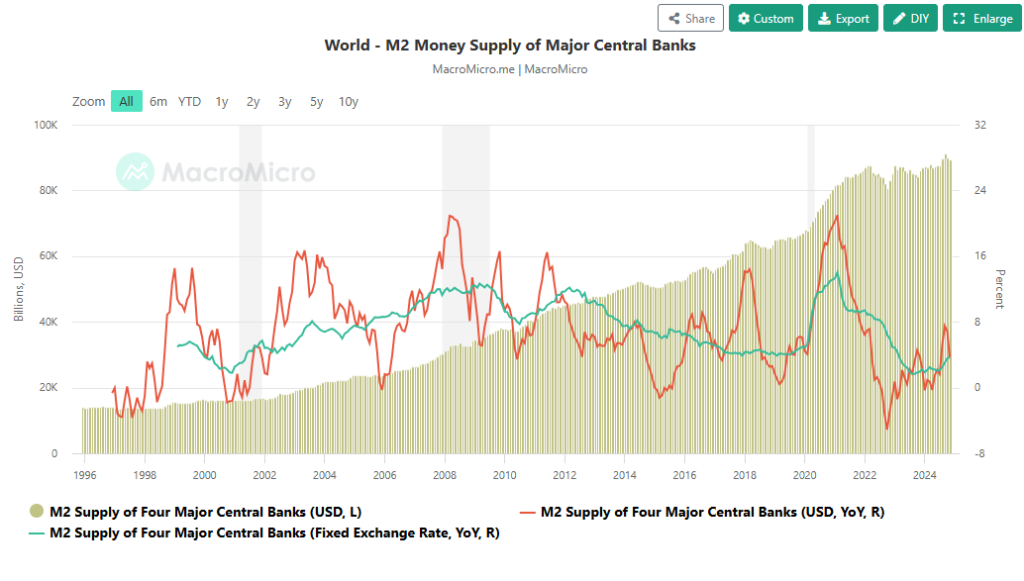
Why has fiat money really become a curse?
- Fiat money is inflationary in the long run, losing its purchasing power over time.
- It benefits the few at the expense of the many, it is socially unjust.
- Fiat money causes crises, boom and bust cycles, and leads economies into over-indebtedness.
- Sooner or later, governments, banks, and individuals will collapse under the weight of the debt accumulated in the fiat financial system.
- Eventually, there will be a day of reckoning: bankruptcies, a large-scale recession, or high price inflation—which destroys the purchasing power of money—or any combination of these.
The real purposes
However, one specific reason for replacing money with commodities (or gold) has received relatively little attention to date, perhaps because it is particularly sinister: monetary money is a… growth elixir for the state – making it bigger and more powerful – steadily eroding, undermining and abolishing civil and economic liberties.
Here is the explanation: With the seemingly unlimited ability to expand the quantity of fiat money, the state can literally buy everything, penetrating every sector of the economy and society – becoming the dominant player and eventually controlling everyone and everything. This process usually unfolds slowly at first but then accelerates.
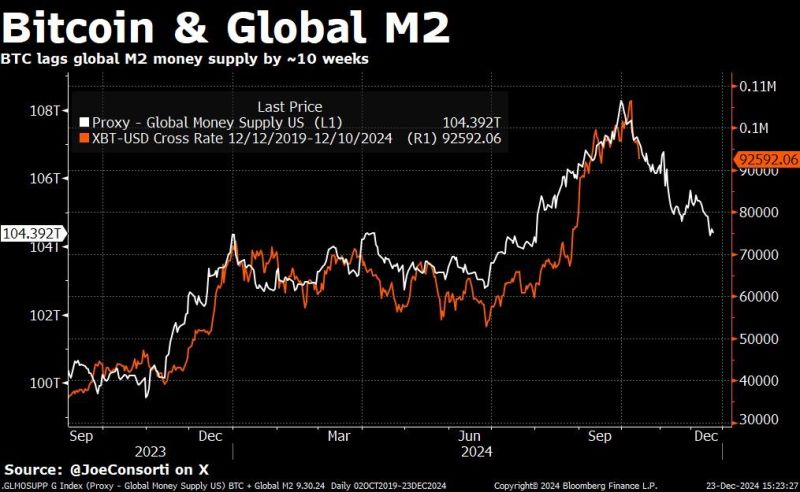
In addition, fiat money allows the state to exploit crises for its own purposes.
For example, aggressive foreign policies and wars can be financed relatively easily with counterfeit money. States do not have to raise taxes to secure additional funding (which is politically unpopular).
They simply issue new bonds, which are purchased by central and commercial banks in exchange for new currencies.
The general population usually does not react through this process, making it difficult for people to understand the real causes of the subsequent price inflation – the inevitable consequence of expanding the quantity of fiat money.
In times of war, it is also very convenient for states and their representatives to blame the enemy for high domestic price inflation. And, since the enemy causes so much harm – it is argued – it must be fought even more fiercely.
This is a recipe for prolonged, brutal wars, during which rulers can further control, monitor and subjugate the wider population.
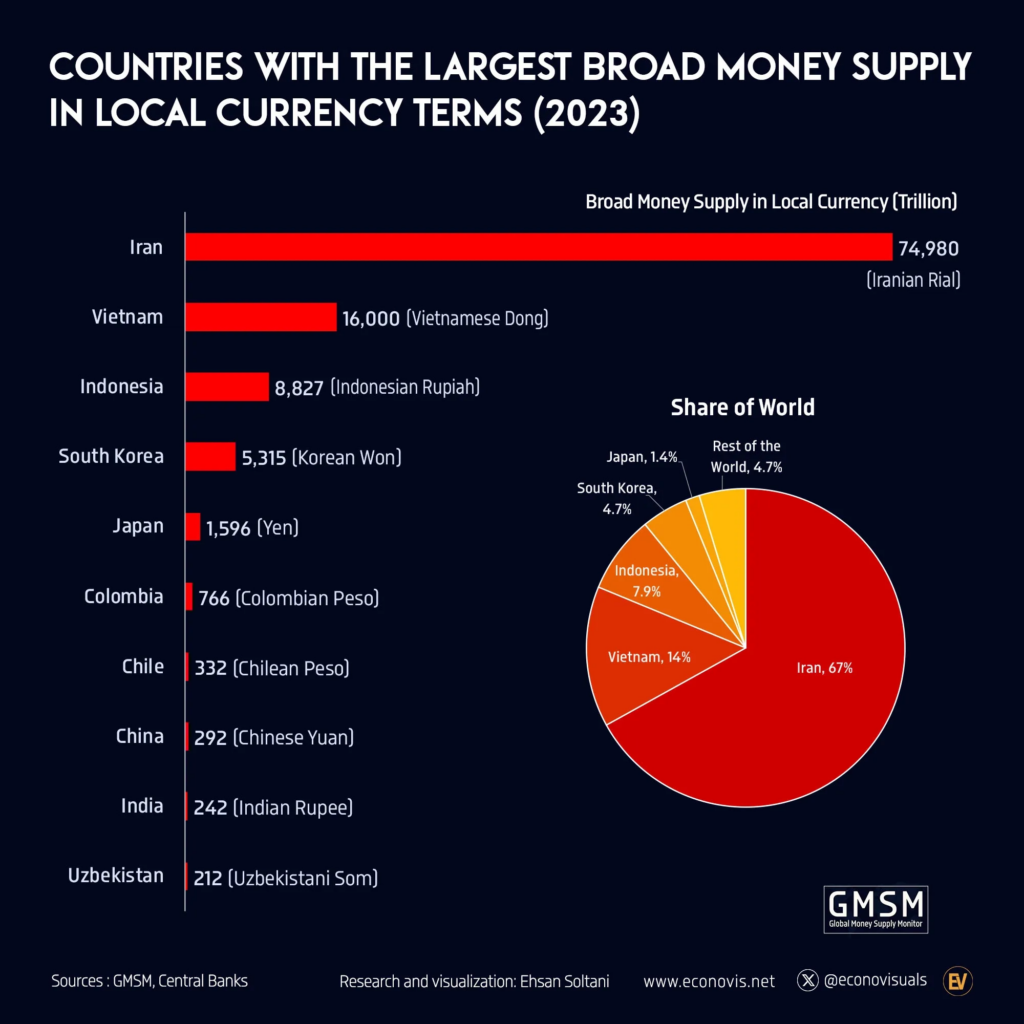
A system of unfreedom
These considerations should have made it clear that fiat money is helping to gradually destroy and abolish what remains of a free economy and society.
Fiat money is a crucial, highly effective tool in the hands of those who seek to create a “system of unfreedom for the masses.” This is a picture that the Austrian economist Ludwig von Mises (1881–1973) formulated as early as 1912, when he wrote:
“It would be a mistake to assume with certainty that the modern organization of the process of economic exchange will continue to exist. It carries within it the germ of its own destruction. The development of the fiduciary medium [i.e., artificial credit] must necessarily lead to its collapse.”
In this context, one can, and should, argue that fiat money is indeed something truly demonic. It does not serve the common interest, it causes developments in economies that are not acceptable based on common sense. In fact, fiat money should raise serious economic and ethical concerns.
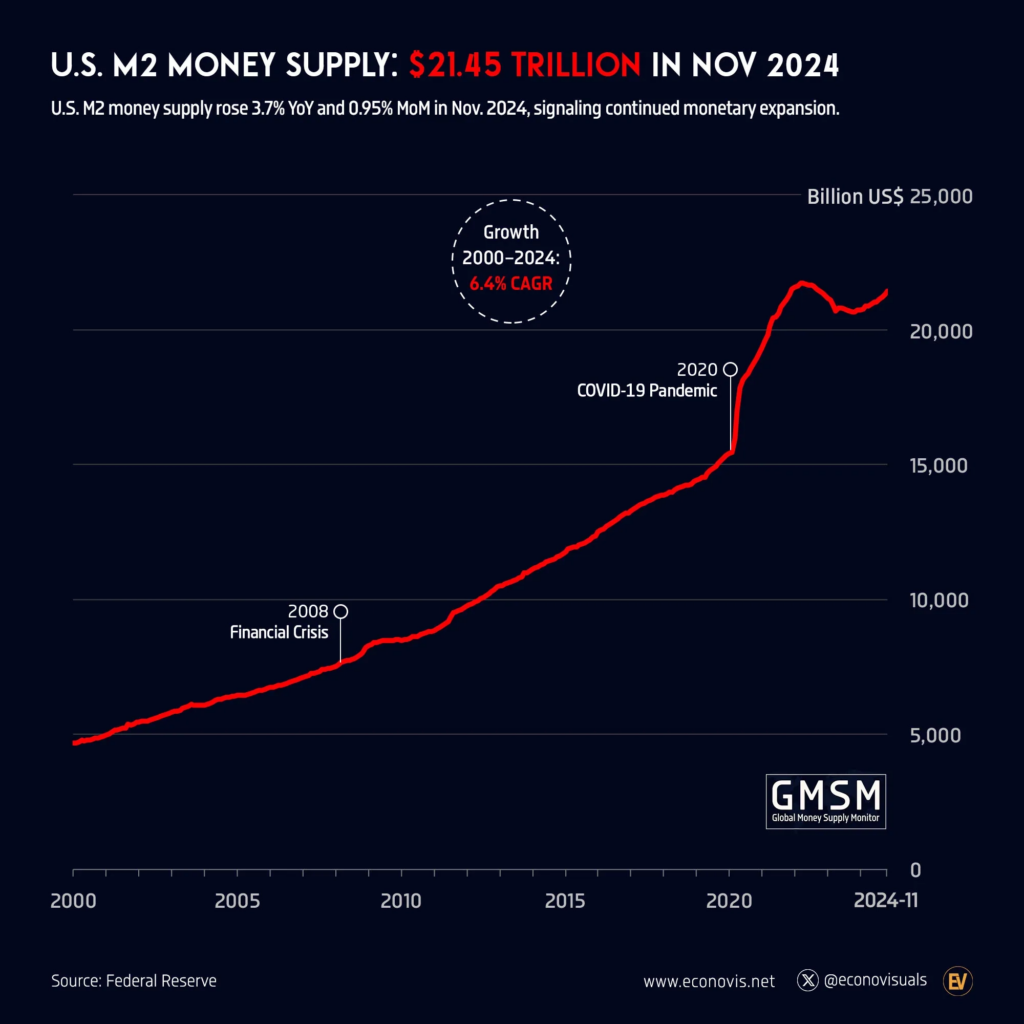
The Deep State
It is possible that Western economies are only just beginning to realize the full extent of the problems created by the use of fiat money.
As noted earlier, one of the most dangerous consequences of fiat money is the unchecked growth of the state, which has now everywhere transformed into what can be described as the “Deep State.”
The deep state ensures that ideologies hostile to freedom—such as the “Great Reset,” the United Nations’ “Agenda 2030,” and the “New World Order”—have dominated the thinking and actions of many people.
The problems created by fiat money, therefore, are not limited to price inflation and the devaluation of money and assets. No, they extend much further.
With it, economies and societies lose their freedom, the foundation of prosperity and peace.
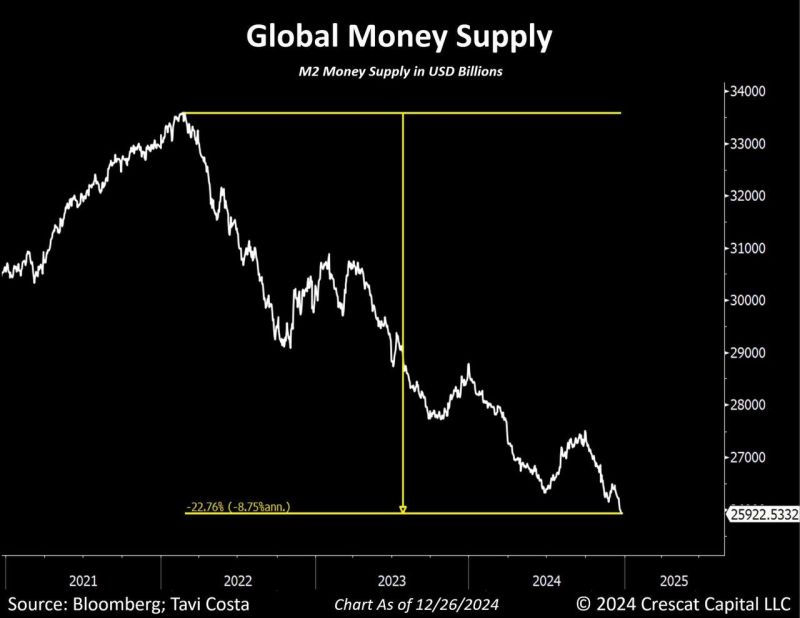
- Fiat money represents deception, false principles, and the insidious plunder of some by others.
- The economic and moral flaws of fictitious money are undeniable.
- In particular, the enormous power and potential for abuse that comes with centralized control of money production are simply too much for humans to handle.
- The consequences of hubris and injustice, of monopoly money production in the hands of a few, are beyond human control and are the root of many evils.
- However, public awareness of the problems caused by fictitious money appears to be quite limited at present.
- As a result, the global financial system is likely to continue to exist through crises for the time being, with the familiar consequences: inflationary booms, unfair distribution of income and wealth, financial and economic collapses, and ever-increasing debt burdens, as well as increasingly powerful and dangerous totalitarian states.
- The possibility of counterfeit money leading to a positive outcome is unlikely.