“There are decades when nothing happens, and there are weeks when decades happen.” This Lenin saying fits perfectly with the chaotic pace of events in Syria, a country full of “fuel” for a geostrategic arsonist.
Now that the chapter on the Assad regime is closed, we can see Syria as a game of external forces. Syria is of great interest to at least five powerful powers, to whom we attribute the status of winners or losers:
- Winners: Israel and Turkey
- Big losers: Iran and the Kurds
- Not defeated: the US and the EU
- Small loser: Russia
We will examine things in detail, starting with Syria itself.
The overthrow of Assad could only benefit the population if Western sanctions against the unified country are lifted and progress is made in reconstruction. On the political and social front, an increase in conflicts is expected. If the central authority in Damascus under Assad was already weak, at least too weak to extend to the entire national territory and achieve internal peace and economic development, this central authority should not be expected to be stronger under the Islamist rulers. Important economic resources, such as the oil fields in the Kurdish regions, are still not available to Damascus for the time being.
Similar to Libya, the fall of Assad has also created new centers of power in Syria, due to the declining grip of the central authority. How weak this is is revealed in the lack of defensive capabilities against massive Israeli attacks. Although these attacks also took place during Assad’s rule, at that time they were mainly directed at Iranian Revolutionary Guard forces deployed on Syrian soil. They have now led to the complete destruction of the Syrian armed forces. The Syrian army no longer appears to exist or is unwilling to submit to the command of the new rulers.
Israel, for its part, has created a kinetic feedback loop that undermines Iran’s position in the region. Hezbollah has been weakened by the 14-month war with Israeli forces, and its leadership and infrastructure are in decline after a series of devastating Israeli attacks, including the infamous pager attack and an airstrike that killed Hassan Nasrallah. The weakened Hezbollah was completely unable to intervene to prevent the collapse of the Assad regime, and now that collapse means that Iran must find a way to rebuild Hezbollah’s operational capabilities without the vital ground logistical link it has long used. For Israel, the year 2024 meant at least a temporary neutralization of much of Hezbollah’s command machinery, the severance of Iran’s land connection to Lebanon, and an extended security zone controlled by Israeli forces around the Golan Heights. There is a growing sense that Israel can act with impunity after waging a grueling and destructive ground war in Gaza and exchanging airstrikes against Iran itself. Any claim that Israel is not in full strategic evolution would be an act of willful ignorance and irrational cognitive intransigence.
Turkey is significantly strengthening its influence in Syria. It supports the SNA (Syrian National Army, until recently an anti-regime military organization) and is increasing pressure on the Kurdish areas through its advance. It had also allowed HTS (Hayat Tahrir al-Sham) to launch an offensive against Assad through arms deliveries and other support, while the close ties between Turkish intelligence and HTS leader Al-Julani have been known for some time. Ankara has made him its man and is now wasting no time in confirming its influence in Syria and using it to its advantage, a typical example being the proposed memorandum of cooperation on the EEZ between the two countries along the lines of the memorandum between Ankara and Tripoli. Turkey has clearly replaced Iran and Russia as the dominant foreign powers in Syria, is withdrawing the Kurdish control of the PYD (Partiya Yekitiya Demokrat, sister party of the PKK) in north-northeast Syria, known as the autonomous Kurdish administration of Rojava, and is expanding its influence in the South Caucasus, where it and its ally Azerbaijan are continuing their advance.
In short, Turkey has won this phase of the war, but now it must “win the peace.” If Syria returns to another phase of a bloody civil war, Turkey will start all over again with its strategic goals. Ankara is behaving like Sisyphus with his stone, having rolled it almost to the top of the hill and now having to try to keep it there.
As for Iran, its geopolitical position in the Levant and the Eastern Mediterranean has collapsed. Iran had invested significant resources in supporting the Assad regime, providing tens of billions of dollars in military aid and logistical support. Most importantly, Iran has played a central role over the years in providing manpower to support the troubled Syrian Arab Army (SAA). The elite Quds Force of the Iranian Revolutionary Guard Corps trained militias to support Assad’s army and led the mobilization and coordination of foreign fighters, including from Lebanon, Iraq, and Afghanistan. For Iran, Syria and Lebanon formed a power projection hub that reinforced each other. Syria represented an important land corridor through which Iran could channel personnel and supplies into Lebanon, creating an essential link in the geographic network of Iranian power projection. Hezbollah played a significant role in coordinating Iranian militias in Syria, and Syria ensured the land connection between Iran and Hezbollah. Thus, 2024 was a disaster for Iran, as Hezbollah was badly hit by Israeli forces and Assad’s Syria collapsed.
Of course, Iran has a certain strategic depth and opportunities to rebuild its position. It still maintains militias in Iraq, has the opportunity to cooperate with Kurdish militias in eastern Syria, maintains productive proxies in Yemen, and has demonstrated its influence against Israel. However, it is clearly on the defensive and faces the prospect of painstakingly rebuilding its position in Lebanon and Syria after decades of massive investment in the region.
The US and EU would certainly like to make more of the new situation, but their problem is that they have few contacts in the entire Middle East except for Israel. Turkey is the only NATO country other than the US that is capable of acting in Syria. Nevertheless, the Europeans are already acting in the style of colonialists again, trying to impose terms and regulations on the Syrians. Even if the Europeans repeatedly want to make the Russian presence in Syria an issue and a touchstone for their continued support for the country, this spark is not going to ignite at the international level. The US seems to be more interested in continuing to protect the Kurds, as their agents in Syria, from Turkish attacks, without there being any significant unrest between the two NATO countries so far. The Kurds, for their part, should be very careful about supporting Washington, the past of their relations is not encouraging.
We recall that the Kurdish movement has been betrayed many times in the past by the US. In 1975, the Kurds had asked for help from the then US government (Nixon as president, Kissinger as secretary of state) to intervene and save them from Saddam Hussein. The US betrayed them after previously using them as pawns in the Iran-Iraq border conflict, resulting in the massacre of 182,000 Kurdish civilians by the then Iraqi regime. A few years later, in the first Persian Gulf War (1990), the US asked the Kurds to fight for a second time against Saddam. Once again, the Kurds were abandoned by the US after the war, thousands of them died as a result of Saddam’s reprisals, while many were forced to flee Iraq.
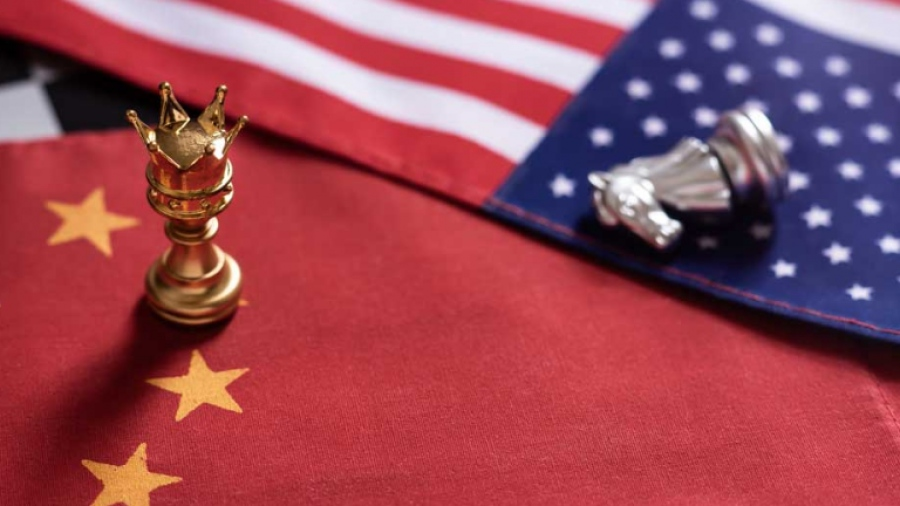
The Kurds in the chess geopolitical game of the powerful in Syria, at this important turning point in their history, are again in danger of being sacrificed as pawns, it does not matter at all whether they will be sacrificed for the white or black king. Whoever does not remember his historical past, the “allies” who repeatedly betrayed him, is doomed to relive it.
The ruling political forces in the West believe that Russia has been weakened so much that the overthrow of Assad is now a suitable opportunity to push back Russian influence in the region. Mainstream media and politicians believe that Putin can be defeated again, as in Ukraine in 2014. The fact that Moscow was unable to prevent the overthrow of Assad is seen as a sign of Russian weakness, as they had already misinterpreted the events in early 2022. They do not seem to have learned anything from their mistakes, they do not even admit them to themselves.
Russia is keeping its cool and acting prudently. Unlike the US and the EU, it has had appropriate contacts with the relevant forces in the region for years. According to the Kremlin, Moscow is “in contact with all Syrian opposition groups.” Of course, Russia’s primary concern is its own facilities, such as the embassy and military bases. Moscow has stated that “the new leaders have guaranteed their security and Russia will discuss with the new government the continuation of the troop presence once the situation calms down.” Russia maintains bases in the coastal region of Syria, including air bases and naval bases near Tartus and Latakia. These bases are an important link in Russia’s projection of power in the Mediterranean and for now, it seems clear that Moscow has decided to distance itself from Assad and try to save the bases through agreements with the future Syrian government.
For Russia, however, the overriding issue is the loss of influence in Ankara that it had previously attributed to the Assad regime. While the Assad regime was in power, Russia was effectively the arbiter in relations between Ankara and Damascus. Syria has been a pressure point for Turkey that Moscow has been able to use to influence Ankara’s decisions on other issues such as Ukraine and the Black Sea. With the fall of Assad, however, the relationship has reversed. Now a Turkish proxy controls Damascus, not a Russian one, and Moscow will have to help Ankara if it wants to maintain its bases on the Syrian Mediterranean coast.
As an outlet for the forces we mentioned, Syria is almost literally at a geostrategic crossroads. Specifically, it is a conflict zone between Iranian and Turkish interests. Whichever of these powers is on the defensive in the region resorts to strategic arson, that is, deliberate ignition to create a harmful threat to its adversary. While the Assad regime has remained in power thanks to the generous support of Moscow and Tehran, it has been Ankara that has provided strong and ultimately successful support to the overthrowrs of that regime. For Turkey to consolidate its victory, it must successfully establish a stable government in Syria and weaken or even neutralize the Kurdish forces that want autonomy. With Iran now in retreat, Israel advancing, Russia on standby, and its unstable economic base and numerous sectarian-ethnic divisions, Syria is a country full of fuel for a geostrategic arsonist.
Syria is certainly a sick state. The question is now being asked, more than 100 years after the Sykes-Picot Agreement (1916), about the relationship between the state and the demarcated territory formerly known as the Syrian Arab Republic. The Assad regime is gone, but the enormous pressure that distorts and tugs at the breadth and length of its former territories remains, and the fundamental question is whether a stable political order under the leadership of “moderate” jihadists can prevail on Syrian soil.