



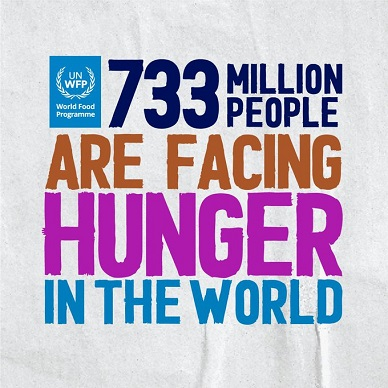
The number of hungry people is rising, while the amount of money the world’s richest nations are contributing to help them is falling.
The result: The United Nations says that, at best, it will be able to raise enough money to help about 60 percent of the 307 million people it predicts will need humanitarian assistance next year.
That means at least 117 million people will not receive food or other assistance in 2025.
The UN will also end 2024 having raised about 46 percent of the $49.6 billion it has appealed for humanitarian aid worldwide. It is the second year in a row that the world body has raised less than half of what it was seeking.
The shortfall has forced humanitarian agencies to make painful decisions, such as reducing rations for the hungry and reducing the number of people eligible for aid.
The consequences are being felt in places like Syria, where the World Food Program (WFP), the UN’s main food distributor, was feeding 6 million people. Looking at its aid projections earlier this year, the WFP has reduced the number it hoped to help there to about 1 million people, said Rania Dagas Camara, the agency’s assistant executive director for partnerships and resource mobilization.
‘Absolute necessity’
UN officials see little reason for optimism at a time of widespread conflict, political unrest and extreme weather, all of which are fueling hunger.
Economic pressures and shifting domestic politics are reshaping some rich countries’ decisions about where and how much to give. One of the UN’s biggest donors – Germany – has already cut $500 million in funding from 2023 to 2024 as part of a general tightening of the belt.
The country’s cabinet has proposed a further $1 billion cut in humanitarian aid for 2025. A new parliament will decide next year’s spending plan after federal elections in February.
Aid groups are also watching what U.S. President-elect Donald Trump proposes after he takes office in January. Trump’s advisers have not said how he will approach humanitarian aid, but he has sought to reduce U.S. funding in his first term. And he has hired advisers who say there is room for cuts to foreign aid.
The United States is leading the way in preventing and fighting hunger around the world. It provided $64.5 billion in humanitarian aid over the past five years. That was at least 38 percent of the total such contributions recorded by the United Nations.
Sharing the wealth
The majority of humanitarian funding comes from just three wealthy donors: the United States, Germany and the European Commission. They provided 58 percent of the $170 billion the United Nations recorded in response to crises from 2020 to 2024.
Three other powers – China, Russia and India – collectively contributed less than 1 percent of the humanitarian funding tracked by the United Nations over the same period.
The failure to close the funding gap is one of the major reasons why the global system for addressing hunger and preventing famine is under immense strain. Nearly 282 million people in 59 countries and territories faced high levels of acute food insecurity in 2023.
The failure of major nations to pull their weight in financing global initiatives has been a persistent complaint of Trump. Project 2025, a set of policy proposals drafted by Trump’s supporters for his second term, calls on humanitarian agencies to work harder to mobilize more funding from other donors and says this should be a condition for additional U.S. aid.

