



The stock market is flashing warning signs:
- the “mania” that has gripped investors over technology stocks, and especially those related to artificial intelligence, seems to be slowly coming to an end… as liquidity dries up.
- If anything, recession concerns have all but disappeared, boosting investor confidence, causing the stock market to explode.
- Stocks, which are historically expensive, don’t need an economic recession to undergo a correction.
- The relentless rally may be preparing for a reversal — without… a recession, because valuations are high.
Α. There are many ways to measure how expensive a market is:
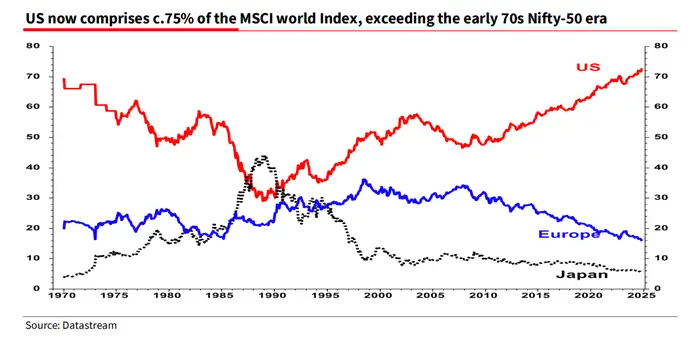
1. The weight of US stocks corresponds to 70% of the MSCI world index.
2. Another indicator is the PE ratio of the S&P 500 index for the next 12 months – essentially an indicator of optimism. It appears below left.
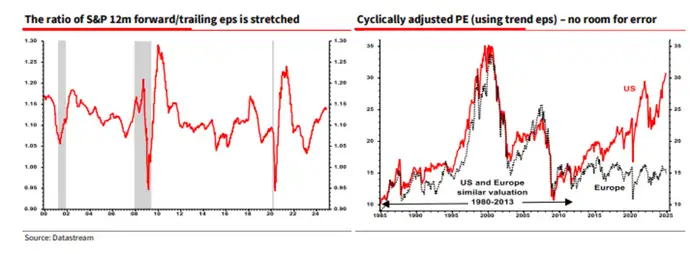
3. The chart on the right above shows the Shiller CAPE index – it shows that the market is as expensive as it was near the top of previous bubbles.
But it is also very expensive relative to European stocks, which have historically traded at similar valuation levels to US stocks.
Β. Liquidity is running out as the Fed reduces its balance sheet, which can be bad news when valuations are high.
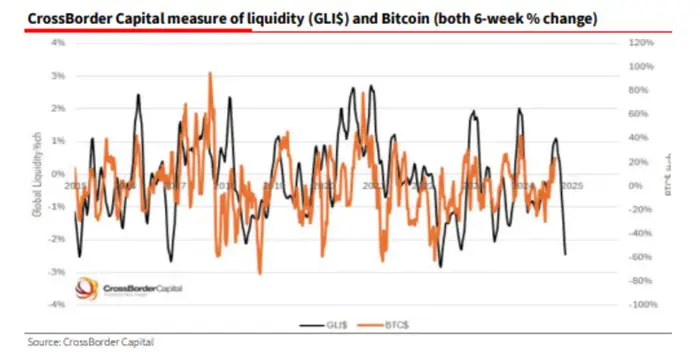
1. CrossBorder Capital’s Global Liquidity Index, shown in black, has declined on a six-week basis. It suggests that Bitcoin, a speculative asset, is expected to decline in price compared to six weeks ago.
2. The rise in 10-year Treasury yields could also cause a liquidity crunch, as investors holding the asset would suffer a loss by selling it. Higher yields also attract capital away from stocks, as Treasurys are risk-free. Rising yields will eventually stifle the stock market, especially as valuations continue to rise.

C. To be fair, bear markets (-20% or more) usually only occur in recessions, when both earnings and valuations collapse. Alternatively, a sharp rise in bond yields can cause problems for stocks in a high PE environment – as is the case now. This is a case of a rubber band being stretched until it breaks – the 1987 stock crash would be a good example.
At some point, rising bond yields will surely start to hurt stocks.
