Three weeks after the Battle of Guadalcanal in the South Pacific, the US Navy would once again face the Japanese: in a night battle that would prove to be one of the greatest naval defeats of the US in World War II.
By the fall of 1942, the battle on the island of Guadalcanal was tilting in the Americans’ favor, with the US fleet having completely isolated the Japanese garrison. The specter of starvation had proven to be the number one cause of death/exhaustion for the Japanese soldiers on the island. Many of whom were willing to kill their colleagues for a ration of rice while those who remained were too weak to move, much less fight.
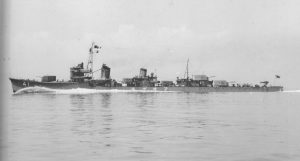
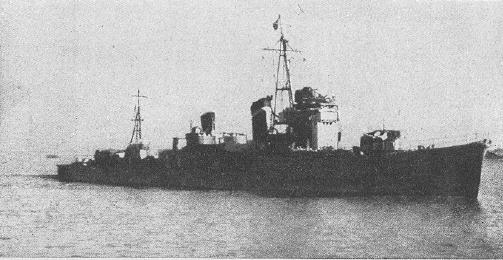
The Japanese destroyer Asashio, a veteran of 9 “Tokyo Express” missions, was a typical example of ocean-going destroyers of the Imperial Japanese Navy. The ship was built in 1936, had a displacement of 2,400 tons and a speed of 35 knots. Her armament consisted of 6 3-inch (127 mm) guns, 28 25-mm guns, 4 13-mm heavy machine guns and 8 24-inch (610 mm) torpedo tubes as well as depth charges.
The Japanese Navy used submarines to resupply the struggling garrison, but the volume of supplies needed was much greater. A newer tactic used flotillas of fast destroyers, which would approach deserted beaches at high speed at night to avoid detection by American aircraft. These missions lasted only a few minutes, often leaving the supplies at sea in barrels, to be swept by the currents onto the beaches and picked up by starving Japanese soldiers. The Americans called these missions the Tokyo Express and were determined to stop them.
On November 30, 1942, an American squadron of five cruisers and four destroyers launched a night attack on eight Japanese destroyers near the Tassafaroga area of Guadalcanal. Using counterintelligence information on the location and strength of the Japanese units and having the advantage of radar, the American ships opened fire first, sinking one destroyer (Takanami).
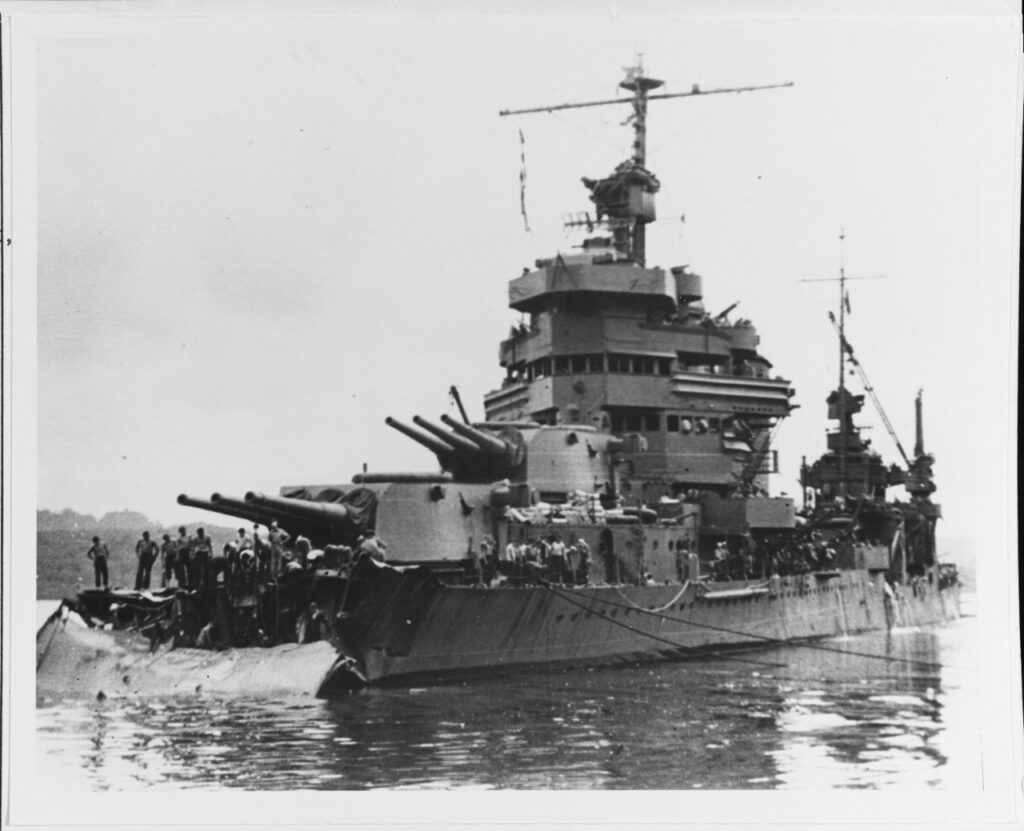
However, the immediate reaction of the Japanese, who maneuvered and launched torpedo beams at the Americans, aiming for the glare of their guns, completely reversed the situation. One American cruiser was sunk (USS Northampton, CA-29) and the other three were seriously damaged (USS Pensacola CA-24, USS New Orleans CA-32 and USS Minneapolis CA-36) and remained out of action for nine months. Thus, the Japanese force managed to disengage.
In the conflict, it became clear that the Japanese were still a formidable opponent with a competent level of crew training, highly trained officers who had tactical awareness and the ability to take initiative, while the Japanese navy’s night combat skills still remained superior to the American one.
The contribution of superior weapons, such as the 610 mm Type 93 torpedo used by the Japanese destroyers, was also significant. The torpedo had a long range of about 40 km, which is why it was called the “Long Lance” by the Americans. Thus, it could hit ships the size of a battleship or cruiser at the limits of their guns.
Another reason for the American defeat, perhaps the most important, was the underestimation of the enemy. Having lost two consecutive battles during the night, the Japanese were in a very difficult position on Guadalcanal. Thus, the presence of eight destroyers made the Americans believe that this was another attempt to supply the garrison, considering that some of the ships were operating as fast transports and would be unarmed. The superior firepower, the use of radar and the optimism from previous victories, gave the Americans an air of arrogance. However, overlooking the proverbial failure of their own torpedoes in contrast to the good performance of the Japanese, something that experienced officers had pointed out.
The Tassafaroga engagement was the third-worst naval defeat for the Americans after Pearl Harbor and the Battle of Savo Island. The lessons learned led to cruisers not being exposed to engagements with smaller vessels, while greater initiative was given by Admiral Arleigh Burke to destroyer commanders.
The situation did not improve for the Japanese, however. Guadalcanal was evacuated a month and a half later, in a feat of organization on the part of the Japanese navy.