


Nearly 50 years after colonial Portugal was forced out of Angola, the West and China are returning to the wider region. For the “good” of the world’s climate, superpowers are resurrecting haunted mines to seize untold underground treasures.
The Minerals Security Partnership (MSP), a 14-nation coalition with the European Commission, has launched a new financing network for critical minerals projects in a bid to boost international cooperation and pledge financial support for a massive nickel project in Tanzania, with the support from the mining company BHP.
The figures published in April 2024 by the International Monetary Fund (IMF) leave no doubt about the importance of Africa and especially the port of Lobito, a vital hub for the export to Europe of agricultural goods and metals mined in Africa.
“Global revenues from the mining of just four basic minerals – copper, nickel, cobalt and lithium – are estimated at a total of 14.6 trillion. euros ($16 trillion) over the next 25 years,” the IMF said in a report (“Harnessing Sub-Saharan Africa’s Critical Mineral Wealth“).
Sub-Saharan Africa alone is believed to contain 30% of the world’s total critical mineral reserves, while Congo is estimated to hold 70% of the world’s cobalt production and about 50% of the planet’s reserves. Cobalt is the key ingredient in most lithium-ion batteries, used in everything from mobile phones to electric vehicles. Zambia alone accounts for 70% of Africa’s copper production.’ “This transition,” adds the IMF, “if done right, has the potential to transform the region.”
Although the IMF reports that sub-Saharan Africa is expected to reap more than 10% of the aforementioned $14.6 trillion, a 12% increase in RES by 2050, experts fear the worst.
Pulitzer Prize finalist and Associate Professor at the University of Nottingham, Siddharth Kara, has revealed the terrible conditions endured by cobalt miners in the Congo, many of them children who work against their will for endless days, with little sleep and under grueling, abusive conditions.
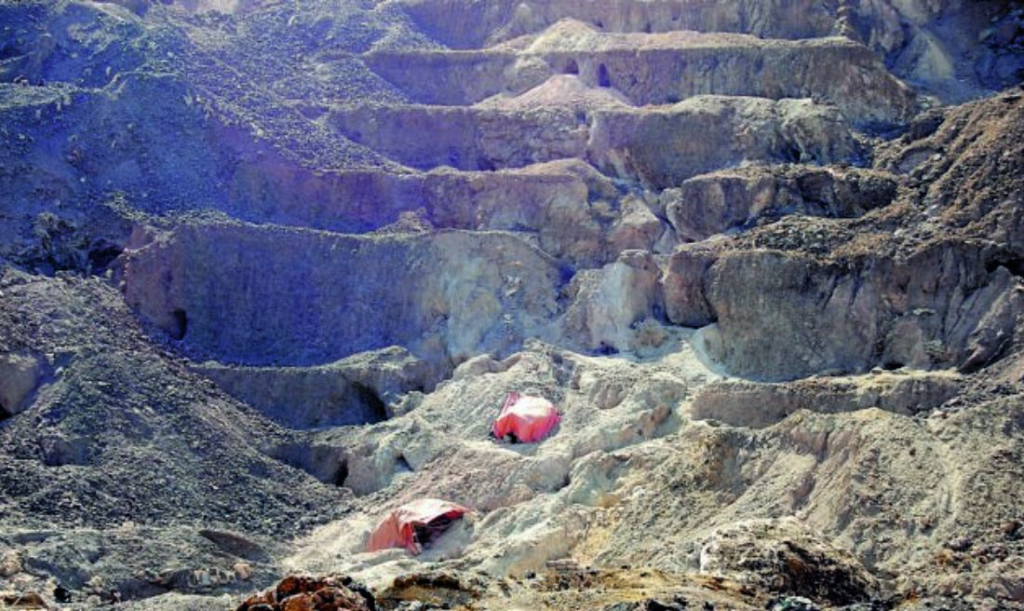
Already, a report by Human Rights Watch (HRW) had revealed the squalor inside Zambia’s Chinese-owned mines: 18-hour work days, unsafe working environments, rampant anti-union activities and fatal workplace accidents (“Zambia: Workers Detail Abuse in Chinese -Owned Mines“).
“Your friends say there’s danger as they come off their shift,” a miner who was injured while working for a Chinese company told HRW. “You will be fired if you refuse, they keep threatening it… The main accidents are from falling rocks, but you also have electrocution, people hit by mining trucks underground, people falling from platforms that are not stable… My accident, I was in a cargo box . The head of the mine… did not put a platform. So while we were working, a rock fell and hit my hand. It was broken to the extent that the bone was coming out of the hand.”
With new US-backed mines, Washington believes the Lobito Corridor could prove to be the missing link needed to ensure Zambia’s copper ends up in green energy goods consumed in the West.
More than half (54%) of the critical minerals needed are located on or near indigenous lands, meaning that the world’s most vulnerable populations are at greatest risk of being profoundly adversely affected by future mining and related operations.
USA and China are coming
In 2024, China has committed $4.5 billion to African lithium mines alone and another $7 billion to invest in copper and cobalt mining infrastructure. In the Congo, for example, China controls 70% of the mining sector. Having lagged behind that country’s investment in Africa for years, the US is now scrambling to catch up.
It was preceded in September 2023, on the sidelines of the G20 meeting in India, by the signing of an agreement by US Secretary of State Anthony Blinken with Angola, Zambia, the Democratic Republic of Congo and the EU to launch the Lobito Corridor project.
“We are meeting at a historic moment,” President Joe Biden said as he welcomed Angolan President Joao Lorenzo to Washington. Biden then called the Lobito project “the largest US rail investment in Africa ever” and reaffirmed the West’s interest in what the region might have to offer in the future. “America,” he added, “is all in Africa… We are all with you and Angola.”
Of course, this is exactly the kind of rhetoric we can expect when Western (or Chinese) interests set out to acquire the resources of the Global South. If this were about oil or coal, questions and concerns about America’s regional intentions would no doubt be raised.
Under the cover of Climate Change, few consider the geopolitical ramifications of such a position – and even fewer recognize the implications of the massive increase in mining on the continent.
