



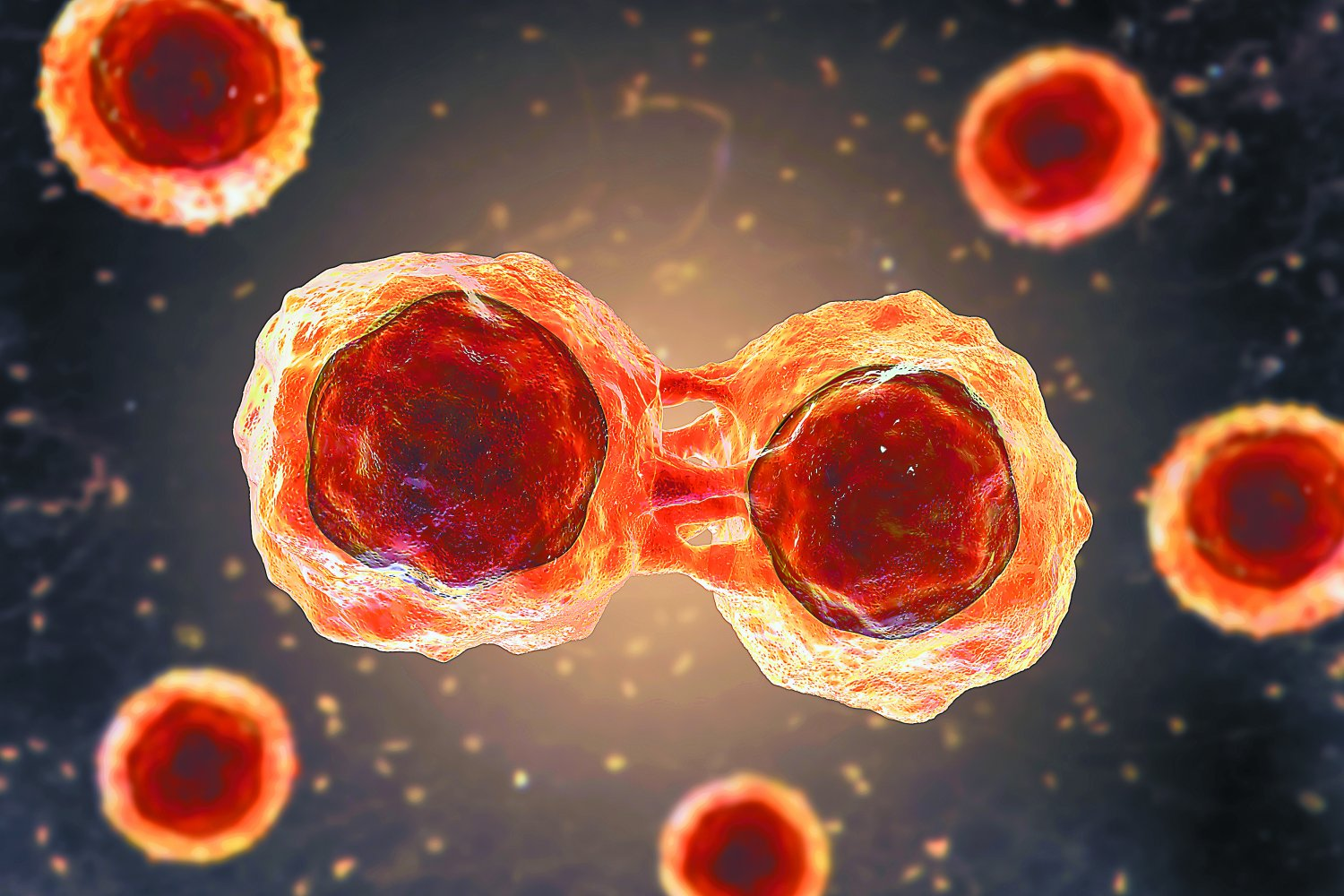
For the first time in the world, a 25-year-old patient with type 1 diabetes was freed from insulin administration after a transplant of her reprogrammed cells. At the age of 25, for the first time in her life, she eats whatever she wants, even sugar – and most importantly, she is free from the daily insulin that has accompanied her since childhood, when she was first diagnosed with type 1 diabetes.
And this is thanks to the world’s first transplant of reprogrammed stem cells against type 1 diabetes that came from her own body. A transplant that went around the world in the last few days through publication in the scientific journal “Cell” where this world first was presented (“Transplantation of chemically induced pluripotent stem-cell-derived islets under abdominal anterior rectus sheath in a type 1 diabetes patient“).
The protagonist of this text who lives in Tianjin, China and who gives hope to many diabetics, wishes to remain anonymous and has every right to do so.
Homologous transplantation
The ground-breaking transplant, which took place more than a year ago but is now being made public after a safe period showing its success, involved the use of stem cells that can differentiate into any type of tissue in the body.
The scientific team proceeded with a homologous transplantation of pancreatic islet cells that were derived from induced pluripotent stem cells (iPS), i.e. from cells that had resulted from reprogramming adult cells to behave as stem cells, as its antibody profile patient showed that a heterologous transplant – heterologous transplants against diabetes are being tested by different groups – would be at high risk for graft rejection.
Of course, we must emphasize that in the case of type 1 diabetes, which is an autoimmune disease, there is underlying autoimmunity, which can also play a role in the immune response even when the transplanted cells belong to the patient himself. Thus, in this particular disease, some form of immunomodulation will probably continue to be needed. In the patient’s case, immunosuppressive drugs were already being taken due to a previous liver transplant, which is ongoing.
The 25-year-old was not the only one who underwent the pioneering transplant. Two more patients followed, who are expected to complete one year since the transplant next November. “The picture of the other two patients is very good and we continue to monitor them.” If the results are equally encouraging, another 10 to 20 patients will soon follow.
Innovative method
The procedure followed was as follows: the researchers extracted cells from the three patients with type 1 diabetes and with a modified reprogramming method brought them back to a pluripotent state. They then transformed these cells into pancreatic islet cells – creating three-dimensional clusters of such cells, the safety and efficacy of which they tested in mice and primates before using them in humans.
In June 2023, in a procedure that lasted no more than half an hour, about 1.5 million pancreatic islet cells – laboratory “children” – were injected into the abdominal muscles of the first patient. The injection point is another breakthrough. And this is because most islet transplants are done in the liver, a point that does not allow experts to monitor the behavior of the transplanted cells. Their injection into the abdomen now allows them to be monitored using MRI, so that they can be easily removed if necessary.
Promising results
About three months after the transplant, the patient was able to produce sufficient amounts of insulin endogenously so that she did not need external administration of the hormone. This level of insulin production continues to maintain until today, achieving secretion of the hormone within normal limits in 98% of the 24 hours.
The path now for the research team is full of challenges but also optimism. One of the important challenges is to achieve, through new immunomodulatory strategies, the abolition of the need for immunosuppression. Another major challenge concerns the future production of pancreatic islets from stem cells on a large scale and at a reasonable cost – efforts are already underway in this direction.
Another major challenge is to make his method applicable to another form of diabetes that is a public health “scourge” due to modern unhealthy lifestyles, type 2 diabetes, in which the pancreas does not produce sufficient amounts of insulin.

