



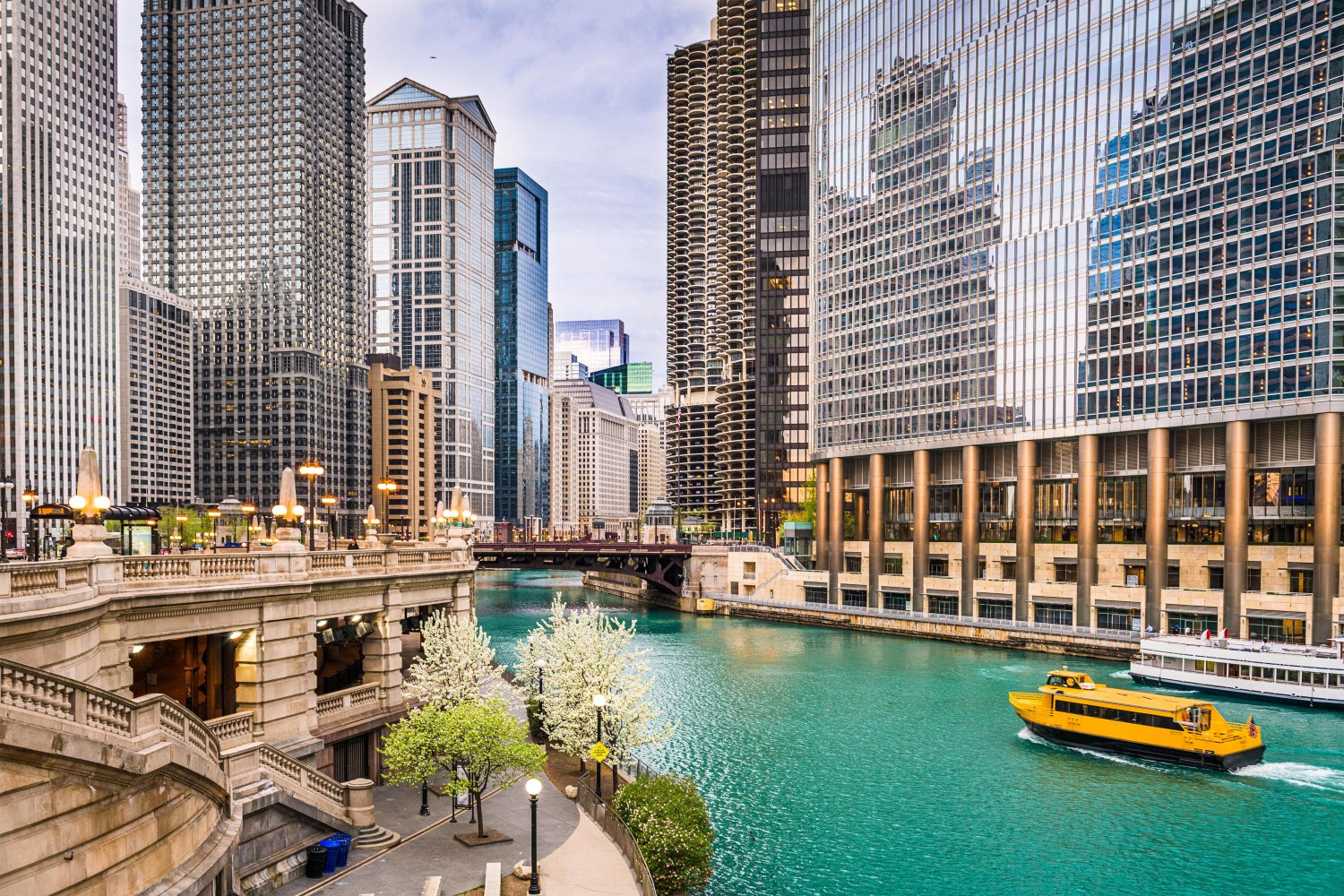
Chicago, the third largest city in the USA after New York and Los Angeles, has thankfully left behind the violent days of gangster conflicts that lived there.
But the tourist agencies still organize Gangsters and Crime and Murder Mystery Tours for the visitors who arrive there, not only to admire one of the most impressive American cities, but also to “relive” (even if only through the stories of the guides) the her sinful past.
Not a few still pass by 7244 South Prairie Avenue to photograph the two-story villa where Al Capone lived from 1923 to 1931 – his family kept it until 1952.
But Chicago is much more than a city of gangsters and platinum beauties who sang and danced jazz and then nestled in the arms of their prized lovers wrapped in the furs they had just given them.
It’s an impressive museum of architecture – this is where the idea of building skyscrapers started, after all – with dozens of (mostly) modern buildings in its center, but also magnificent 19th and early 20th century mansions in its well-planned neighbourhoods. Chicago is also the huge market with shops where you can find everything your appetite craves, and restaurants with ethnic cuisines but also with delicious American burgers.
Like Chicago are the walks on the shores of Lake Michigan (which has an area of 58,030 square kilometers!) and the music scenes with jazz (and not only) music, and the theaters, and the bars with the live performances of emerging artists that when full world scenes that you have seen in movies come to life before your eyes.
Modern Chicago is, in a few words, a city that you can’t get enough of walking around and getting to know from end to end. Everywhere, even in its remote neighborhoods, you will find something interesting.
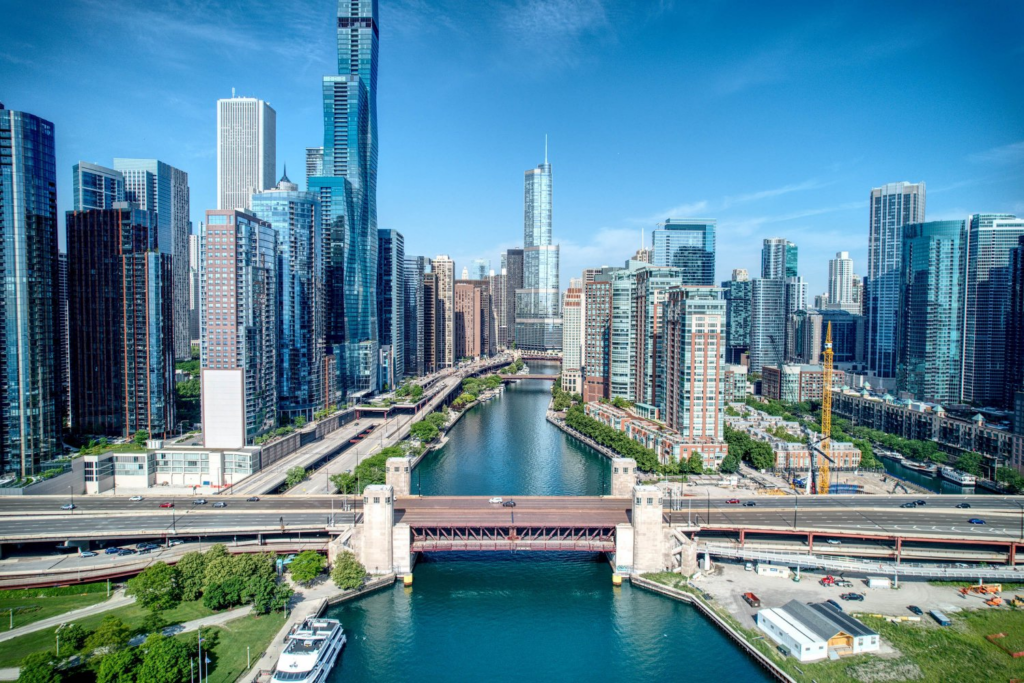
Museums and skyscrapers by the water
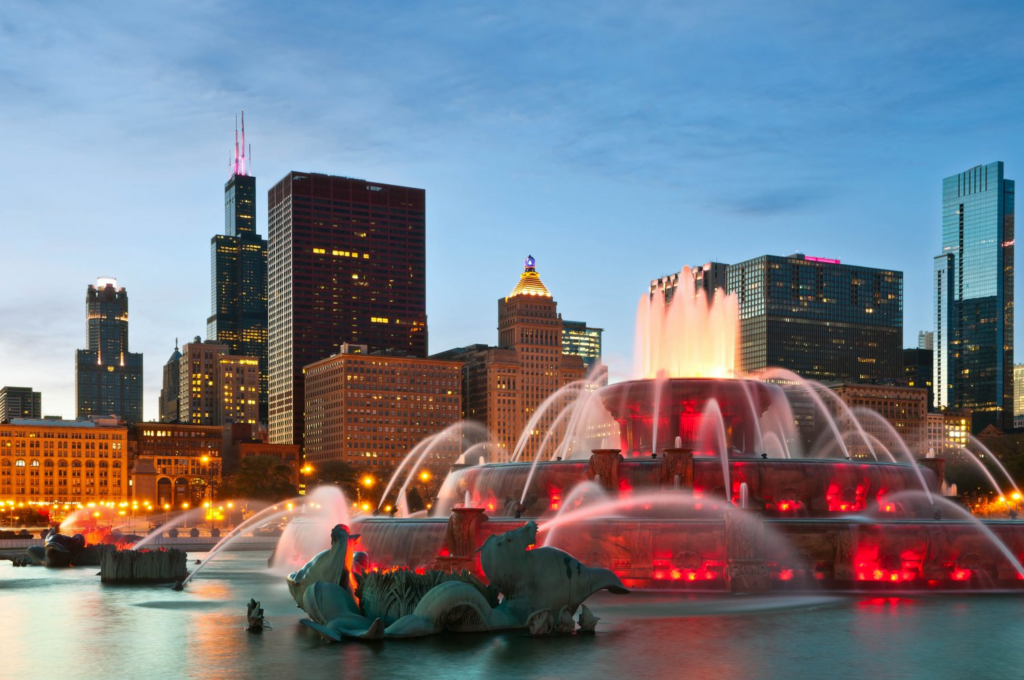
So we walk along the banks of the Chicago River that runs through the city, in a “forest” of skyscrapers. We enjoy the evening show with colorful lights at the rococo Buckingham Fountain.
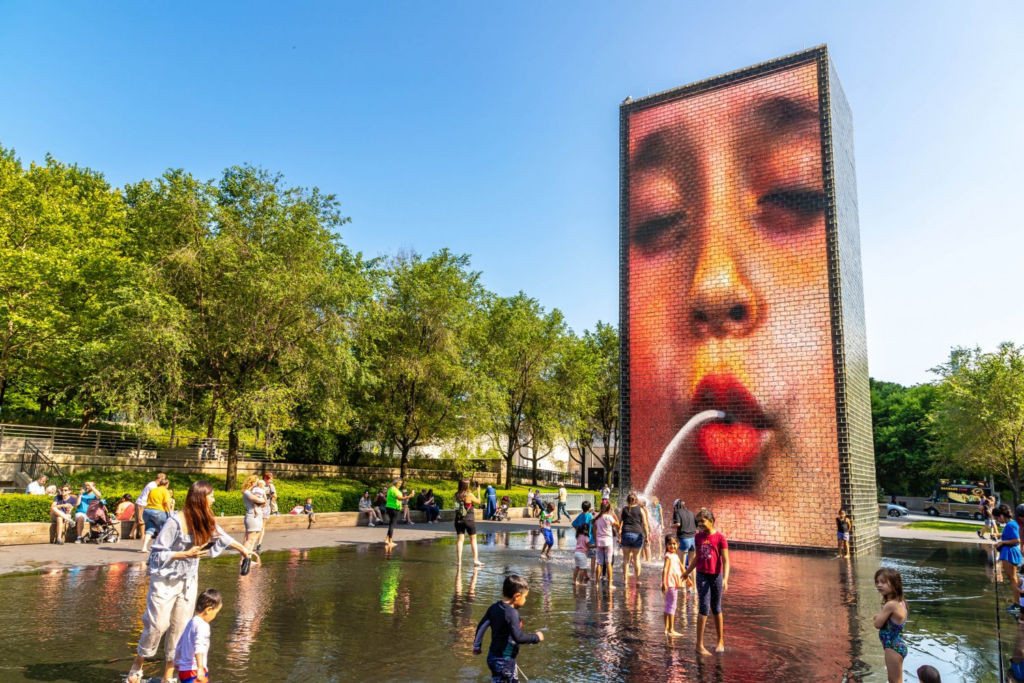
We play by photographing the distorted views of the landscape (and our boss) on the famous “bean”, the silver mirror sculpture Cloud Gate by the British-Indian visual artist Anish Kapoor, located in the very central Millennium Park. A little further down we also photograph the Crown Fountain with the enlarged faces that shoot water from their mouths, one of the most famous installations of the Spanish sculptor Zaume Plensa.
We also climb to the top of the Willis Tower, also known as the Sears Tower, which in 1973, when its construction was completed, was the tallest building in the world. It held the record for 25 years, and its 442 meters may not be as impressive today as it was then (taller skyscrapers have been built since), but its history alone warrants a visit. From there, moreover, from its Skydeck, we enjoy a unique view of the entire city.
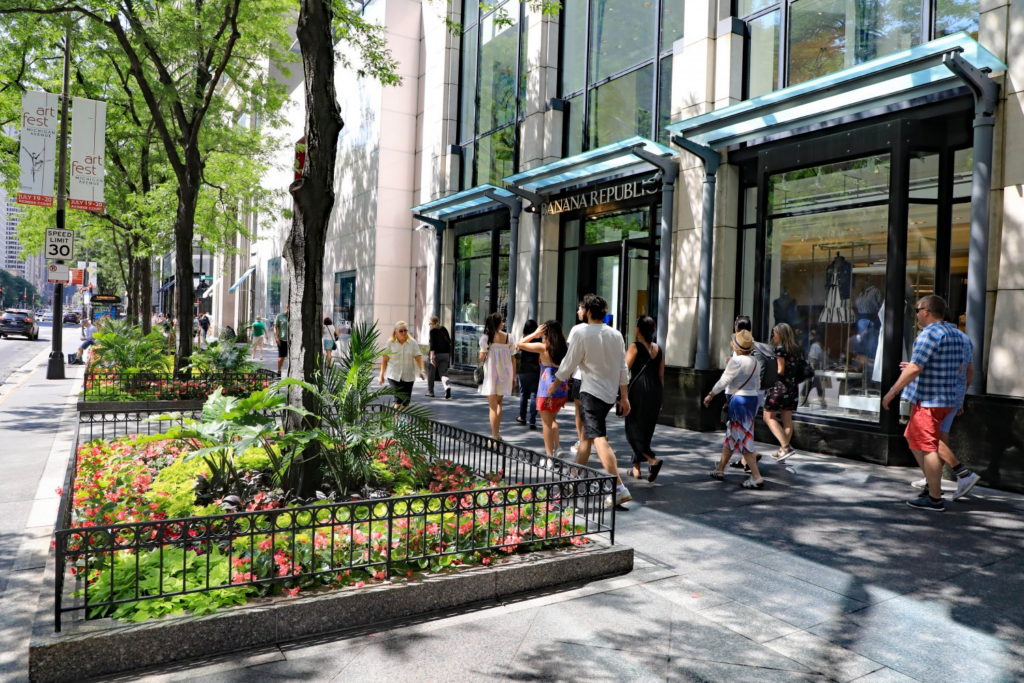
The Carbide and Carbon Building is one of Chicago’s most iconic art deco buildings – the city has many of them. The Magnificent Mile, the main street with its big shops, Navy Pier on Lake Michigan, with its amusement park, theaters and restaurants, Chinatown with its restaurants and small shops, but also Greek Town with its “greek gyros” and its skewers are a few more stops on a journey of many kilometers but also of many emotions.
The most moving thing for us is of course a visit to the National Hellenic Museum located at 333 South Halsted Street, always in Greek Town. It is a small museum dedicated to the thousands of our compatriots who immigrated to Illinois and who built their lives there from the beginning. Attention, the museum is closed from Monday to Wednesday.
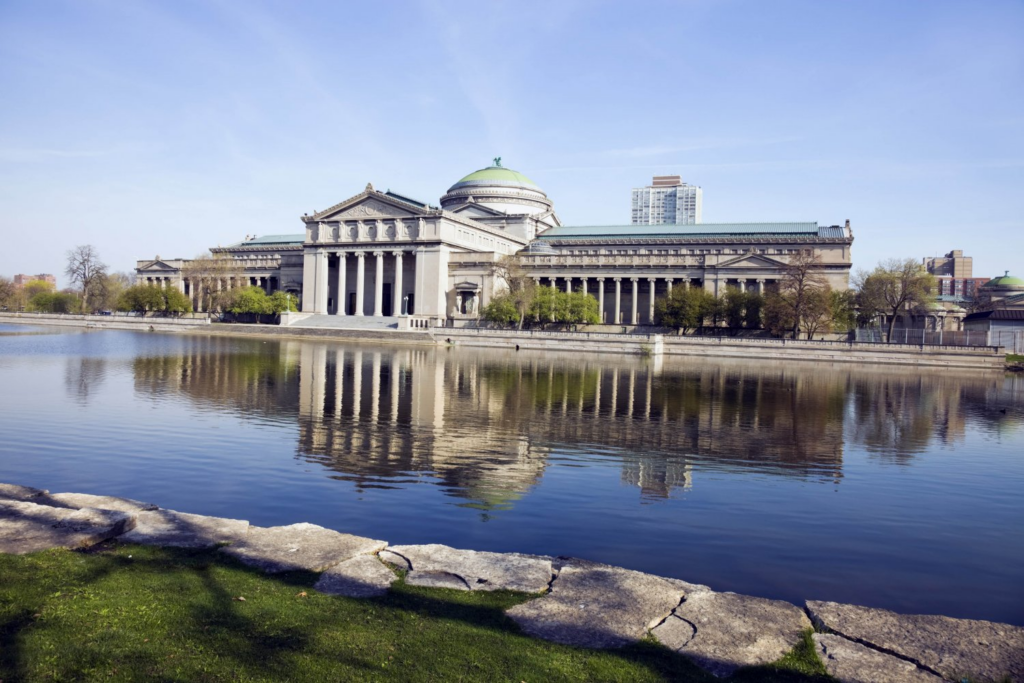
The Field Museum of Natural History, with exhibits from cultures around the world, the Museum of Science and Industry, the Chicago History Museum, the Art Institute (where the famous painting “American Gothic” by Grant Wood is also exhibited), the Institute for the The University of Chicago’s Study of Ancient Cultures Museum and the Museum of Contemporary Art (MCA) fill our hours and days with even more images.
In the Driehaus Museum we see what the interiors of the city’s mansions looked like in the late 19th and early 20th centuries (as well as various periodical exhibitions). Pioneer architect Frank Lloyd Wright’s original home in suburban Oak Park offers guided tours. Not far away is the house where Ernest Hemingway was born, which is now a museum – and it’s closed from Monday to Wednesday.
The free-admission Lincoln Park Zoo as well as the city’s second zoo, Brookfield Zoo, as well as the Shedd Aquarium are particularly popular with families with children. The marinas and beaches on Lake Michigan – where, despite warnings about polluted water, many residents enjoy swimming in the summer months – are another occasion for long hikes that are well worth it.
Provided of course that the weather is good. And that the “Windy City”, as Chicago is called because of its often icy – especially during the winter months – winds, is showing its good side.
Although, whatever the weather, and with sunshine and with cold and with snow, the city does not lose its charm. A charm that is retro and ultra-modern at the same time, which easily wins you over from the first minutes in the bustling center with its wide streets and large (all you need to stroll comfortably) sidewalks.
The river, the huge lake that looks like a sea, the neighborhoods with the two-story houses and the complexes with the offices and luxury apartments, the squares and the green parks, they all invite you to walk them.
Informationally, because in one trip we have to take care of everything, compared to other big cities in the USA, Chicago has quite high crime rates. This means that there are some degraded neighborhoods that we should avoid or at least be more careful if it saves us and we want to get to know the other, the “darker” Chicago.
But the sprawling well-paved center and pretty-housed suburbs are quite safe, where all you need is the care you’d take when traveling in any other big American or European city – wallets and passports in a well-secured pocket, etc. .
We pay attention, we are not afraid, and we enjoy the images that follow one another like scenes from a documentary about modern American history. A city-overproduction, Chicago will reward us generously for the long journey.


