




Genetic engineering allows scientists to “read” and edit DNA at will. They can rewrite this “language of life”. The first genetic engineering techniques were developed at the famous Stanford University in the early 1970s, where viruses and plasmids were used [double-stranded, circular DNA molecules, the size of which varies, found in many bacteria and containing a small percentage of the cell’s genetic information ( 1 -2 %)] to alter bacterial genes. Similar processes were optimized and “sophisticated” in the following decades. GMOs are now common enough, people are (warily) buying tomatoes modified with fish genes (… to be cold hardy) without much fear anymore. Since 2011, with the discovery of CRISPR-Cas9 * in Escherichia Coli bacteria, laboratory techniques now have the power to edit any gene with precision. Indeed, artificial intelligence has accelerated these scientific travails.
On the physical level, gene editing is the most fundamental transformation one can impose on an organism. The mutated gene will change the function of a protein in related cells or change the regulation of another gene. This can be done by direct mutation or by splicing whole genes from other organisms – including genes from other species. In animals, they can alter the function of a tissue or perhaps entire organ systems. Neon skin. New eyes….. New brains. If the DNA is processed before an embryo develops, the mature adult can pass the new gene on to subsequent generations. The same applies to any bacteria, fungus or plant mutation.
With embryonic mutation, the language of life is permanently redefined. As amazing as this action is, it simply reinforces pre-existing, less direct methods that have been used for millennia.
Artificial selection has been practiced for about forty thousand years in dogs and for more than ten thousand years in domesticated plants and animals. While the underlying genetic mechanisms were unknown until modern times, farmers have long practiced selective breeding to get more milk, thicker milk, or tastier fruits and vegetables. Visit any garden or farm and you will find nothing but successful transgenics.
Historically recent dog breeds demonstrate how quickly you can reach completely new body types and behavioral manifestations of the beloved quadrupeds: Beagles, Chihuahuas, Collies, Dachshunds, Dobermans. Labradors, Pit Bulls, Poodles, Pugs, Rottweilers, Yorkshires. all their lineages trace back to the ancient wolves. Most canines have evolved into their current, overly conspicuous, characteristic forms over the past 150 years, beginning with the pheromones as the “Victorian explosion” of artificial reproductive selection. During this period in Britain, dog breeding was intensified and expanded, resulting in the production of many of the most recognizable dog breeds. The Victorians, influenced by Darwin’s ideas, became obsessed with breeding for the ideal of a particular race. While the breeding and upbringing of a cynar can make a huge difference in its temperament, some breeds tend to be shrewd and docile, while others tend to be foolishly naive or vicious.
Genetic traits enable or limit certain behaviors. Observing these effects in dogs and farm animals, Victorian scientists were inspired to try selective breeding in humans. Of course, “Eugenics” was an old idea, formulated by Plato in Ancient Greece. At its root, the term simply means “well-born”, “good offspring”. In Plato’s imaginary polity, parents will match and mate, combining their innate qualities to produce children of their own kind, (that is, offspring that will range from hardy slave laborers to arrogant overlords). In this State every child would belong to the State. This breeding program would reinforce the Platonic caste system, with “golden” philosopher-kings at its apex, “silver” warriors as subjects, and “bronze” workers forming its base. So one could argue that anyone who chooses a mate based on health, beauty, or intelligence is practicing “soft eugenics,” but Plato’s calculated technique was not widely used until modern times.
The great Francis Galton, cousin of the great Charles Darwin, was the architect of the mental complex of official eugenics policy in England, America and Germany. The British polymath thinker was a psychologist, naturalist, inventor, mathematician, philosopher, tropical explorer, geographer, inventor, meteorologist and statistician. His ideas later became the basis of behavioral genetics. In addition to his very important works on statistics and psychometric testing, Galton’s book Hereditary Genius (1869) had a huge impact on the intellectual elite of the time. His mating and health programs were embraced by the wealthy, while birth control and forced sterilization were foisted on the lowly and cast as “stupid,” “stupid” and “idiot.”
Eugenics allowed its “experts” to direct evolution to their desired ends. Mathematics had entered the fabric of life to recalibrate the human genome.
During the interwar period, eugenics was embraced by liberals as “social progress” and embraced by the socio-economically dominant industrial elites as “social Darwinism”. After the war, these practices were re-examined and reworked. A bright neon wrapper of them is now the urban “Liberal Eugenics”, which rejects state coercion and favors the free market choice of “pre-planned” babies. A more extensive form is offered by “transhumanism”.
However, even in the postwar period, Darwin’s grandson and Galton’s “great-nephew” Charles Galton Darwin continued to formulate plans to create a new human species (as, of course, did other “social planners” » of various worldviews). Darwin the Younger set a long-term example in his book The Next Million Years (1952). There they wrote: “Civilization has taught man how to live in dense crowds”, anticipating the era of mass urbanization. “There are already many who prefer this crowded life, but there are others who do not, and these will gradually be eliminated. Life in the crowded state of cities has many unattractive features, but in the long run these can be overcome, not so much by changing them, but simply by changing the human race to suit them.’
Unlike his famous namesake grandfather, who was a relatively noble being, humble and cooperative, the younger Darwin had a distinctly authoritarian element – tempered only by his doubts that any utopia could not satisfy everyone. Certainly not that his doubts stopped him from dreaming. Unlike today’s transhumanists, who insist on improving their own bodies and brains for greater strength, longevity, and intelligence, Darwin the Younger focused his attention on ways to “bio-engineer” the masses.
Seeking the successful use of hormones to alter animal behavior, he calculated that “there may be a drug which, without other harmful effects, will remove the urgency of sexual desire and thus produce for mankind a regime of bees, workers of a hive”. The authorities could also use a generalized “satisfaction drug” suitable for pleasing the masses.

Of course, these measures would only be temporary fixes. “If a dictator should ever seek to bring about some really permanent change in mankind, he could do so if and only if he knew how to change some of the human genes, for only then would the changed quality become immovable as a fixed characteristic of the tribe”. Even if such a venture were to be undertaken, the elite leaders would have to remain determined, unconvinced, obsessive and “wild”, otherwise their drive would be tamed, their faith diluted and their free inspiration taken away.
Darwin the Younger did not possess the genius of his grandfather or his uncle Francis Galton, which in part clearly illustrates the inaccuracy of purely eugenic reproduction. And although Darwin the Younger shared the same techno-hive fantasies as Nikola Tesla, he was far less inventive than Nikola Tesla. This phenomenon becomes a real problem where the concentration of wealth and patrimonial privilege is the norm, as is the case from capitalist America and secularized atheistic Europe to theocratic India and communist China. One need not be clever, inventive or philanthropic to dictate social policy. It only has to be on the head.
The deeper biological essence of the thing
Experimentation in human biology is not limited to genetic mutation. Another target is the phenotype, the most flexible external expression of an organism’s genetic programming. Such qualities are not passed on to offspring (with some exceptions, but let’s leave that aside for now). A genetic tendency to become tall is the genotype. A person’s actual height, as affected by diet and other environmental factors, is the phenotype. As far as the species is concerned, an impending phenotypic change is already an event.
Different chemicals and hormones can steer a phenotype in many directions, be it size, function or intelligence. These drugs range from disease cures to biochemical enhancement for the ambitious and daring. Young people want to have an edge over their competitors and old people want to rejuvenate. Therefore, this is what technology also “wants”. “Techneion” offers many ways to produce bigger muscles, more endurance and … firmer erections.
Performance enhancement is common enough among athletes, especially bodybuilders. Most people use anabolic steroids to strengthen their bodies. Human growth hormone offers a milder method, with the added benefit of stronger bones from its use. Creatine helps muscles repair after hard workouts and is reported to provide greater bursts of speed and power. Go to any health food store and you will find a variety of vitamins and supplements to improve athletic performance (with a variety of substances, both natural and synthetic). Go into the shadowy closets of a gym locker room and you’ll likely find illegal anabolic steroids, insulin, diuretics, gonadotropins (for … increasing testicular size), and ephedrine.
The disadvantages are profound and often permanent, compared to the minimal risks of natural physical development. But many prefer an accelerated acceleration of physical development. The action unfolds as if raging ambition is part of human nature.
Aphrodisiacs, stimulants of sexual desire and activity, are a more… spicy form of physical performance enhancement. Human civilizations have long used foods such as oysters, cattle testicles, powdered rhinoceros horn, and even… tiger penis broth to enhance sexual drive. Despite their enormous popularity – to the point of driving some species to extinction – the results may be nothing more than a placebo. However, one cannot deny the medicinal power of the popular Viagra (Sildenafil), also known as “blue lightning”, which can cause erections so strong that some users end up in the hospital.
The “beautiful sex” does not have a drug equivalent to Viagra, but Techneion provides them with related options. There are tablets and compact pellets to increase libido in women. There are also “cocktails” of hormones, including estrogen, progesterone and testosterone. And of course, there’s always cocaine, 2CB (the synthetic entheogen – psychedelic drug 2,5-dimethoxy-4-bromophenylethylamine, known as Nexus) and the euphoric psychotropic “ecstasy” [3,4-methyldioxymethamphetamine (MDMA)]. The use of these substances is not a sure way to increase libido, but many women swear by them. In the symbolic lyrics of the famous American songwriter, musician and singer Stephanie Lynn – “Stevie” Nicks, in the Fleetwood Mac song “Dreams” it is characteristically said: “thunder only happens when it rains”.
Transgender enhancement is a combination of hormone therapy and plastic surgery. Similar techniques are widely used to empower men and women, but gender reassignment interventions are less common and much more aggressive. As a steady “cultural mutation”, the transgender movement was started by the German physician Magnus Hirschfield in the early twentieth century. His social effort was focused on what he called “sexual intermediaries”. In 1910, she managed to get “transvestite certificates” recognized by the German police.
On the medical side, the year 1969 was a peak year for the “flower power” movement [movement of passive resistance, non-violence and anti-war stance on the Vietnam War, inspired by the famous beatnik poet Allen Ginsberg]. Then the infamous “pioneer” surgeon, Stanley Biber, shined. Before he surgically “transforms” anything, he initially conducts sex-change operations in the small town of Trinidad, Colorado, near the famous self-managed “Drop City” Commune. Bieber’s methods were copied and continued to be perfected around the world.
Today, “gender reassignment” is a booming industry. The American investigative journalist and author Jennifer Bilek demonstrated the direct connections between Big Pharma, Big Philanthropy – Private foundations and organizations that non-profitably spend huge sums of money to provide aid to afflicted and sick people) and of ‘synthetic gender identities’.
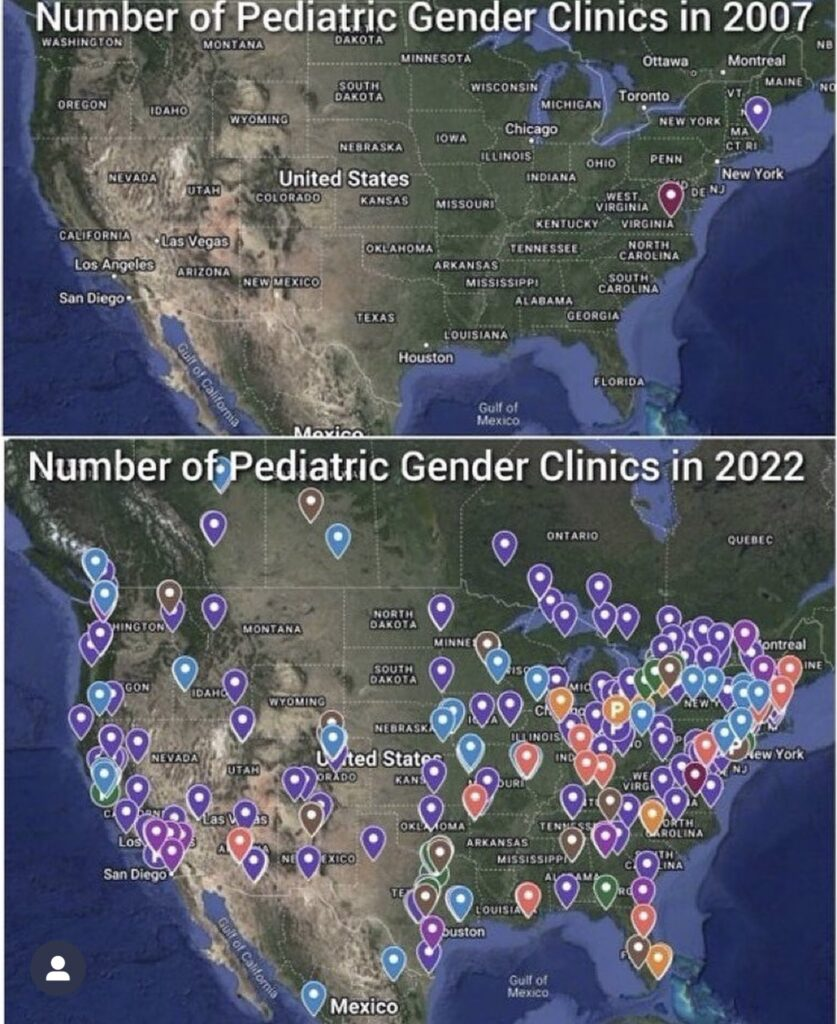
Bilek has detailed how the expanded trans ideology in the biomedical establishment is funded by the “ARCUS Foundation” (an international charity focused on issues related to LGBTI rights, social justice, ape conservation and environmental conservation, started by the late Jon Lloyd Stryker), as well as by the “Pritzker Family Foundation”. Through these non-profit networks, an untold fortune has been funneled into transgender technology and the promotion of transgender ideology.
According to the Indo-American market research company “Grand View Research” **, in 2021 the “surgical gender reassignment market” was estimated at 1.9 billion dollars. This amount by 2030 is expected to rise to more than 5 billion dollars. The technology in this field is “asking” for more money, as the armies of psychopathic female androgen users grow and hot-headed straight-faced hostile men who wear… lipstick and use estrogen patches.
As Technology expands, it transforms human nature. We are a civilization in transition. In many countries, confirmation and acceptance of transgender identity is required by law. Discrimination and “misgendering” is punishable by heavy fines, public denunciation, social ostracism and professional ruin. An iron “rainbow” hangs over our heads like a sword of Damocles.
FOOTNOTES
* CRISPR – (acronym for clustered regularly interspaced short palindromic repeats) – i.e. “Complex of small palindromic sequences with regular spatial distribution” refers to regions in the genome where repetitive DNA sequences are found is a family of DNA sequences found in the genomes of prokaryotic organisms [(i.e. non having a cell nucleus), such as “bacteria” and “archaea” (a realm of single-celled microorganisms formerly misclassified as bacteria)].
The sequences in question [i.e. sequences of bases denoted by a series of four different letters (G-Guanine, A-Adenine, C-Cytosine, T-Thymine) which indicate the sequence of nucleotides that form a DNA molecule], are derived from fragments of bacteriophage DNA that had previously infected the prokaryote. They are used to detect and destroy DNA by similar bacteriophage viruses during subsequent infections. Therefore, these sequences play an essential role in the prokaryotes’ anti-phage (therefore anti-phage) defense system, and provide a form of acquired immunity. CRISPR is found in approximately 50% of sequenced bacterial genomes, as well as nearly 90% of sequenced ancient genomes.
Cas9 (or “CRISPR-associated protein 9” / “CRISPR–associated protein 9”) is an enzyme that uses CRISPR sequences as its guide to recognize and “open” specific DNA chains, complementary to the CRISPR sequence. Cas9 enzymes together with CRISPR sequences form the basis of a technology known as “CRISPR–Cas9”, which can be used to edit genes within organisms. This editing process has a wide variety of applications, including basic biological research, development biotechnological products and the treatment of diseases
The simple CRISPR system is based on the Cas9 protein. The Cas9 endonuclease is a four-component system, comprising two small molecules: crRNA and “trans-activating CRISPR RNA” (tracrRNA). In 2012, 1964-born American biochemist Jennifer Anne Doudna and 1968-born French biologist, geneticist, and microbiologist (Emmanuelle Marie Charpentier) redesigned the Cas9 endonuclease as a more user-friendly two-component system, fusing the two molecules RNA in a single-guide RNA, which combined with Cas9, can find and cut the target DNA, specified by the guiding guide RNA.
This contribution was so important that it was recognized with the Nobel Prize in Chemistry in 2020. By manipulating the nucleotide sequence of the guide RNA, the artificial Cas9 system could now be programmed to target any DNA sequence to cause its cleavage.
Scientific groups [led by the 1981-born Chinese-American biochemist Feng Zhang (current professor of Neuroscience at the McGovern Institute for Brain Research and the departments of Brain, Cognitive Sciences and Biological Engineering at the renowned Massachusetts Institute of Technology- MIT) and the 1954-born American geneticist George McDonald Church (also a molecular engineer, chemist and pioneer in personal genomics and synthetic biology)] simultaneously published descriptions of genome editing in human cell cultures, for the first time using of the CRISPR–Cas9 system.
This system has since been used in a wide range of organisms, including baker’s yeast or ‘brewer’s yeast’ (Saccharomyces cerevisiae), the opportunistic pathogen ‘blight’ (Candida albicans), ‘zebrafish’ or ‘stem of the rice fields” (Danio rerio), the fruit muscle “Drosophila melanogaster”, the ants “Drepanognathus saltator” and “Bíró’s egg horn (Ooceraea biroi – from the Hungarian zoologist and naturalist Lajos Bíró ), the Egyptian conehead (Aedes aegypti), the nematode “Caenorhabditis elegans”, the muscle of various plants, the Western European “domestic mouse” (Mus musculus domesticus), non-human primates and finally human embryos.
** Grand View Research is a market research and consulting firm based in India and the US, registered in the state of California, with headquarters in San Francisco. The company provides syndicated research reports, customized research reports and consulting services. Grand View Research’s database is used by well-known academic institutions around the world and by multinational companies to understand the global and regional business environment. Its database features thousands of statistics and in-depth analysis around 46 industries in 25 major countries worldwide.

