



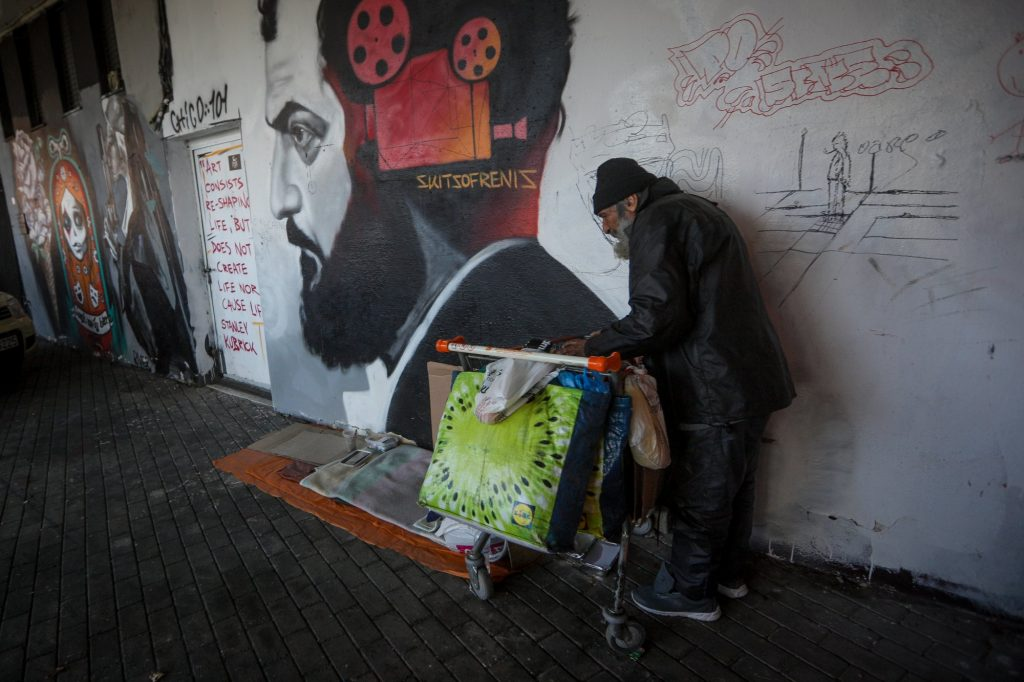
According to the United Nations’ Universal Declaration of Human Rights, everyone has the right to a standard of living adequate for health and well-being, including housing, yet in the last 10 years homelessness has skyrocketed.
In particular, the percentage of homeless people in the European Union increased by 70% and their number is now estimated at 4 million.
In addition, the European Pillar of Social Rights includes many rights related to housing. As far as Greece is concerned, according to the 4th paragraph of the 21st article of the Constitution, “the acquisition of a residence by those who are deprived of it or who are inadequately housed is an object of special care of the State”.
The implementation of the Constitution is an issue, while the truth surrounding it is depicted daily on the streets of the Greek capital.
Homelessness and institutional deviance
In 2021, the “Lisbon Declaration on the European Platform to Combat Homelessness” was signed by the member states of the European Union, which committed to the following:
- No one is sleeping rough because of a lack of accessible, safe and appropriate temporary housing.
- No one lives in temporary or transitional housing for longer than is necessary to successfully move to a permanent housing solution.
- No one is removed from any institution (eg: penitentiary, hospital, care facility) without an offer of suitable accommodation.
- Evictions should be prevented whenever possible and no one should be evicted without assistance in finding suitable housing when needed.
- No one is discriminated against because of homelessness.
- Which of the above has the State taken care of so far? The question is possibly rhetorical. The housing crisis is more intense for young people who belong to vulnerable groups.
Independent surveys, however, have measured the magnitude of the problem. As the evidence of the recognized validity of Our World in Data demonstrates, the member countries of the EU South are high on the “black” list of countries whose citizens are affected by homelessness.
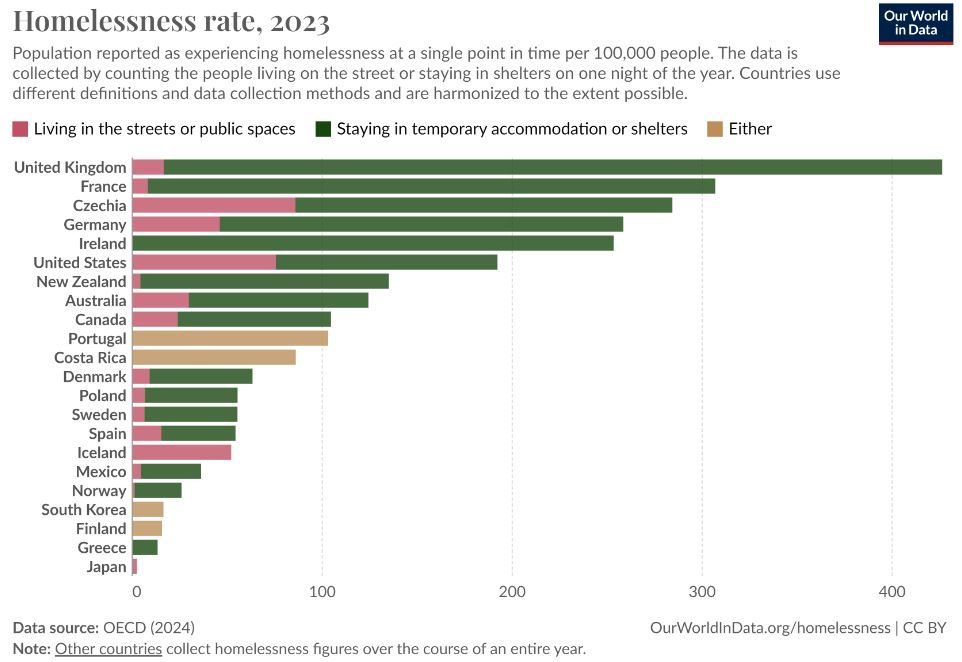
The survey was conducted across the globe. The future, however, is bleak, as the huge accuracy and consequent reduction in disposable income, the lack of protection of the first home, the lack of available rental properties, and the skyrocketing rents are estimated to increase the rates of homelessness.
Rapid urbanization, decline in public housing, lack of government intervention.
According to a report by the European Commission, young people with disadvantaged socio-economic, refugee, immigrant backgrounds, victims of domestic violence or young people of the LGBTQ+ community due to disruptions in family relations, etc. are more likely to experience homelessness at some point in their lives. In fact, the rate of homeless youth has also increased in the European Union, and the experience of homelessness can have long-term consequences for these young people.
We are, ever deeper, in the vortex of a global housing crisis. Around 1.6 billion people worldwide lack adequate housing, according to a United Nations report – and experts say this could rise to 3 billion by 2030.
In order to house those 3 billion, the world will need to build 96,000 new affordable homes every day, says the United Nations Human Settlements Programme.
In a recent report to the United Nations General Assembly, Balakrishnan Rajagopal, the Special Rapporteur on the right to adequate housing, states that “the key drivers of the affordability crisis are rooted in structural changes that cover the last decades”.
They monetized housing
He cited rapid urbanization, a decline in public housing and a lack of government intervention as some of the causes.
Rajagopal also pointed to the financialization of housing as key to the crisis, saying it “transformed housing from a fundamental social necessity into an investment tool, stripping it of its inherent function of providing safe and decent living spaces.”
In that context, there are stories of people finding their own solutions. In the UK – which tops the chart above for the highest percentage of people reported as homeless to the Organization for Economic Co-operation and Development – a former drug addict has offered hundreds of homeless people a free bed in his small flat since 2020.
However, these separate, isolated measures are not enough to address a global crisis: what is needed are coordinated, systemic solutions.


I’m not sure exactly why but this weblog is loading incredibly slow for me. Is anyone else having this issue or is it a issue on my end? I’ll check back later and see if the problem still exists.