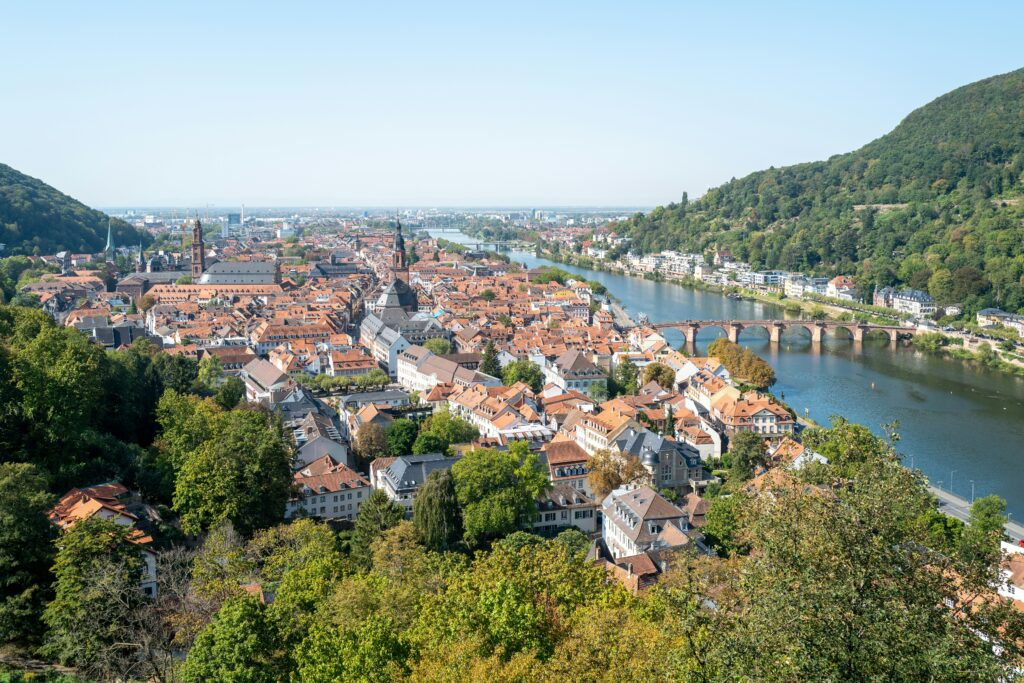
It is located in the southwestern part of Germany and borders France and Luxembourg, which makes it a cultural crossroads. The history of Saarland is multi-dimensional and fascinating, as it has been at the center of European conflicts and political changes many times.
French territory after its occupation in 1792, it will come under German occupation in 1870 and will be part of the German Empire. However, after the end of the First World War, in 1921, it will be under English and French control, in accordance with the provisions of the Treaty of Versailles, while in practice the area was administered by France within the framework of the League of Nations.
In 1935, however, a referendum allowed the residents of the area to decide their fate: 90.8% of the citizens favored reintegration into Nazi Germany at the time.
After World War II, the long-suffering region was again under French occupation, forming the so-called Protectorate of Zaar. France, in fact, neither annexed it nor expelled the local German population, unlike the fate of the territories annexed by Poland and the USSR.
Finally, on October 27, 1956, the Saar Treaty declared that it should join West Germany, as it did on January 1, 1957. This was the last major international border change in Europe until the fall of communism over 30 years later.
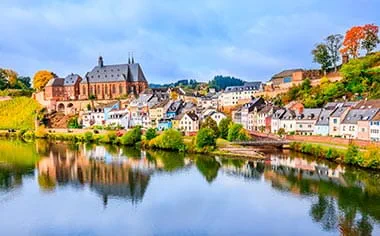
Saarbrücken: Baroque grandeur
The tour of Saarland starts from its capital, Saarbrücken, which combines the historical element with the modern. The visitor will be enchanted by the old town with its narrow streets and picturesque squares. In any case he will visit the market St. Johanner, with its numerous shops, pubs, restaurants, bars and bistros, where the heart of the city beats.
Among the highlights of Saarbrucken is the castle. It is essentially a magnificent baroque building, built on the left bank of the river Zaar, on top of the ruins of a medieval castle. But let’s take things from the beginning.
Its existence was first recorded in 999 under the name “Castellum Sarabrucca”. In the 17th century it was rebuilt in a Renaissance style, but later it was destroyed and today there are only some remains of these buildings. In the 18th century, Prince William Henry of Nassau-Saarbrücken built a magnificent baroque house on the same site.
Since then the building has suffered various disasters, partially burnt down and been rebuilt before being completely and grandly renovated in 1989, when architect Gottfried Böhm designed and added a modern steel and glass main building. The castle is today both an administrative center and a place for cultural events, conferences and celebrations.
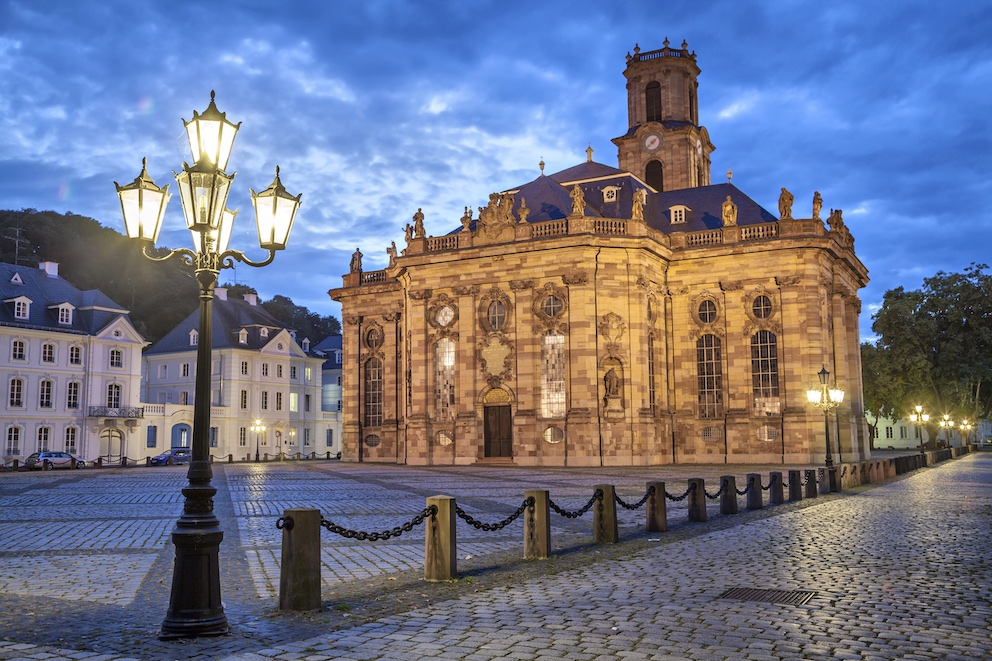
And the historic buildings don’t stop there. It is of course worth visiting the Ludwigskirche church. It is the symbol of the city and is considered one of the most important Protestant churches in Germany.
It is essentially a masterpiece of baroque architecture. Prince William Henry of Nassau-Saarbrücken is also behind the building of the church. Construction began in 1762 and was completed in 1775. Together with Ludwigsplatz and the adjacent buildings it forms part of a unique Baroque ensemble. After being completely destroyed during World War II, it has since been fully restored.
It is also worth visiting the neo-Gothic town hall – erected between 1897 and 1900 – where an imposing tower of 54 meters high dominates. Behind its creation is the architect Georg J. von Hauberrisser, the same man who also designed the town halls of Munich and Wiesbaden.
The authentically preserved facade of the building is decorated with sandstone statues representing occupations of bygone eras. Saint George and the dragon are also depicted, possibly symbolizing the eternal battle between good and evil.
Leaving Saarbrücken behind, the town of Felklingen is also of particular interest, located about 10 km west of it, bordering France. It is a place with a strong industrial past, it is also home to the Felklingen Steel Works, a former industrial complex, which has been fully preserved, untouched by time.
Precisely for this reason, in 1994 it was declared a UNESCO World Heritage Site, being an undeniable witness of the Industrial Revolution in Europe.
It started producing cast iron in 1882 and remained active until 1986. Today, in addition to providing a journey through the industrial history of Europe, it is also a unique venue where international exhibitions, festivals and concerts are organized.
Saarland’s important industrial past is also remembered by the Saar Polygon monument, in Ensdorf, about 20 kilometers northwest of Saarbrücken. How was it created? Let’s start things from the beginning.
In June 2012, the last coal mine closed in the state of Saarland. Nevertheless, the history of the mining industry as well as the related traditions are part of the cultural heritage of the region.
The Saar Polygon monument was therefore founded in 2016 precisely as a permanent reminder of this history. Essentially, it is a metal, sculptural construction, which the visitor can browse.
Thus 132 steps lead to a viewing platform of the area 40 meters long, with the view from a height of 25 meters breathtaking. Thanks to its prominent position, the structure is visible from all directions and, in fact, depending on the viewing angle, it changes shape.
Natural beauty
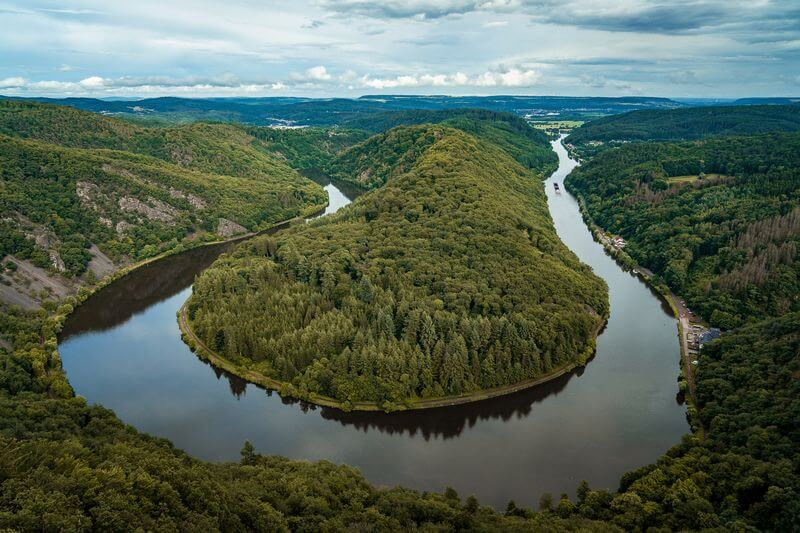
The state of Saarland is also famous for its natural beauty, with endless forests of beech, oak and fir. A landscape of astonishing beauty is the so-called Saarschleife, where the river Saar creates an impressive curve through the dense forest. It is one of Germany’s most iconic natural attractions, attracting thousands of visitors every year.
The Bliesgau region, in the south-east of Saarland, in the immediate vicinity of France, is an idyllic place with apple and plum orchards, vast beech forests and enchanting meadows, where flocks of sheep graze.
It is crossed by the river Blies, a tributary of the Zaar, from which it takes its name. The area has been included in UNESCO’s World Network of Biosphere Reserves. In fact, half of all orchid species found in Germany can be found there.
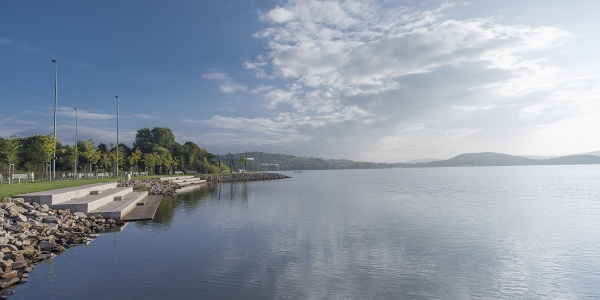
Another attraction is the artificial lake Bostalsee in the Nohfelden area in northern Saarland. Especially in the summer it attracts visitors to sunbathe on its shores and indulge in water sports.
The lake was created in 1979 and is used almost exclusively for recreation. Swimming in its waters, beach volleyball, surfing, sailing, kayaking, diving, pedal cycling and fishing are just some of the activities it offers. Perhaps in a few decades, due to climate change, such areas will endanger the tourist resorts of the Mediterranean.
Finally, the Hunsrück-Hochwald National Park, which covers an area of 100,000 hectares, could not be missing from the list. There are specially designed routes for hikers, who can wander for hours in this virgin forest without encountering a human presence, but only rare plants and animals.
The isolated habitat, for example, which stretches in the Hunsrück highlands between Saarland and the state of Rhineland-Palatinate, is home to the black stork and the black woodpecker. A biodiversity hotspot.