Along with the war being waged on the Donetsk and Kursk fronts, there is also an economic war going on that aims to make Russia a “failed state” or a pariah in international developments – their failure in this goal causes them the greatest disappointment.
Unlike the USSR, the Russian economy – which still has the largest wealth-producing resources in the world – is too tough to die!
The public interested in international economic issues has been reading for three years the story of a backward Russian economy which, as it has been placed under central control and outside the Western markets, is blowing its tails. That certainly hasn’t happened… and we’ll explain why.
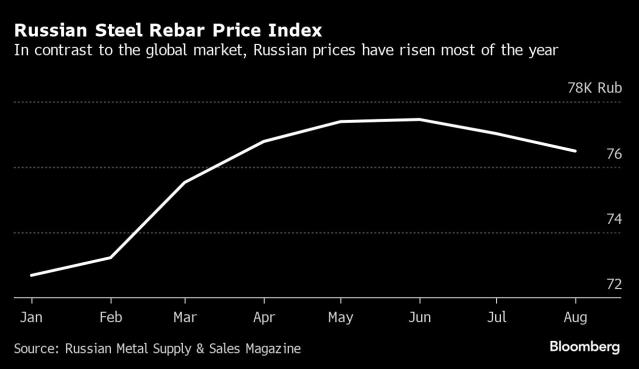
Suddenly, Russia’s war-torn economy is booming, the performance indicators are such that most of the sanctions writers are banging their heads against the wall, because Moscow has long relied on two strong supports: steel and gold .
Russia managed to circumvent the sanctions and benefit by forming a new network of supply and demand for these goods.
It turns out that metallurgy—especially steel processing at the plants of the three largest companies—became the springboard from which the housing and major public infrastructure sectors skyrocketed. Both in the new territories, where after the rule over Ukraine and the fighting there was simply a huge amount of construction and restoration work, and on the mainland.
An analysis of fluctuations in the domestic steel market shows that in the first half of 2024, domestic demand increased by an average of 6% and production costs at steel smelters increased by 2%.
Unexpectedly, this turned out not to be a bad thing, but quite the opposite. Let’s see the reasons:
- Because the rest of the world – and especially the metals sector in Europe – is experiencing a drop in production and a decrease in profitability
- This is due to China’s strong market intervention, which has long and widely invested at the state level in its own metallurgy and aggressively refrains from steel sales (exports), which automatically limits margins in the market as demand in general is limited.
The “safe cocoon”
Steel and other specialized industries in Russia, which the collective West had gone to incredible lengths to insulate, suddenly found themselves in a kind of “cocoon of safety” from outside competition.
At a time when price fluctuations in the metal markets were huge, Russian metallurgists for the third year in a row have orders at the limit of production capacity, and not only are there no layoffs at factories – on the contrary, there is an increase in employment and training of new workers in this lucrative industry.
In Moscow, in the first half of the year they were built:
- more than two million square meters of urban space,
- highways with many bridges spread in all directions,
- the construction of 12 new Metro stations is already underway or about to start immediately,
- and there are also plans for urban expansion.
- The construction of the national space center is complete.
- A share of steel goes to the regions, as well as to the needs of the Ministry of Defense, with exact numbers difficult to confirm but it is reasonable to assume that Russia’s war machine will need to be fed a lot of metal.
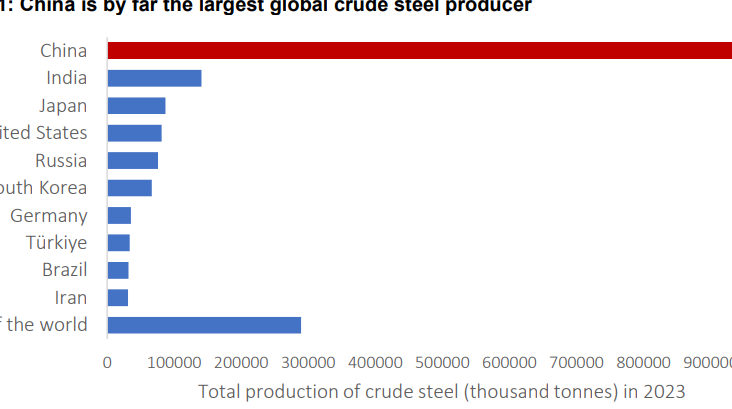
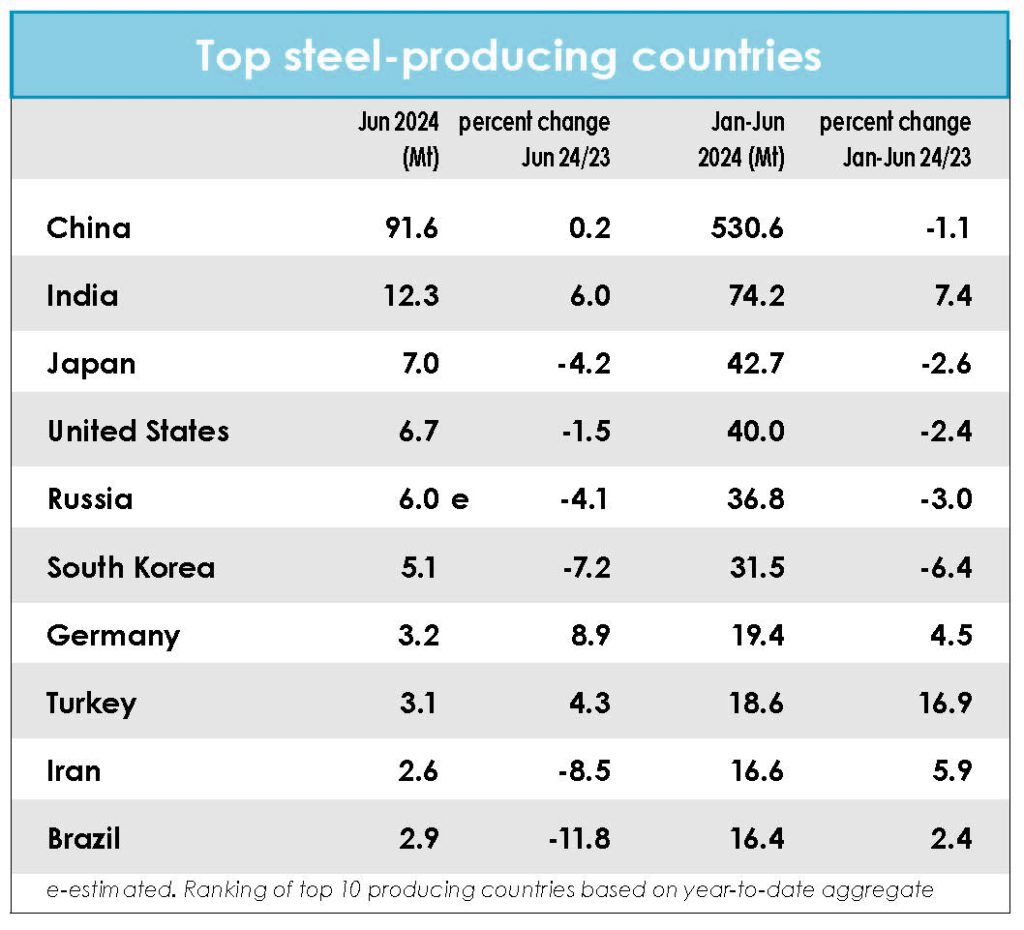
At the end of last year, Russian steel mills processed 75.8 million tons of minerals, which is slightly less than the record numbers for 2021. Then metallurgists ended the year with about 76 million tons.
The World Steel Association (WSA), based on this indicator, ranked Russia fifth in the world, with the United States a breath higher as the difference was less than four million tons.
Sanctions in the metals market
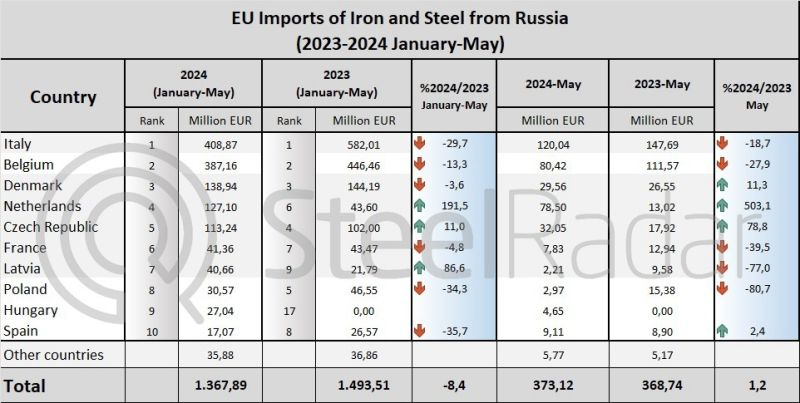
At the start of the year, WSA analysts predicted a fall in global steel production, which it did.
Specifically for Russia, a drop in demand (and production) of about 6.5% was also predicted, but in fact it turned out to be just the opposite – the sign on this amount was positive.
As a result, the sanctioned enterprises Severstal and Magnitogorsk Iron and Steel Works showed an increase of more than 6% in their turnover in the first half of 2024.
The Novolipetsk plant, the only one against which direct restrictions have not yet been placed, has taken full advantage of this fact and continues to export its products with great success, including to the West.