
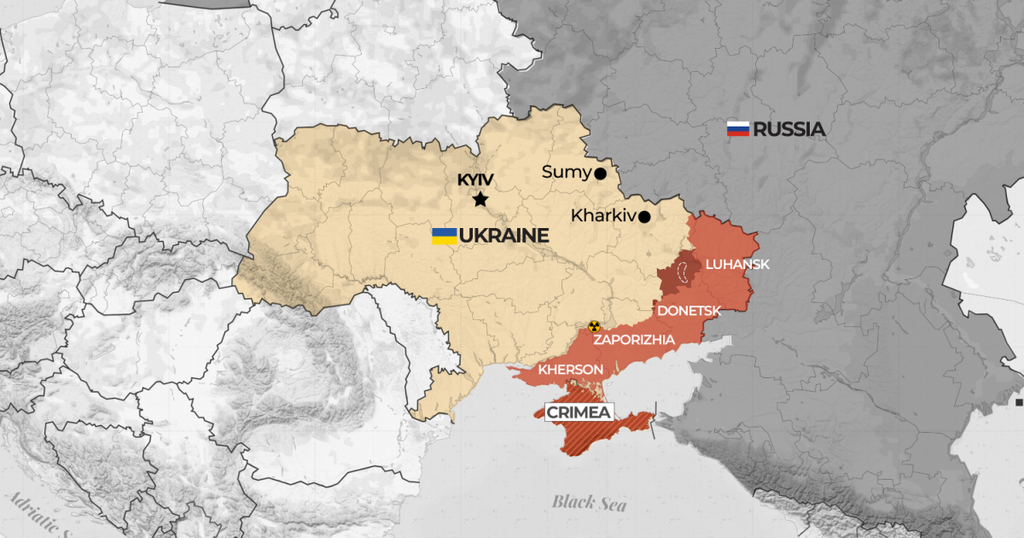



On the face of it, for Russia its “war economy” has ostentatiously turned its “back” on Western sanctions, while the war in Ukraine is in its third year, with no end in sight.
Its GDP grew by 3.6% in 2023, having been consistently positive for the past five quarters.
Thanks to Russia’s broken alliance with China and partnerships with the Global South, its trade and financial sector are recovering.
So much so that the World Bank recently upgraded it to a high-income country.
But “dark clouds” are gathering over Moscow. Inflation outpaces average income growth. Recent figures show that on an annual basis it is galloping to 8.61%, far short of the 4% target set by the Central Bank of Russia.
The consumer price index has increased by 3.82% since the beginning of the year. Last year, the loan application rejection rate was reported to have reached 80%.
This practice is increasingly turning individuals to borrowing from non-banking microfinance organizations, the so-called MFOs.
Last year alone, Russians took out microloans totaling one trillion rubles. This is an increase of around 30% compared to 2022.
Experts estimate that this percentage will increase by an additional 25% by the end of 2024. The percentage of overdue microloans in the first quarter of the year meanwhile reached 32%.
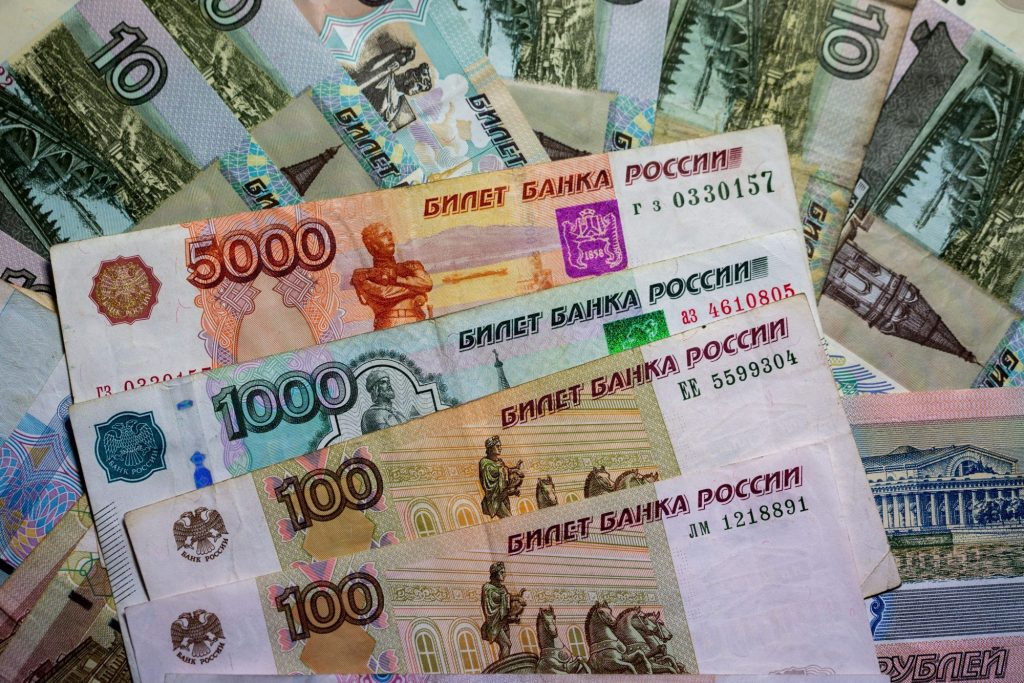
Russia, a “babushka” of private debt
Up to a maximum of one million rubles each – almost 10,500 euros – microloans are given like stragglers in Russia. Applications can even be made online, at any time, day or night. Their processing takes from 15 minutes to an hour. Money is disbursed on the same day, unlike banks.
They are given for short periods of time, ranging on average from a week to 60 days. Of course, the interest rate is “salty”.
It is around 0.5 to 0.8% per day or up to 292% per year. The average amount of this type of loans is estimated at less than 10,000 rubles. This money is usually used to buy food and clothing, as well as pay off old loans.
Many Russians turn to MFO more than once. At the end of last year, the percentage of this category of borrowers was 83.4%.
It is estimated that this trend will continue for at least another six months, as there is no immediate reduction in inflation levels. This is due to the tightening of credit policy and the increase in key interest rates.
The result is that the number of Russians resorting to MFOs is constantly increasing, breaking one record after another in the volume of microloans granted.
But if they stop paying, they will accrue interest and penalties. By law, their sum cannot exceed 130% of the original debt. But then again, it’s very… The main danger for many Russians, however, remains. It is none other than the accumulation of loans.
In case of systematic non-payment of microloan installments, meanwhile, MFOs can sell the debt to collection agencies, which do not raise much.
An economy fueled by loans
The fewer loans banks issue, the more people turn to MFOs. But this ultimately leads to more bankruptcies.
Indeed, in the first quarter of 2024 alone, more than 12,000 out-of-court bankruptcy proceedings were initiated in Russia. It is five times more on an annual basis.
More than half of those who filed for bankruptcy are retirees. In the same period, the number of bankruptcies declared by a court order increased by 18.2%, reaching 89,000.
The aggressive borrowing of Russians – in bank loans and microloans – is not offset by income growth. The country’s economy is now growing not because of investment and import substitution by domestic production, but because of an increase in consumer demand, which is fueled by loans. Such economic growth cannot be sustained for long.
“Overheated” is the term increasingly used by bankers recently for the state of the Russian economy. The main reason cited for this – including by the governor of the Central Bank, Elvira Nabiulina – is the long overdue transition to a war economy.
Amid sanctions, demand for goods and services outstrips the ability to expand supply, due to increased costs of producing weapons and ammunition. And because of the war, the labor shortage is recorded as intensifying. And mainly in male workers.

