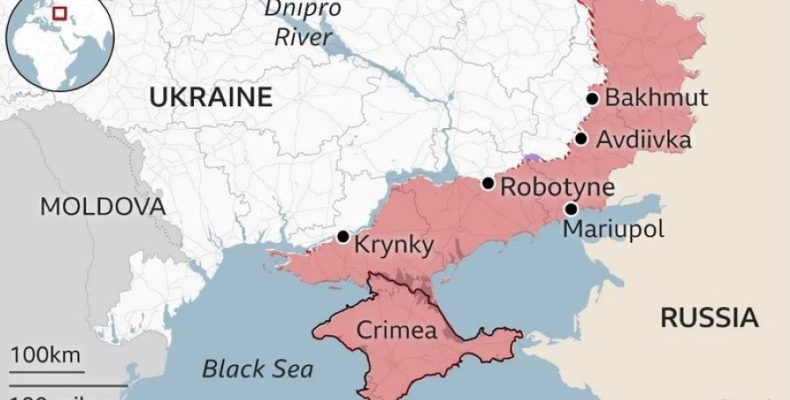
By 1110 cities such as Edessa, Antioch, Jerusalem, Tortosa, Beirut, Laodicea, Tripoli, Tire and Acre were definitively under Latin occupation.
However, despite the first successes, the defense of the conquered territories was problematic due to shortages, since most of the fighters-pilgrims left for Europe a few weeks after fulfilling their purpose. During the period 1100-1120 the main conflicts took place in the north between the knights of Edessa and Antioch (on the one hand) and the Seljuks of Aleppo and the Damascenes and in the south between the knights of Jerusalem and the Fatimids of Egypt.
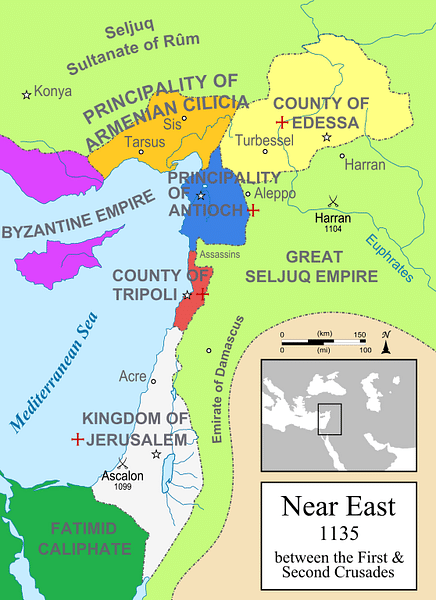
After the capture of Antioch (1098) and Jerusalem (1099), the Franks established in Syria and Palestine the so-called Crusader Kingdom (French: Outre-mer = overseas possessions), which consisted of four smaller feudal states. These states were the County of Edessa, the Principality of Antioch, the County of Tripoli and most important of all the Kingdom of Jerusalem.
The Principality of Antioch was created in the lands of today’s southeastern Turkey, with a natural border to the east of the Orontes River, which flowed between the Taurus and Jebel Al Ansariyah mountains. South of Antioch, in the lands of today’s Lebanon, the rich County of Tripoli stretched from Safita to Beirut. Still further south, in the lands of present-day Israel and Palestine, on the west bank of the Jordan River, the Kingdom of Jerusalem was formed, bordering Fatimid Egypt in the disputed territory of Gaza and Ashkelon. The most vulnerable and isolated Frankish state was the County of Edessa, which had been created on either side of the Euphrates.
The first crusaders (Normans, French, Germans, Italians and Flemings) took advantage of the political and military disintegration of the Muslims by sweeping away in successive battles any Turkish or Arab resistance and establishing in wider Syria and Palestine small Christian settlements, mainly in the fortified cities of the coastal zone .
Despite the initial successes, however, the Franks faced significant problems stemming from the antipathy and suspicion of the local population, but mainly due to the lack of fighting men. Most of the warriors who took part in the capture of Antioch and Jerusalem hurried back to Europe after completing their pilgrimage to the Holy Land. In addition, the main protagonists of the First Crusade began to clash with each other over the distribution of new possessions and primacy in the feudal hierarchy.
The family of Count Raymond Saint Gilles (1041-1105) from Toulouse in the south of France, maintained sovereignty in Tripoli, the Italo-Norman princes Bohemund I (1050-1111) and Tancred (1076-1112) successively ruled Antioch, while knights of Franco-Belgian origin such as Baldwin I (1062-1118) and Godfrey of Boulogne (1061-1100) respectively took over the reins of administration in Edessa and Jerusalem.
The Edessa referred to here is the Greek city of Mesopotamia “Antiochia ip Kallirrois” (note in Syria), which was founded by Seleucus I Nicator in the 3rd century BC. near the city built by Alexander the Great. However, after its destruction by floods, Seleucus annexed it for the second time and named it Edessa.
Meanwhile in the fragmented Muslim camp the rulers of the independent emirates, on the death of the Seljuk Sultan Malik Shah in 1092, were embroiled in a long civil war of succession, leaving the Franks to expand on the coast.
The unruly Seljuks of Rum, Aleppo and Anatolia, the rich Arab caliphs of Damascus and Baghdad and the Fatimid caliphs of Egypt were the different seats of the same cube, but without the necessary disposition to peacefully settle the dynastic differences between them. In theory all Sunni Muslims recognized the Seljuk Sultan Malik Shah and his descendants as their overlord, as well as the Caliph of Baghdad, but the rulers of regional cities such as Aleppo, Mosul and Damascus pursued an independent policy. On the contrary, the Shia Fatimids recognized the caliph of Cairo as their spiritual and military leader.
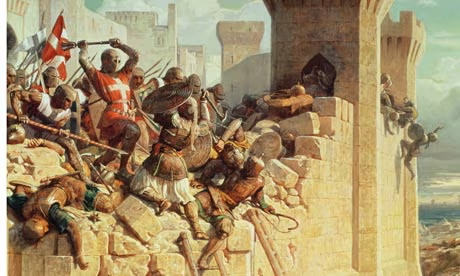
The migration of Westerners to the East
After the successful invasion, the first waves of Christian settlers began to arrive in Palestine after 1100, following either the sea route through the busy ports of Italy, or the more dangerous land route through the Balkans, Constantinople and Asia Minor. The main attempt to reinforce the newly established fiefdoms with new inhabitants took place in 1101, when groups of Lombards. German and French settlers (a total of about 200,000 people) without a central administration followed the land route through Nicaea-Dorylaeus-Iconium in uncoordinated and separate waves to Antioch. The vast majority of these ambitious immigrants were mercilessly slaughtered by Turkoman horsemen during the torturous march from Nicaea to Iconium, leaving the few Frankish colonies unreinforced with the necessary manpower and the Muslims demoralized.
Along with the military misfortunes, important and continuous political rearrangements were constantly evolving in the Crusader fiefdoms. During the period 1100-1103, Antioch was ruled by the conqueror of Galilee, Tancred, because his uncle, Bohemund I, had been captured in Melitini by the Turks. In June 1100 Bohemund I had routed the hordes of Prince Ridvan of Aleppo on the borders of Antioch, but was then captured and held prisoner for three years.
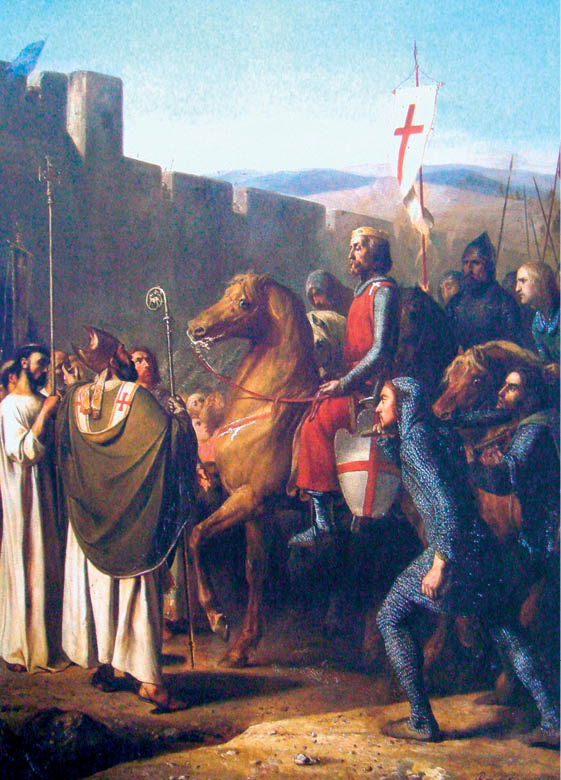
In the same year, Godfrey died at a young age, probably falling victim to poisoning, so in a climate of doubt, his younger brother, Baldwin I, was crowned king of Jerusalem. Although Bohemund I was the undisputed ruler of Antioch, after the death of Godfrey of Boulogne he also claimed the crown of Jerusalem, but Baldwin I overtook him. Bishop Daimbertos, who had become patriarch of Jerusalem, expressed similar visions, wishing to transform the newly established kingdom into a monastic state with the tacit consent of the Vatican.
Of the leading figures of the first wave, Count Raymond Saint Gilles was the only Frank who still maintained friendly relations with the Byzantine Court. Dissatisfied with not reaping the crown of Jerusalem, he later participated as a military adviser in the failed crusades to reinforce Anatolia. In 1102 he captured Tortosa and then laid siege to the Emirate of Tripoli, which belonged to the Arab Benu Amar family. The complex picture of the Frankish states was completed by the lord of distant Edessa, Baldwin de Burgh. He was a cousin of Baldwin I of Jerusalem and maintained control of the city relying mainly on its large Armenian element.
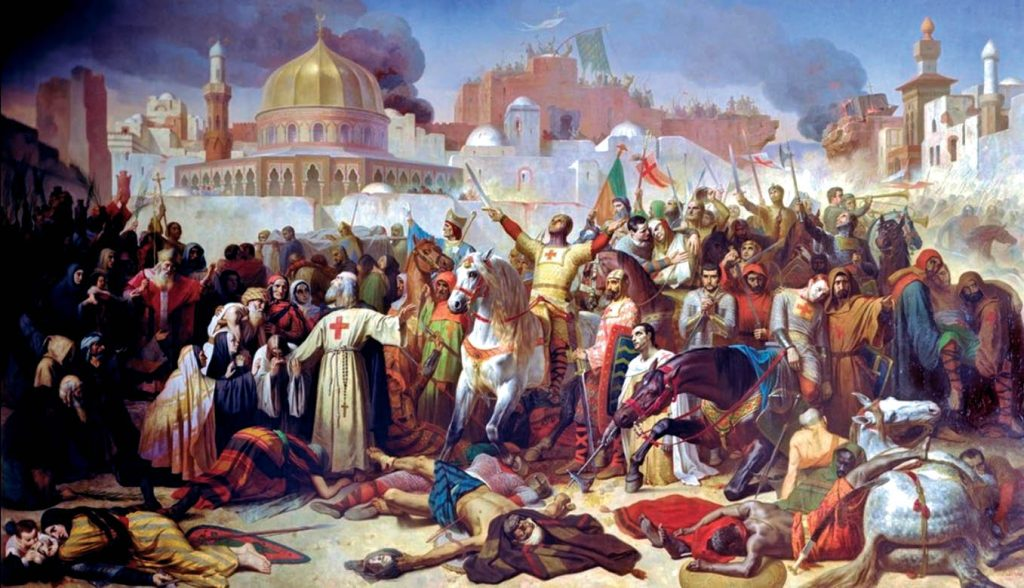
Conflicts in the Principality of Antioch (1100-1120)
During his short hegemony in Antioch, Tancred clashed on his eastern border, towards the Asian interior, with the Turks of Aleppo. At the same time, he got involved in local conflicts with the Byzantines, mainly on the coast of northern Syria. In 1102 he captured Laodicea, pushing back the Byzantine garrison defending this important Mediterranean port. Despite the intense dispute with the Greeks of Constantinople over the dynastic issue of the Principality of Antioch, the greatest enemy of the Norman crusaders was the Seljuk ruler of Aleppo, Prince Ridwan, nephew of Malik Shah.
In 1104 Bohemund I was released from his captors. He was captured in 1100) by Malik Ghazi Danismed and spent three years in prison. With the assistance of Count Baldwin of Edessa, he clashed with the Turks in the city of Haran, which was built on the banks of the Balih, a tributary of the Euphrates, south of Edessa. Possession of the city would enable him to effectively control Muslim movements in the strategic Aleppo-Mosul-Baghdad axis, while relieving Edessa of the constant pressure of painful Turkish incursions.
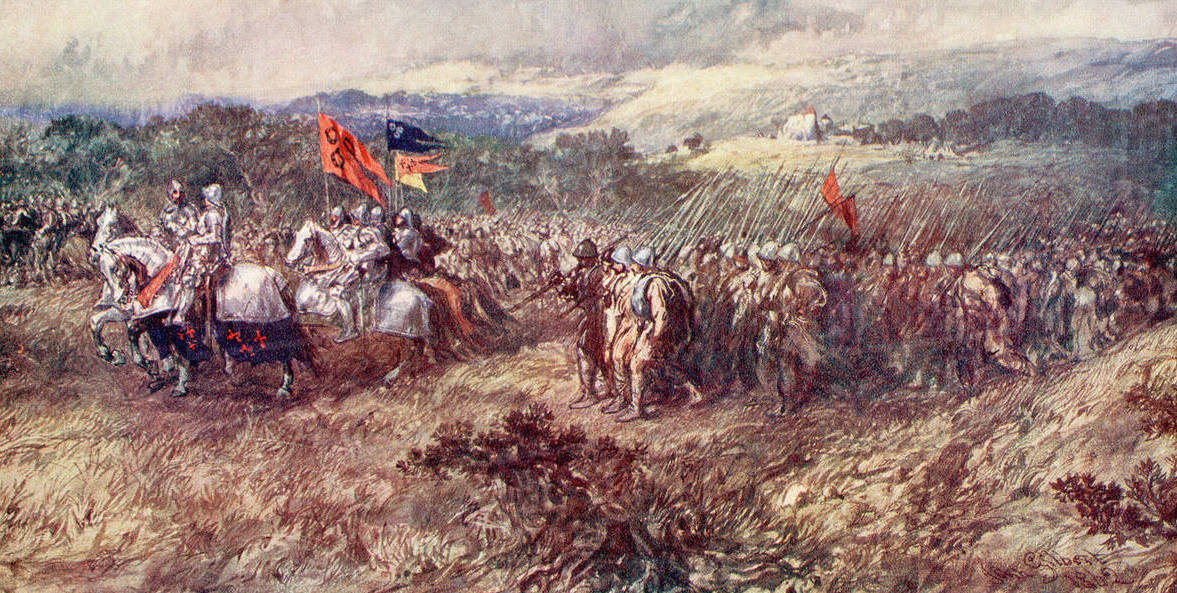
The Christians assembled to besiege Haran numbered about 3,000 cavalry and 7,000 to 9,000 infantry, mostly of Armenian origin. However, instead of the small garrison they were faced with the united armies of Sokman Ibn Ortok of Mardin and Zekermis, ruler of Mosul. The two emirs rushed to reinforce the besieged city, resulting in a pitched battle rather than a complete siege. The battle that followed was fought on the banks of the river Balich, at about the same spot where centuries before the Parthian horse archers had decimated the Roman legions of Crassus, during the battle of Carrion.
On the left side of the Christian line were placed the Armenians of Edessa under the lord Baldwin de Burgh, opposite Sokman, while on the right wing the shutters of Antioch were lined up. According to Bohemund’s plan, his men would remain hidden a short distance behind the foot of a neighboring hill, while the Armenians would be the first to start the battle, receiving the pounding of the Turkish vanguard, with express orders to feign retreat. The objective was to lure the Turks into an advance so as to expose their left flank to the front of the Knights of Antioch. In fact, the demon Bohemundus had tried to fight the Turks by copying their tactics, but things did not turn out as he expected.
When the enemy cavalry attacked, the Armenians not only maintained their front but managed to push their opponents back to the banks of the Balikh. Excited, they began to pursue the Turks, hastily and uncoordinatedly crossing the tributary, thinking that they had completely prevailed. By the time they realized they themselves had fallen victim to a well-planned trap, it was too late. About 10,000-15,000 horsemen had surrounded them from the surrounding hills and began charging at them from every point of the horizon. The enthusiasm for the victory turned into fear and panic, with the result that within a short time the remnants of the Armenians crossed the tributary again, in a state of complete disarray, dragging along the bewildered knights of Antioch.
The latter, seeing their allies advancing without expecting them, had hastened to cover the expanding gap on the right flank of the Christian line. They abandoned their positions and attacked successfully, neutralizing in their front all the Turkish islands that tried to stop them, when they suddenly perceived the first panic-stricken fugitives who threatened to sweep them away like a tidal wave. Realizing the unfavorable turn of the battle, Bohemund attempted to disengage in order to save his own intact units in time.
Overall, however, the army had suffered significant losses. Those Armenians who were not neutralized by the Turkish heavy cavalry drowned during the retreat in the waters of the river. The Turkomans and Ghulams (elite mounted bodies of the Muslim armies who were heavily armed and fought with lance, sword or bow) had engaged in a terrible pursuit of the “Christian dogs”. Galloping skilfully they isolated the panicked fugitives, “cutting” the Christian infantry with ease.
Some 8-10,000 Armenians and Franks died on the battlefield, while several nobles were captured, including the Comte de Bourgh, the lord of Tourbechel, Lord Jocelyn of Courtenay, and Archbishop Benedict. The remnants of the Franco-Armenian army fled to Edessa, leaving the Turks undisturbed to raze the border settlements. The heavy defeat, except for large areas east of the Orontes River that belonged to the Principality of Antioch, definitively deprived the Franks of the possibility to methodically blockade Aleppo from Mosul.
Until 1291, when the Franks withdrew from Syria, Aleppo and the wider Mesopotamia region remained permanently under Muslim occupation. After the battle, the unrestrained Seljuks of Zekermis laid siege to Edessa, which Tancred had undertaken to defend with a few combat-worthy units. Bohemund I had left the defense of the city to his nephew and he himself had hurried back to Antioch to gather reinforcements. There, new unpleasant news awaited him. The destruction in Haran was sealed by the sudden counter-attack of the Byzantine fleet commanded by the admiral Kandakouzinos. The descending Byzantine forces attacked Laodicea and recaptured it, except for the citadel in which the remaining Franks fortified themselves. In addition, the imperial forces had captured Tarsus and Adana, completing their counterattack in Cilicia. Their reaction was expected, since they had never recognized as legitimate the Norman settlement in Antioch and the wider Cilicia.
Although the position of Bohemund I was particularly critical, eventually the situation was reversed. In Edessa, the desperate Tancred, in order to break the siege of the city, attempted a night exit led by a few knights, sergeants and Armenian militiamen. The daring venture met with unexpected success, as the drunken Turks were unable to offer any real resistance and were mercilessly trampled or slaughtered inside their tents. Their destruction was accelerated by the rumor that Bohemund I had appeared behind them with the rest of the knights of Antioch.
The salvation of Edessa was temporary and was mainly due to the civil war between the Muslim emirs, a fact that Bohemund I was well aware of. The latter, because he did not have enough Latin subjects, was obliged to rely on Monophysite Armenians and Orthodox Greeks, who at the first opportunity would abandon him to once again support the Seljuks or the Byzantines. Shortly after the defeat he left for Italy (Apulia) planning to recruit young Frankish and Norman fighters to reinforce Antioch’s Latin minority.
After settling the outstanding administrative affairs of his Italo-Norman kingdom, he organized the mission of naval aid to Antioch and then went to the Vatican, where he collaborated with Pope Paschal II in planning the neutralization of the Byzantines. He then visited France seeking financial and military aid from King Philip I.
During the bilateral talks Bohemund informed the French ruler that he intended to campaign against the Greeks, first invading the Byzantine possessions in the Balkans. The “unholy” agreement, which marked a new turn for the Crusades (7), was sealed with two marriages: the aged Bohemund married the princess Constance, and Tancred was sent the princess Cecile, both daughters of Philip I.
In 1108 the Franco-Norman army besieging Durres in the Adriatic surrendered to Emperor Alexios I Comnenus, exhausted by hunger and contagious diseases. The Treaty of Devolis was signed between the two sides, according to which the humiliated Bohemund I swore servitude to the Greek emperor as the legal representative of the Principality of Antioch. In order not to impose the unfavorable terms of his defeat on Tancred, he remained in Italy, where he had two sons. The first died at a young age, but the second was named Bohemund II and was destined to be the future ruler of Antioch. Three years later the greatest protagonist of the First Crusade died bankrupt and forgotten by his fellow warriors, never to see Syrian shores again, leaving the regency of Antioch to his nephew. Tancred remained in charge of the city from 1104 to 1112, single-handedly managing to regroup the principality’s forces.
The decisive step in the salvation of Antioch took place in April 1105, when the Norman knights annihilated the forces of Prince Ridvan during the battle of the fortified city of Artach, north of Antioch. That year the Armenian guards surrendered the castle to the Turks, citing their opposition to the suffocating Frankish hegemony. The act of treachery prompted Tancred to march against the fortress at the head of a strong force, to re-establish Latin hegemony in the region. Ridvan attempted to stop him before laying siege to the fort, causing the two opposing armies to meet head-on on a rocky plain east of Artah. The situation was very difficult for the Franks, because Ridvan had gathered fanatical troops from all the Turkish provinces of Mesopotamia. When Tancred saw the numerous opposing army, he decided to remain stationary outside the rough terrain so that the Turks would be forced to cross it first.
Indeed, certain of their victory the impatient Turkomans continued to advance, seeking to overtake the lesser Normans. Emerging from the rocky field, the Muslim light cavalry charged with impetuosity against the stationary Norman line. Although outnumbered, the Antiochian heavy cavalry managed to break the enemy’s cohesion, so the defeated Turkish cavalry retreated into the rough terrain to regroup, but they were unable to maneuver effectively between the difficult paths. Several were forced to dismount from their wounded horses, with the consequence that they were an easy target for the lances of the Normans, who followed and attacked them with particular hatred.
This victory restored Tancred’s supremacy over Ridvan, as well as control over the fertile regions east of the Orontes. Without sufficient military support, the Seljuk garrisons in the cities of Artah and Shermin almost immediately submitted to the principality’s knights. In September 1106 Tancred scored a new success against the emir of Apamea, south of Antioch, on the west bank of the Orontes. Two years later, taking advantage of the absence of the Byzantine fleet (which was in the Adriatic), he regained control of Laodicea and the following year captured Zavala and the fortress of Margat (Markab), extending his southern borders to Lebanon and the County of Tripoli. In 1110 he took possession of the later legendary Crac of the knights. (See p. 104)
The Krak of the Knights (Krak des Chevaliers or Crac des Chevaliers), is a fortress built by crusaders, located in Syria and one of the most important monuments of medieval military architecture in the world. In Arabic the fortress is called Qal’at al-Ḥiṣn. The word “Krak” comes from the Syriac karak, meaning “fortress”. It is located 65 km west of the city of Homs, near the Lebanese border. Crac was the seat of the Knights of St. John during the Crusades. It was expanded between the years 1150 and 1250 and housed a garrison of 2,000 men. The fort has outer walls 30 meters thick, with seven towers each 10 meters in diameter.
Within a few years Tancred had succeeded in every area in which Bohemund I had suffered defeat, permanently stabilizing the principality’s borders from the Taurus Mountains in the north to Lebanon in the south and from the Mediterranean to the right bank of the Orontes. But as the greedy prince increased his power by leaps and bounds, he had begun to create animosity, especially among his disgruntled allies. During the period of time when he was marking successive successes as regent of Antioch, he also ruled as protector-lord the County of Edessa, since Count Le Bourg and Joslin of Courtenay had been captured by the Turks during the Battle of Haran.
Benefiting from the rich collection of taxes paid to him by the Armenians, he never sought to pay the large ransom for the release of Le Bourgh (60,000 dinars), provoking the latter’s natural anger. Edessa was governed in the name of Tancred by his cousin, Roger Fitzrichard, who, however, was not loved by the Armenians because of his violent behavior.
When Joslin was released, he interceded for Le Bourgh’s release as well after both pledged to support their Turkish captor, Emir Javali, in his war against Prince Ridwan of Aleppo. Returning to Edessa, Le Bourgh immediately demanded the assumption of power, completely disconcerting Tancred, who neither expected his appearance nor wished to give back the hegemony of the city. Finally in 1108, with the persistent intercession of the remaining rulers of Armenia and the patriarch Bernard of Antioch, Tancred reluctantly ordered Roger to cede Edessa to Le Bourg.
Despite the settlement, relations between the two former allies remained “cold” and the temporary truce between them looked like it would soon end. Indeed, when Prince Ridwan declared war on the emir Javali to gain control of Mosul and the west bank of the Euphrates, Tancred with 1,500 knights sided with his vassal, while the knights of Edessa under Le Bourgh immediately joined with the Bedouins of Javali! The two rival Franco-Turkish armies clashed with unprecedented fury at Menbij. near the castle of Turbesel, and the inconclusive battle ended with a marginal victory for Tancred’s alliance.
In his quest to gain more power Tancred had clashed with a crusader ally only ten years after the capture of Antioch. This unacceptable event caused the indignation of the rest of the Christians, who were scandalized by his arrogant behavior.
In 1110 his rampant expansionist policy continued, after he became involved in the military conflicts taking place between the successors of the County of Tripoli. His uncontrolled activity was finally limited after the timely intervention of King Baldwin I. who on two separate occasions, acting as the rightful sovereign of all the Christian rulers, demanded the absolute unanimity of the Latins in order to effectively meet the new mortal menace of the emir Mountwood.
Maudoud went to Syria at the head of a large force as a military envoy of the caliph of Baghdad, undertaking to carry out purges to rid the country of the Christian “miasm” but also of the independent emirs who ignored the suzerainty of Baghdad.
His first move was to lay siege to Edessa. Baldwin’s catalytic intercession, and a promise to punish any Frankish apostate who in future allied with the Muslims for his own personal gain, forced Tancredo to comply and march with the rest against the Turks, putting aside his old differences with Le Bourgh .
Baldwin I himself had just finished the siege of Beirut and at the head of 15,000 men lined up on the plain of Edessa threatening the rear of Mountoud. When the Turks perceived the arrival of the king, they preferred to retire to Haran, immediately lifting the siege. The crusaders had managed to unite just before the disaster, fully assimilating the king’s threatening words to Tancred: “…Whoever prefers to scheme with the Turks cannot be ours and will be ruthlessly crushed…”.
A year later, in the spring of 1111, Maudud again invaded central Syria, reinforced by the forces of the Emir Tukhtekin of Damascus.
The first battle of Ramla
Prince Ridwan, despite the urgings of the citizens of Aleppo, refused to assist the envoy of Baghdad citing as a pretext his alliance with the Principality of Antioch. Le Bourg, the Count of Tripoli and of course Baldwin I, at the head of about 16,000 men, rushed to Tancred’s side almost immediately. The Franks camped in Apamea and the Turks further south, in the region of Sejer. The rival rulers did not seek to engage in line-to-line combat and, instead, limited themselves to small-scale skirmishes, mainly between sections of the two vanguards.
Without achieving the significant victory they sought, the Turks retreated across the Euphrates in the autumn of the same year, leaving the Franks absolute masters of the Syrian lands. A year later Tancred died and the regency in the principality was taken over by Roger (1112-1119), ruling until Bohemundus II came of age.
While in the north the conflicts of the Normans of Antioch raged with the Turks of Aleppo and also with the Byzantines, in the southern sector King Baldwin I tried with difficulty to stop the successive Egyptian attacks in the area of Ascalona. At the same time, the Kingdom of Jerusalem was subject to insidious raids by armed bands of Damascenes who breached the northeastern borders in Galilee, near the Lake Tiberias region.
When Baldwin I took power in Jerusalem, the Arabs were already in complete control of the countryside and the Christians were confined behind the high walls of the city. To break the suffocating Arab cordon around Jerusalem he organized sorties-counterattacks against the Muslim camps, soon managing to gain complete control of the Palestinian hinterland.
He then turned his attention westward to the Mediterranean coast, seeking on the one hand to retain Haifa and Jaffa as the main ports for his capital, and on the other to seek a port (Acre) to the north with deeper water and better protection from storms local winds. But in order to carry out his plans, he first had to establish a safe corridor from Jerusalem to the sea, making sure to retain possession of the border towns of Ramla and Lyda.
In 1101 Frankish forces captured the port cities of Arsuf and Caesarea, driving the Egyptian fleet away. Until then the Muslim galleys were a constant threat to the Italian ships of Pisa, Genoa and Venice that were constantly transporting new pilgrims to Jerusalem. The capture of the two naval bases directly deprived Egypt of maritime communication with the Palestinian coast, despite the fact that it still held Ascalon.
The advance of the Christians on the coastline showed their willingness to get rid of the Egyptian presence and this, fatally, provoked the reaction of the ruler of Egypt, the vizier Al Afdal Shahanshah, who ruled the country in the name of the minor caliph Al Amir. After gathering around 12,000 cavalry and 20,000 infantry, Shahanshah marched against the Christian lands through Ascalon, threatening to take Ramla. The danger was imminent, but Baldwin I, despite the general order under arms, had only 260 mounted barricades and 900 infantry, which doomed him from the outset to failure, despite the experience of his men. Everyone knew that the battle that followed would decide the survival of the small kingdom, although the expected conflict was more reminiscent of the duel of the brave David with the invincible Goliath.
To boost the morale of the Christians, Bishop Gerard ordered that the Holy Cross accompany the soldiers. Before the fighting began, Baldwin I delivered a fiery speech that fully reveals his mood and emotions: “Men, God is with us and with him on our side we fear not, we will attack! If you are slain, then sorrow will spread over our kingdom, but if you win, then immortal glory will belong to you… As for retreat, don’t even think about it… France is too far away.’ After praying and praying, he divided his army into five smaller detachments, himself taking command of the rear guard.
The unequal battle began with an attack of the first two divisions against the left flank of the Egyptian sea of people. Within a short time the Franks were wiped out, as the Egyptians surrounded them and neutralized them with ease. The arrows of the Sudanese archers rained everywhere, mowing down the remaining Franks who saw the battle lost, but the king remained undaunted. The third detachment of the Galilean knights under Tiberias lord Hugo de Saint Omer attempted to repair the breach caused by the Egyptian advance, but the desperate attempt failed miserably.
The Egyptians routed his men and the defeated Said Omer was forced with the survivors to flee the battlefield, seeking safety on the walls of nearby Jaffa followed by the Muslim cavalry who pursued him to the outskirts of the city. The battle seemed to be decided when the daring Baldwin I, at the head of the last two detachments, charged against the center of the Egyptian line, taking advantage of the thick cloud of dust created by the galloping horses. The unsuspecting Egyptians did not expect this raid and were stunned at the swords and bare spears of the determined knights who suddenly appeared before them.
Fierce hand-to-hand combat ensued, which ended in complete victory for the knights, Baldwin reportedly defeating the Shahanshah himself in single combat. Under the unbearable pressure of the Frankish cavalry the Egyptian center collapsed and those Muslim soldiers who were not killed on the spot began to reluctantly retreat and then flee.
The fear of defeat was instantly transmitted to the units of the right flank, who began to abandon their comrades in search of refuge in Ascalona.
Baldwin I, on his horse called Gazelle, gave the order for the immediate pursuit of the enemy, with the threat of the death penalty for anyone who attempted to collect booty before the complete destruction of the Egyptians and the coming of night. The victory was complete.
The next day the king returned victorious outside the walls of Jaffa, his banners flying proudly, spreading hope to the distraught inhabitants who thought, based on Saint Omer’s mournful descriptions, that their monarch was lying dead in the “slaughterhouse”. of Ramla. His unexpected return and the announcement of his victory were enough to “convince” the 500 or so Egyptian horsemen who had mercilessly pursued Saint Omer to withdraw from the Christian lands before completing the plundering of the neighboring settlements.
In total the Egyptians had about 5,000 dead, while the Franks 500-1,000 dead. Among the casualties were the knights of the first three detachments and the infantry of the rear guard who had been carried off by the horsemen who routed Saint Omer. With the grandeur mounted, Baldwin I temporarily confirmed the invincibility of his army. The only one who seemed to be displeased was Tancred, who had believed that with the king’s death the succession process would finally open for him, since he was on excellent terms with the patriarch Daimbertus of Jerusalem.
Destruction and rebirth
A year later (1102), the Shahanshah’s son, Sharaf Al Maali, returned to the Ramla region determined to take revenge on the hated Baldwin I. Starting from Ascalona, his men captured the city of Lyda and set its cathedral on fire. The news of the new Muslim invasion was transmitted in time to Jerusalem, but the confused information about the size of the opposing army (unverified information spoke of several thousand men), led the king to a decision indicative of the arrogance with which he faced the Fatimids.
On May 17 he left Jerusalem without waiting for reinforcements from the remaining knights, foot sergeants, and crossbowmen who had already gathered in Galilee, Jaffa, and Hebron. He was put in charge of 500 barricades, accompanied by some of his old comrades who had starred in the First Crusade. Among them were Stephen of Blois, Stephen of Burgundy, Conrad, the squire of the German emperor, and Hugh of Lusignan.
The veteran warriors marched unconcernedly against their opponents, confident that they would easily repel the Bedouin “plunderers”. But when they made visual contact with the enemy units and realized their mistake, it was too late to escape. The fast-moving Egyptian vanguard had eliminated any hope of escape for the small force.
The inexhaustible selfishness of the king towards his old acquaintances, and the memory of the former victory, had prevented him from acting wisely. Thus the “companion” of the old crusaders marched reluctantly against the pagans, and though they fought valiantly, they were almost completely exterminated. Baldwin I himself was saved by the self-sacrifice of the men of his personal retinue, who cut a path with their swords through the enraged Egyptians and finally sacrificed themselves so that he could escape to Ramla, avoiding at the last moment capture and banishment in the streets of Cairo.
On the side of Baldwin I there were still a few fierce fighters. As there was no other escape route, they retreated towards Ramla seeking shelter in the tower of the city. Only a small group of knights managed to escape heading for Jaffa under the command of Hugh Le Bourgh, the king’s cousin. In the meantime, dusk had fallen and the group of Baldwin I, together with the wounded, had piled up in a dire situation inside the small tower. The fortifications of the city were not adequate and everyone knew that the Egyptians would easily capture the outer wall. The king and five men loyal to him attempted to escape under cover of the thick darkness, with the prospect of returning to Jaffa to gather reinforcements. Baldwin I managed to escape to the coastal zone, looking for a sea means to reach Jaffa, since all land routes were blocked.
The next morning the Egyptians launched their attack. They climbed the walls undisturbed, besieged the tower and attempted to set it on fire in order to force the last defenders of the fort to abandon their positions. Preferring to die fighting rather than burn alive, the crusaders led by Conrad attempted a heroic exit.
The futile attempt ended in tragedy, as most of the nobles, including Hugh of Lusignan, Stephen of Burgundy, and Stephen of Blois, were killed. Only Conrad and a few others were captured and taken to the dungeons of Cairo. In the meantime, Baldwin I, after wandering for two days in the mountains around Ramla, managed to approach Jaffa with the help of Goderic, an English captain who operated as a pirate on the coast of Palestine.
While the landscape looked bleak and Jerusalem was now exposed to the whims of the Egyptian army, fortunes again appeared favorable to Baldwin I. Dissensions and antagonisms in the leadership of the Muslim faction did not allow Sharaf Al Maali to engage in the siege of Jerusalem without distraction. Moreover his preoccupation with the siege of Jaffa, after the easy victory at Ramla, had strained his soldiers, who remained unpaid for weeks, patrolling the countryside without having collected rich booty.
Maali’s inability to take the offensive initiative gave the Franks the necessary time to regroup their forces. At first the garrison of Jaffa was reinforced by a strong detachment of knights and sergeants from Galilee, which was under the command of Saint Omer. The experienced warriors evaded the Egyptian patrols and entered the coastal city, helping to boost the morale of its inhabitants.
However, the most important event that definitively tipped the scales in favor of the Christian faction was the unexpected arrival, on the coast of the city, of a large fleet of dozens of ships that transported to Palestine soldiers and pilgrims from England, France and Germany. Having managed to escape the Egyptian squadrons with the help of favorable winds, they approached the port of Jaffa and unloaded considerable quantities of supplies, while also supplying the king with new devoted fighters who “thirst to fight the infidels at once.” At the end of May Baldwin I, at the head of a ready army, marched out of the gate of Jaffa, having in addition at his disposal 90 knights from Jerusalem who had hurried to be placed under his command before the great conflict. The battle that followed was an informal sequel to the second battle of Ramla.
This time the Franks were fully prepared to face the outnumbered Fatimids. The Egyptians, according to their favorite tactic, at first tried to overrun the front of the crusaders, but the Latin infantry remained firm around the priests and their commanders and finally with constant shots decimated the light cavalry of Maali.
With their flanks stabilized, the ironclad knights fiercely launched successive attacks against the Egyptian center, inflicting heavy casualties on the opposing units with each new charge. The combined action of horsemen, sergeants, lancers and crossbowmen soon bore fruit, and the cracks in the body of the Muslim line steadily widened. Finally, under the relentless pounding, the Egyptian horsemen gave up all attempts to continue the battle and began to gradually withdraw, leaving behind 3,000 dead and badly wounded.
The kingdom had been saved, despite the pessimistic predictions. Freed temporarily from the pressure of the vizier Maali, Baldwin I continued the policy of expansion in the coastal zone. In 1104, with the help of 70 Genoese ships and their crews, he finally succeeded in capturing Acre, securing for his kingdom a major port. to avoid Frankish enclaves and marauding Crusader raids, they were obliged to cross the desert south of the Dead Sea to reach Damascus safely. Trade from Damascus to the West, on the other hand, continued as normal with the assistance of the Muslim merchants of Acre.
Unable to face the Franks on his own, the vizier realized that, to neutralize them, he had to ally with the Sunnis of Damascus, first overcoming the religious differences that divided them. In 1105 his renewed army (estimated to have numbered 5,000-15,000 men), consisting of Arab horsemen and African archers, under the leadership of his son, Senna Al-Hussein, assembled at Ascalon and from there again invaded Christian lands, encamping 6 km away from the repaired walls of Ramla. This time the Egyptians were flanked by 1,300 mounted Turkomans from Damascus, sent to help by the city’s military leader, the usurper Togtekin.
The legitimate ruler of Damascus, the 12-year-old Prince Irtas, was a political exile and had sought shelter and asylum at the Court of Baldwin I, which precipitated the alliance between the Fatimids and the Togtekin, since the latter sought to rid themselves of the Franks at the same time but and from the annoying young suitor. Against the new double threat the king of Jerusalem had to oppose only 500 knights, about 1,000 mounted sergeants and 2,000 infantry, while in Haifa a garrison of 300 men remained to guard the castle.
On Sunday, August 27, Patriarch Evremar blessed the Frankish warriors and the battle began soon after. The heavy Christian cavalry charged the African archers in the center of the opposing line chanting “Christ conquers, Christ reigns, Christ commands!”, seeking to crush them before the opposing cavalry could surround them. The front of the crusaders was moving like a huge “living wall” when the Damascene cavalry mounted on the right flank of the Muslim line galloped against them, unleashing hundreds of arrows to immobilize them before they could make contact with the Egyptian infantry.
Indeed, the first Frankish islands suffered dozens of casualties, with the result that the momentum of the crusaders was halted. Completing a sickle maneuver the nimble Turkomans evaded the surprised Franks who were in disarray and moved swiftly to their exposed left flank, while the African infantry continued to pound the Christians to give the mounted sergeants no chance to protect the vulnerable flank. of knights.
Realizing the criticality of the situation, Baldwin I seized the white banner of Jerusalem with the embroidered yellow cross, and raising it aloft, to appear as if he were personally leading the reserves, galloped against the Turkomans. The rearguard forces surprised the Damascene horse archers and annihilated them before the latter could strike the knights. The king’s intervention was a catalyst. The heavy cavalry were able to regroup and, freed from Turkoman action, charged in concert against the Africans.
With their lances in hand, the first Frankish islands “pierced” the line of unprotected archers and rushed through the gaps in the opposing line, reaching the tents of the Egyptians. The Egyptian infantry found themselves surrounded without hope of escape, as the Frankish horsemen were everywhere, hacking to pieces with swords and axes any fugitives who left their positions. Knowing that it was a battle with no hope of surrender, the Sudanese also fought passionately, realizing that the Franks would show them no mercy.
The total collapse of the Fatimid army was facilitated by the fact that, at the time of the Christian attack, cavalry units from the left flank of the Egyptians had secretly left their positions in order to besiege Haifa and then suddenly find themselves in the rear of the Christians. The plan failed and as the battle progressed the Egyptian army left Ramla, defeated for the third time, leaving behind around 4,000 dead. Christian casualties were about 1,000 dead.
Epilogue
By 1120 the Egyptian raids against Ramla showed a relative lull. The Franks, under the leadership of Baldwin I, continued their conquests on the coast, wresting Sidon and Beirut from the Arabs in 1110. The king died in 1118 and was succeeded by Baldwin Le Bourgh as Baldwin II. Five years later, Tire was also occupied. Eastward the Kingdom of Jerusalem extended into the Transjordan region, beyond the east bank of the Jordan, reaching in its heyday as far as the Red Sea, at the Gulf of Aqaba.
In the north the Franks of Antioch maintained the tactical advantage over the emirs, who were still at civil war with each other and with the central leadership in Baghdad. A marginal balance of power was maintained in Syria until the emergence of the warlord Zengi, who united Mosul, Damascus and Aleppo under his sceptre, setting in motion the dramatic events that led to the Christmas of 1144 in the capture of Edessa and the organization of the Second Crusade.
More specifically, the Seljuk atabeg (governor) of Mosul, Imad ad-Din Zengi, who had also managed to conquer Aleppo, captured Edessa in 1144, catalyzing the crusading state of which it was based. He then became involved in problems within his own territory and two years later was assassinated by one of his officers. His son and Sultan of Aleppo, Nuredin, successfully faced the revolt of the Armenians of Edessa supported by its old count, Joscelin II, began to press dangerously against Antioch and emerged as the most important opponent of the leaders of the Second Crusade for the next 30 years…