The global South’s drive to de-dollarize global trade doesn’t just involve the oil or energy goods sector – after Saudi Arabia’s commitment to trade energy goods in US currency (the well-known petrodollar) ends.
As these states are world leaders in the commodity market, they are attempting to expand the economic fields in which transactions will be conducted in local currencies and potentially in the future with a common currency of the BRICS group of states that will completely replace the US currency in bilateral Commercial relations.
The abandonment of the dollar this time is in the crucial wheat market – with the risk that the West will be threatened by a food crisis as supply chains are expected to change drastically.
At the same time, it is becoming clear that in the new geopolitical scenario that is evolving, the issue of security is not limited only to defense issues (military equipment, etc.) but is also critical in areas such as food or energy security.
The agreement
Russia’s Agriculture Minister Oksana Lut announced that BRICS countries have agreed on an initiative to create a grain exchange platform that will allow buyers to purchase the commodity directly from producers and in local currencies.
This proposal received the support of Russian President Vladimir Putin ahead of the BRICS summit scheduled to take place in Russia in October.
After a meeting of the group’s agriculture ministers in Moscow, Lut said: “We will work with our colleagues to create and develop this platform and explore the possibilities of wheat market trade settlements in the local currencies of the BRICS countries ».
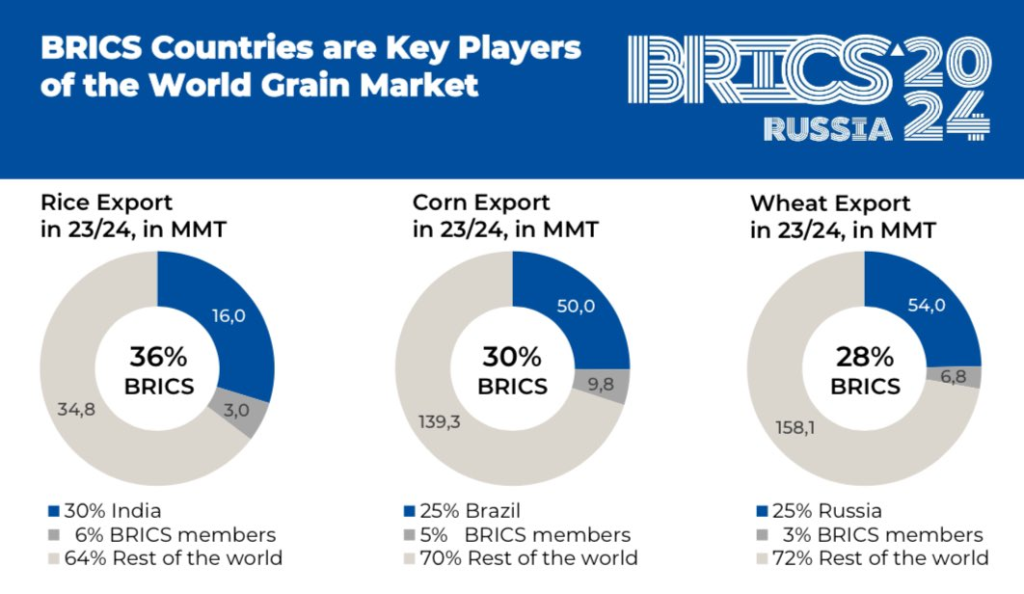
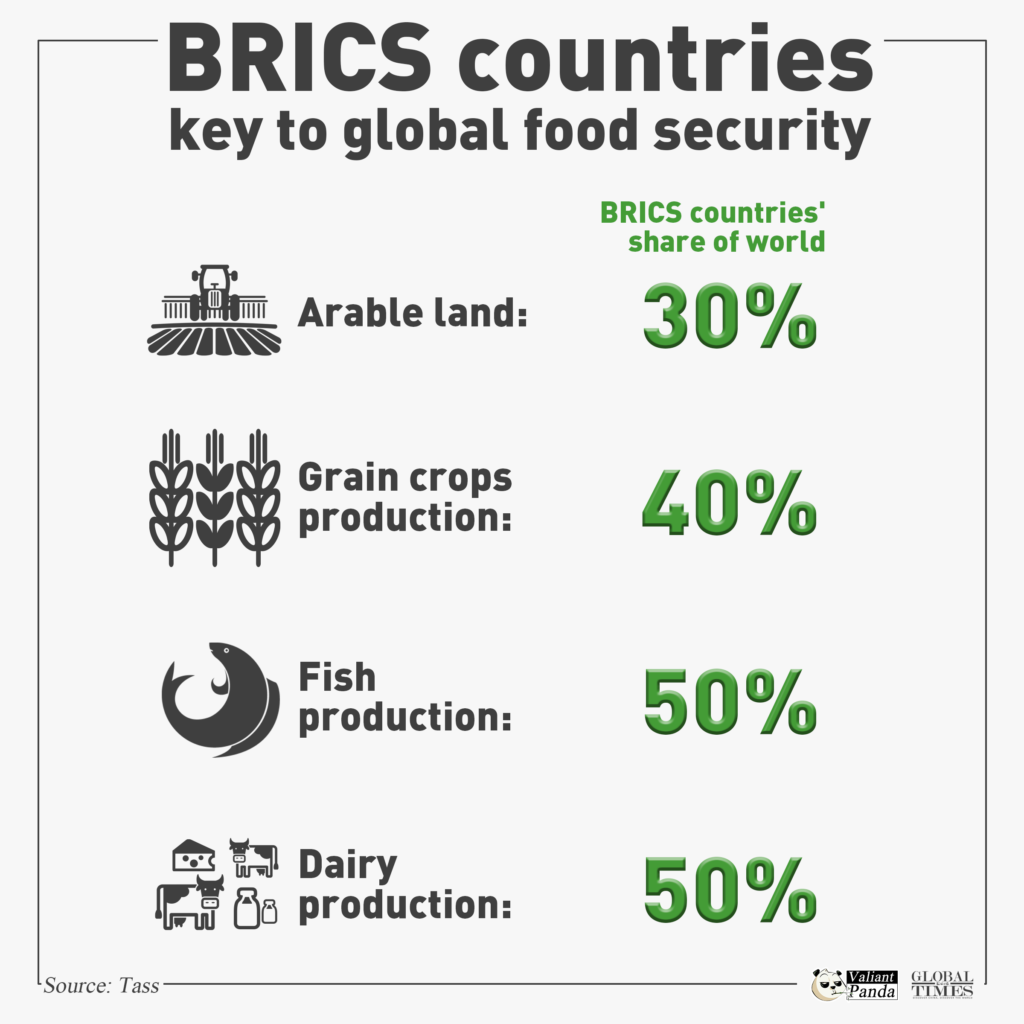
The BRICS group, which includes Brazil, India, China, South Africa and other member states, has more than 30% of the world’s cultivated land, according to data from the Russian export center Agroexport. In addition, BRICS countries contribute more than 40% to the global production of cereals and meat, almost 40% to the production of dairy products and more than 50% to the total production of fish and seafood.
This initiative is seen as a strategic move to strengthen agricultural trade within the BRICS framework, ensuring greater efficiency and enhancing economic integration by using local currencies for transactions.
De-dollarization
The BRICS group aims to weaken the international role of the dollar and has tried to reduce the dependence of commercial transactions on the US currency. Its latest plans include yet another industry that could be affected by the currency transition to a world where the dollar plays a smaller role.
Earlier this year, the BRICS bloc entered into a massive trade deal. Specifically, all BRICS states and six partner countries agree to increase trade in local currencies. Now, the team is going to develop a trading system that would remove the influence of Western currency on international trade in a massive way.
The beginning was made with the purchase of energy products, as Saudi Arabia, the largest exporter of “black gold”, potentially wants to allocate the critical energy resource to other currencies. The BRICS bloc is advancing this plan as it monitors global trade to establish similar safeguards of global South states’ interests.
The introduction of a grain exchange platform would be a huge development for global food trade. Not only for local currencies, but also for dependence on the dollar. It would highlight another example of a collective of states abolishing currency as a necessity to participate in world trade.